
Subscribe
Subscribe
- Latest Legal News
- News
- Law Firms
- Columns
- Interviews
- Law School
- Legal Jobs
- हिंदी
- ಕನ್ನಡ
A democracy is tested not merely by the freedoms it grants its citizens, but by the extent to which it allows them to exercise those freedoms without fear. The right to protest is among the most visible expressions of a constitutional democracy.
Yet, in an age where technology can identify, track and digitally profile individuals with unprecedented precision, the very act of exercising this right may expose citizens to a different form of State scrutiny.
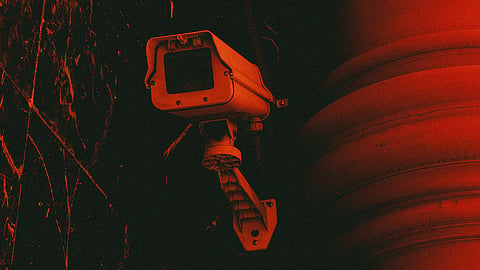
On November 3, 2026, a petition before the Supreme Court challenged the use of CCTV cameras and facial recognition technology by the State to monitor, identify and track individuals participating in public protests. The Supreme Court issued notice on the petition, bringing into focus the constitutional question of whether participation in a public protest can justify State surveillance and the processing of individuals' personal data.
At Independence, India inherited a colonial administrative and policing structure in which public assemblies and political demonstrations were frequently subjected to executive control. The adoption of the Constitution marked a fundamental departure from this relationship. Citizens became constitutional rights-holders, entitled to question authority and collectively express dissent.
Although the Constitution does not expressly enumerate a separate fundamental right to protest, its foundations lie in Articles 19(1)(a), 19(1)(b) and 19(1)(c), which guarantee freedom of speech and expression, the right to assemble peacefully and without arms and the right to form associations. These freedoms collectively enable organised dissent and democratic participation, subject to the reasonable restrictions permitted by the Constitution.
The Emergency of 1975–77 exposed the vulnerability of these freedoms when executive power escapes effective constitutional restraint. Restrictions on the press, preventive detention, arrests of political opponents and suppression of dissent demonstrated how quickly democratic participation could be curtailed. In ADM Jabalpur v. Shivkant Shukla (1976), the Supreme Court's majority denied the availability of judicial enforcement of personal liberty through habeas corpus during the Emergency under the prevailing legal framework. The judgment was subsequently overruled in KS Puttaswamy v. Union of India (2017), which reaffirmed the constitutional significance of personal liberty and privacy.
The decades that followed witnessed the expansion of protest beyond organised political opposition. Farmers led by Mahendra Singh Tikait and the Bharatiya Kisan Union brought agrarian grievances into national discourse, particularly through the 1988 demonstrations in Delhi. The implementation of the Mandal Commission recommendations in 1990 triggered competing claims concerning reservation, equality and social justice. Meanwhile, the Narmada Bachao Andolan challenged the human and environmental costs of large dam projects, while the Right to Information movement (1994) led by the Mazdoor Kisan Shakti Sangathan helped advance demands for governmental transparency and accountability, eventually contributing to the enactment of the Right to Information Act, 2005.
Protest increasingly became a means through which citizens could influence public policy and compel institutions to respond to neglected concerns. Its significance lay not merely in the number of people assembled, but in the ability of ordinary citizens to make their grievances politically visible.
The decade beginning in 2010 witnessed a renewed wave of public mobilisation. The anti-corruption movement led by Anna Hazare in 2011 brought thousands of citizens to Jantar Mantar and Ramlila Maidan, placing demands for institutional accountability and a strong Lokpal at the centre of national debate.
In In Re: Ramlila Maidan Incident (2012), the Supreme Court underscored the constitutional importance of peaceful assembly and expression and the requirement that State action remain within legal and constitutional limits.
The demonstrations following the December 2012 Delhi gang rape brought questions of women's safety, criminal justice reform and institutional accountability into public consciousness. In 2019-20, we saw the the anti-Citizenship Amendment Act protests, particularly the women’s-led demonstration at Shaheen Bagh.
In Mazdoor Kisan Shakti Sangathan v. Union of India (2018), the Supreme Court considered the competing claims of demonstrators seeking to exercise their right to assemble and residents affected by the resulting disruption. The judgment highlighted the need to balance the right to protest against the rights of other citizens.
The farmers' protests against the three agricultural laws enacted in 2020 further demonstrated the scale and persistence of collective action demanding repeal of the legislation and assurances concerning their economic security. The eventual repeal of the laws in 2021 illustrated how sustained public mobilisation could influence legislative and executive decisions.
These movements differed in their causes, constituencies and political consequences. Yet, they shared an important characteristic: citizens used collective presence to make their demands visible and hold those in power accountable. The constitutional challenge was principally concerned with the conditions under which people could assemble, the restrictions that could legitimately be imposed and the extent to which the State could regulate demonstrations.
The contemporary phase of protest jurisprudence presents a challenge qualitatively different from those that dominated earlier decades. Technological developments,have introduced a new dimension: the increasing deployment of CCTV cameras, drones, digital databases and facial recognition technology has altered the nature of public surveillance. Conventional videography may document the occurrence of an event. Facial recognition technology, by contrast, can potentially convert images into identifiable biometric information, match them against databases and facilitate the retrieval or subsequent use of information concerning particular individuals.
The distinction is constitutionally significant. A person attending a peaceful demonstration does not, merely by entering a public space, necessarily surrender the right to informational privacy. Nor can physical visibility in a public place automatically be equated with consent to unrestricted biometric identification. The constitutional question is not whether the State may ever record a public gathering, but whether it may identify every individual present, retain their information and potentially use it for purposes extending beyond the immediate event.
This does not mean that the State must never use facial recognition or that every instance of surveillance is unconstitutional. Public safety, the prevention of violence and the investigation of crime are legitimate governmental concerns. The constitutional question is whether a particular surveillance measure has a lawful basis, pursues a legitimate purpose and is necessary and proportionate to that purpose.
The nine-judge Bench decision in KS Puttaswamy v. Union of India (2017) provides the essential framework. By recognising privacy as a fundamental right under Article 21 and other freedoms guaranteed by Part III, the Court affirmed the importance of personal autonomy, dignity and informational self-determination. State action interfering with privacy must, therefore, satisfy constitutional requirements, including legality, a legitimate State aim, necessity and proportionality.
The capacity to identify individuals across large gatherings may transform isolated acts of recording into a systematic means of tracing political participation. The availability of such technology cannot, by itself, establish the justification for its use.
The latest Supreme Court proceedings, therefore, raise a question central to the future of democratic participation: whether the State's power to observe a public gathering also extends, without adequate justification or safeguards, to creating searchable records of the people who attend it.
The history of protest in independent India reflects an enduring struggle to preserve the citizen's ability to question authority. From the constitutional recognition of peaceful assembly to mass movements demanding social justice, accountability and changes in public policy, protest has remained an essential instrument of democratic participation.
The constitutional protection of dissent cannot be meaningful if its exercise exposes citizens to disproportionate surveillance. The State has a legitimate responsibility to maintain public order and investigate crime, but these objectives must be pursued within a framework of legality, necessity, proportionality and appropriate safeguards. The question is not whether the State can ever observe a public gathering, but whether the identification and tracking of its participants are justified by a sufficiently specific and lawful purpose.
A constitutional democracy must allow its citizens to question authority without making the act of dissent itself a source of permanent digital scrutiny.
Anamika Mishra is an Advocate practising before the Supreme Court of India and the Delhi High Court.