AoRs must argue cases themselves, not routinely engage senior advocates: Supreme Court Justice KV Viswanathan

Speaking at the felicitation ceremony for the 2025 batch of Advocates-on-Record, Justice Viswanathan also stressed the importance of drafting, client communication and mentoring young lawyers.
Justice KV Viswanathan
Published on
2 min read
Listen to this article

Supreme Court Justice KV Viswanathan on Wednesday urged newly designated Advocates-on-Record (AoRs) to develop a culture of arguing cases themselves instead of routinely engaging senior advocates to appear on their behalf.
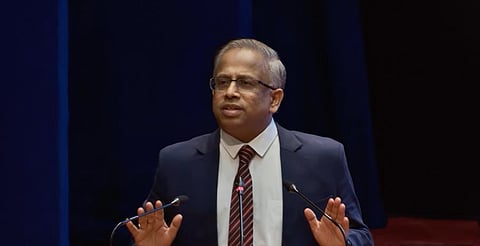
Justice Viswanathan was speaking at the felicitation ceremony for the 2025 batch of Advocates-on-Record organised by the Supreme Court Advocates-on-Record Association. Chief Justice of India Surya Kant and Justice Vipul M Pancholi also addressed the gathering.

Justice Viswanathan said the perception that an AoR’s role was limited to preparing and filing cases before engaging a senior advocate had changed considerably over the years, but needed to change further.

“There is somehow a feeling - it has changed by and large now - that an Advocate-on-Record means that he will prepare the case, or she will prepare the case, file the case, and as a default engage a senior. It was widely prevalent in the ’80s and ’90s, but it has substantially changed now. But you must bring in a culture where, as a default, you will argue the case. And in exceptional cases where the client insists, you will, of course, engage a senior.” he said.

Driving home the point, Justice Viswanathan joked that if the expression “Advocate-on-Record” encouraged lawyers to think of themselves as dealing only with paper books, they should instead think of themselves as advocates who argue cases.

“If you want, a change of name will help. You may call yourself ‘Advocate-on-Rolls’ if ‘of Record’ has a tendency to associate you with the paper book. But for heaven’s sake, argue your cases.” he said.

Encouraging the young lawyers to have confidence in their own abilities, Justice Viswanathan said they should not hesitate to argue matters themselves, particularly where clients were unable to afford senior counsel.

He added that strong drafting often had a direct bearing on the outcome of a case and urged the new AoRs to devote time and care to every pleading they signed.

“Please do not be casual in your drafting because three years in the Court, and substantially having practised here, I have realised that a good draft does make a difference to the outcome of the case.” he said.

He said judges looked for concise assistance through well-prepared pleadings, adding that a cogent synopsis and list of dates could help the Court quickly understand the issues involved.

Justice Viswanathan also advised the new AoRs to treat every brief with the seriousness it deserved and to value the responsibility attached to their designation.

“Put a heavy price on your name. Don’t sign anything casually. Anything that goes under your name must be accurate, precise, and above all, must value-add in the case.” he said.

The judge also stressed the importance of maintaining regular communication with clients.

He further urged senior AoRs to encourage promising junior lawyers by involving them in drafting work and sharing a part of their fees, describing it as a way of giving back to the profession.

Concluding his address, Justice Viswanathan reminded the newly designated AoRs that the legal profession often rewarded sustained hard work in unexpected ways.

“The profession is a very unique profession. You don’t know what rewards await you round the corner. You keep doing your work. Something magic will happen.” he said.

Bar and Bench - Indian Legal news
www.barandbench.com