
Subscribe
Subscribe
- Latest Legal News
- News
- Law Firms
- Columns
- Interviews
- Law School
- Legal Jobs
- हिंदी
- ಕನ್ನಡ
A Delhi court on Saturday observed that in a democracy, it is the right of the press and public to ask questions to the government, and the government and elected official must listen to opinions which are different from their own.
Additional Chief Judicial Magistrate (ACJM) Neha Mittal of the Rouse Avenue Courts said that a merely asking questions to representative of public in parliament regarding any law and order situation or any other matter, cannot amount to defamation.
"Any contrary view will rather be a dark spell in the era of democracy paving way for utter disregard of the constitutional rights," the Court underscored.
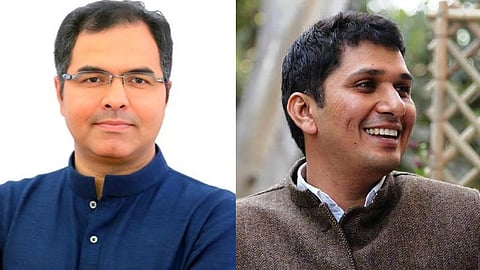
Judge Mittal made the observation while rejecting the criminal defamation case filed by Delhi Deputy Chief Minister Parvesh Verma against Aam Aadmi Party (AAP) leader Saurabh Bharadwaj over certain social media posts made by the latter.
The Court refused to take cognisance of the case, holding that Bharadwaj's posts were in the nature of questions asked with the purpose of criticising the government and not to defame anyone.
Verma had sued Bharadwaj over his social media posts allegedly insinuating that Singh used his influence in favour of officials of a school where a three-year-old girl was raped.
It was Verma's case that Bharadwaj posted “false, malicious and highly defamatory” tweets and videos on May 15 and May 16 from his X handle.
The posts alleged that Singh misused his position as a minister to appoint his alleged associate, one Amarjet Singh Baboo, as a trustee in a private school trust worth nearly ₹500 crores and that the said trust belongs to Singh.
According to Verma, Bharadwaj also insinuated that he (Verma) exercised his influence in favour of the employees of the school run by the said trust, who are the accused persons in the POCSO case.
He further argued that Bharadwaj made insinuations of corruption, nepotism and file suppression against him, lowering his reputation in the eyes of the public.
After considering the case, the Court noted that Bharadwaj largely reiterated information already posted on Facebook by Amarjeet Singh Baboo himself.
The Court also observed that Verma had stated during his examination that he was not associated with Baboo in any manner and had not been involved in his appointment as a trustee.
However, it noted that Verma had himself posted on Facebook about knowing Baboo since his college days and had shared a birthday greeting for him.
"The complainant has specifically posted his photo with Amarjit Singh Baboo for extending his greetings on his birthday, which the complainant is certainly not expected to know of the random thousand people he gets clicked with. This association of the complainant with Amarjit Singh Baboo contradicts the statement of complainant made by him that he is not associated with Amarjit Singh Baboo in any manner," the Court said
Thus, the Court concluded that Verma had approached the Court with unclean hands.
"The obligation towards the Court to approach with clean hands is an absolute obligation. A litigant who attempts to pollute the stream of justice or who touches the pure foundation of justice with tainted hands is not entitled to any relief. No litigant should be permitted to misuse the judicial process by filing frivolous petition," the Court said.
Judge Mittal added that easy access to justice should not be used as a license to file misconceived and frivolous petitions.
No litigant can play "hide and seek" with the Courts and suppression of material facts is impermissible to a litigant or even as a technique of advocacy, she said.
"It is not just the clean hands, but also clean mind, clean heart and clean objective that are the fundamental of judicious litigation," the Court said.
[Read Order]