

Arbitrator selection for domestic disputes in India requires balancing procedural experience with industry-specific expertise, an in-house counsel panel observed at India ADR Week 2026 held in Mumbai.
Panelists noted that while retired judges traditionally serve on arbitral tribunals, complex commercial matters increasingly benefit from domain specialists, practitioners, and general counsel on the bench.
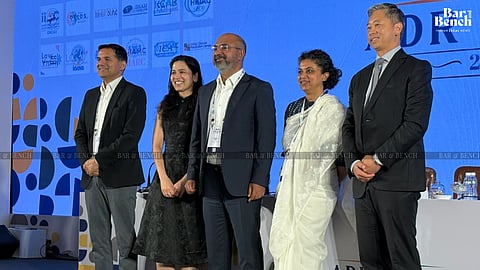
The panel discussed “In-house Counsel's Roles and Expectations during the Arbitral Process”. Skadden Partner Sharmistha Chakrabarti moderated the session.
It featured Mahindra & Mahindra General Counsel Naveen Raju, Hindustan Unilever Executive Director of Legal & Corporate Affairs Vivek Mittal, Global General Counsel Shalini Saxena, and Asia Head of International Arbitration at Skadden Friven Yeoh.
Mittal highlighted the distinction between domestic and international frameworks. He noted that technical arbitrations often stall when former judges view cases purely through a courtroom lens.
“Arbitration in India has become very complex because most of the arbitrators, established arbitrators are either ex-judges or fairly senior counsel, they don't understand the subject matter expertise,” Mittal said.
“I am advocating that GCs should become arbitrators,” Mittal suggested.
Saxena also stressed subject-matter familiarity for tribunal members across all backgrounds. “I need the institutions to ramp up and also start telling or holding the pen of their arbitrators and saying, 'Look, if it's not your skillset, you may be a retired judge, please get the skillset. Educate yourself before you start opining on it',” she said.
The panel addressed contract negotiations as well. Saxena noted that contracting with governments or regulators limited flexibility because regulatory mandates often dictate the dispute forum.
“I end up signing with the government, regulators. I need them to be convinced of following the same trends that we are discussing in this room,” she said.
Raju added that dealing with public sector entities differs significantly.
He referred to the June 2024 Office Memorandum of the Finance Ministry to highlight how various government directives favor court litigation over arbitration for high-value disputes to avoid multi-year litigation.
In another session moderated by Trilegal Partner Shalaka Patil, dispute specialists mapped out strategic decisions for claimants and respondents across the lifespan of an arbitration.
The panelists were BNY Mellon Senior Director Abhishek Thanvi, Vischer Managing Associate Janine Haesler, Gateley Legal UK Head of Disputes & Partner Richard Healey, and Bombay High Court Senior Advocate Zal Andhyarujina.
Thanvi suggested prioritizing commercial continuity over pure legal battles.
Haesler warned against delaying asset tracing.
Andhyarujina stated he found going to court for urgent interim reliefs under section 9 to be more effective than before an arbitral tribunal
Healey advised calm when receiving dispute notices: “Resist the temptation to want to immediately respond,” he said.
Another panel discussed whether Indian arbitrators and counsel are becoming the new neutrals of international dispute resolution.
Driven by geopolitical realignments and unilateral sanctions against traditional seats, the discussion examined India’s rising global prominence.
Humphries Kerstetter Partner Eraldo d'Atri moderated the session.
The panelists were Twenty Essex Barrister and Arbitrator Baiju Vasani, Rahul Donde Dispute Resolution Founder Rahul Donde, Shardul Amarchand Mangaldas Partner Shaneen Parikh, and Humphries Kerstetter Managing Associate Srishti Jain.
Vasani noted how India’s non-aligned stance made its lawyers an “enemy to none, friend to all.”
Donde cited demand for alternatives to London or Singapore.
Parikh highlighted domestic restrictions on foreign lawyers as barriers to expansion of firms.
Jain urged practitioners to compete for arbitrations unrelated to India.