
Subscribe
Subscribe
- Latest Legal News
- News
- Law Firms
- Columns
- Interviews
- Law School
- Legal Jobs
- हिंदी
- ಕನ್ನಡ
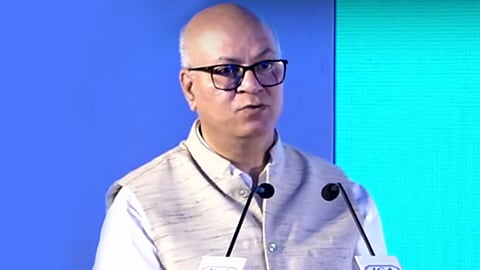
Judges do not deserve praise for merely doing their duty and should be willing to accept criticism, Jharkhand High Court Chief Justice Mahesh Sharadchandra Sonak said on Friday.
Justice Sonak was speaking at an event held to mark his retirement from judicial service. He was elevated as an Additional Judge of the Bombay High Court in June 2013 and served there for nearly 13 years before taking over as Chief Justice of the Jharkhand High Court in January 2026.
In his farewell address, he expressed his discomfort with the practice of praising judges for performing their judicial duties.
"I am not very comfortable with the general idea of praising the judges for doing their judicial duties. No one deserves praise for doing what he or she ought to do. Just as Oliver Wendell Holmes once bemoaned that the trouble with most of us is that we would rather be ruined by praise than be saved by criticism," said Justice Sonak.
He went on to note that judges were not infallible.
"Behind every verdict is a judge wrestling with imperfection. As judges, we are human, not infallible. As the great Benjamin Cardozo felicitously said, great tides and currents which engulf the rest of the men do not turn aside in their course and pass the judges by," said Justice Sonak.
He also pointed to the pressures under which courts function.
"Some of our decisions can be dialogues with generations which are yet to come. It is wrong and too great an expectation to get every judgment right. Given the pressures of our dockets we mostly decide in the heat and dust of the battlefield with no leisure for calm contemplative reflection," he noted.
Justice Sonak held that criticism of judicial decisions was necessary to ensure that the judiciary remained faithful to its constitutional responsibilities.
He stressed that respect for the judiciary had to be earned through its commitment to the law.
"The rule of law no doubt demands reverence for the judicial office but not for the individuals who occupy it. And even that institutional respect is never an entitlement but something that must be earned and preserved each day through steadfast fidelity to law immune to the passing tides or any external noise," added Justice Sonak.

Emphasising the human dimension of judicial work, he said judges must look beyond the paperwork in cases.
"Our endeavour must be to see whether we can within the four corners of law do justice to this human. Our endeavour must be to look beyond the cold print of a petition to the human face behind it remembering that our constitutional duty is not merely to apply the law mechanically but to administer justice with compassion and equity," urged Justice Sonak.
The outgoing Chief Justice also described the judiciary as a collective institution in which judges carry forward the work of their predecessors and pass it on to those who follow them.
"This judicial tenure is like a relay run and it is essentially a team sport not some individual event. You take the baton from the judges before you, you work to the best of your ability, you hope and pray that you don't drop the baton crucially, that you do not sully or stain this baton and then you pass it on to the judges who follow. The earnest hope is that you pass it on to someone who will run faster and run a better marathon."
Reflecting on the end of his judicial tenure, Justice Sonak said,
"At this stage there is no unfinished business on my mind and fortunately there are no unfinished judgments either. There is a clear sense that you have played your role without fear or favor and to the best of your ability as the judge's oath ordains."