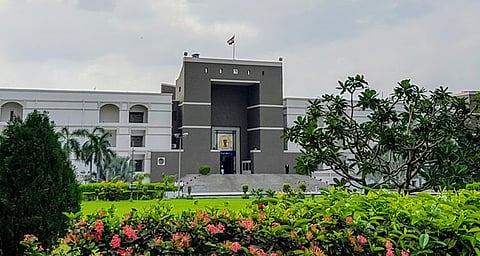
The Gujarat High Court has directed State tax authorities to strictly follow instructions governing the use of Artificial Intelligence (AI) while passing adjudication and appellate orders [Faiz Enterprises Vs State Tax Officer].In a judgment delivered on August 20, a bench of Justice AS Supehia and Justice Vaibhavi D Nanavati cautioned that any violation of the safeguards would amount to contempt of court.The Court issued the direction after a State Tax Officer admitted that he had used AI while drafting an order and had consequently relied on non-existent and irrelevant judgments.“We direct that the instructions dated 18/08/2026, which we have incorporated in our order shall be scrupulously followed, and any violation of the instructions would amount to contempt of this Court, in view of the directions issued by us,” the Court said..The case arose from a petition filed by a firm, Faiz Enterprise, challenging the proceedings initiated by the State tax authorities under the Goods and Services Tax (GST) regime.During the hearing of the matter on August 13, the Court was informed that the State Tax Officer had cited decisions which either did not exist or had citations and legal principles unrelated to the dispute before him. The Bench then prima facie observed that the officer appeared to have passed the order by relying “exclusively on the AI generated case laws”.When the matter was taken up again, State Tax Officer Devang Arvindkumar Yadav filed an affidavit tendering an unconditional apology..Yadav stated that he was a probationary officer and that the mistake occurred because of his lack of experience. He admitted using AI while drafting the order and referring to judgments which were non-existent or irrelevant. He also informed the Court that he had subsequently attended a training programme on the use of AI in drafting and adjudication.Following the Court's intervention, the Additional Commissioner of State Tax issued Statewide instructions on August 18 regulating the use of AI by adjudicating and quasi-judicial authorities..The instructions said that AI can only assist decision-makers. Any judgment, statutory provision, rule, circular or notification identified through AI must be independently verified from primary official sources before being incorporated into an order.If an AI tool paraphrases the ratio of a judgment, tax officers have to locate the original paragraph and reproduce it before relying upon it. Authorities must also verify whether judgments remain good law and record reasons when decisions cited by taxpayers are held to be inapplicable.Significantly, the instructions said that AI cannot substitute the independent application of mind by the adjudicating authority.“Orders must reflect independent legal reasoning and record the officer's own application of mind to the law and the facts of the case. AI output may assist in reasoning but cannot substitute it.”The Court took recorded the same in its order..On the merits, the State informed the High Court that it proposed to revisit the orders against Faiz Enterprise and issue a fresh show-cause notice. It thus set aside the order and directed fresh reconsideration..Advocate Hardik V Vora appeared for the petitioner. Assistant Government Pleader Raj Tanna represented the State authorities..[Read Judgment]