Karnataka HC quashes criminal case against Coorg homestay owner booked for not reporting rape of US tourist

The Court noted that one set of charges against the homestay owner was under a dead law, while the other did not apply since the law did not fasten a liability on him to report the rape incident.
Karnataka High Court
Published on
3 min read
Listen to this article

The Karnataka High Court recently quashed criminal proceedings against a Coorg homestay owner who was accused of failing to report the rape of US tourist who had stayed at the homestay [Palecanda Ponappa v The State of Karnataka].
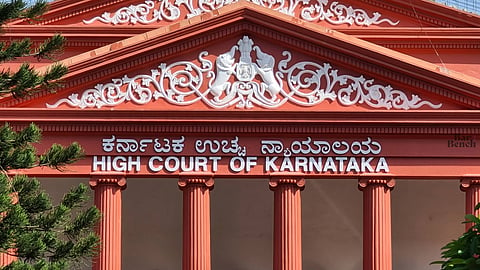
Justice M Nagaprasanna observed that two of the charges levelled under against the homestay owner were the Foreigners Act, 1946. However, this law was repealed over seven months before the alleged offence took place. The Court, therefore, held that these charges cannot stand.

"The incident forming the subject matter of the present proceedings is alleged to have occurred on 12-04-2026 i.e, more than seven months after the repeal had taken effect ... Criminality cannot be conjured out of a statutory provision which had ceased to exist when the alleged act occurred," the Court said.

Justice M Nagaprasanna

The remaining charge was under Section 239 of the Bharatiya Nyaya Sanhita, 2023 (BNS), which deals with the offence of intentionally failing to report crimes.

The Court observed that this provision does not punish silence as such. Rather it deals with a failure to provide information that one is legally duty-bound to give.

The Court further noted that Section 33 of the BNS fastens a duty on the public to report certain offences. However, sexual offences are not among the offences referred to in Section 33.

The Court also noted that the legislature has expressly added a provision to in the Protection of Children from Sexual Offences Act, 2012 (POCSO Act) to make it mandatory to report child sexual assault offences. Other sexual crimes, however, have not been added to the list of offences that one is bound to report.

"The Court cannot transplant that duty into a statutory field where Parliament has consciously not placed it," the Court added.

The Court concluded that there was no legal duty fastened on a private citizen, like the homestay owner in this case, to report an incident of rape. It added that while some may expect the homestay owner to report the incident out of a moral obligation, such moral expectations cannot be grounds for a criminal case.

"Morality may expect a citizen to speak; criminal law can punish his silence only when the statute commands him to speak. A moral expectation cannot, by prosecutorial alchemy, be converted into a penal obligation," the Court held.

A moral expectation cannot, by prosecutorial alchemy, be converted into a penal obligation
Karnataka High Court

Further, the Court also observed that the homestay owner was not at the premises when the crime took place, nor was he informed about it by the rape survivor. In such a scenario, the Court ruled that the homestay owner cannot be prosecuted under Section 239 of the BNS.

The Court proceeded to quash the chargesheet filed against the homestay owner.

"A criminal trial cannot be permitted to become the punishment where the law does not disclose the crime. Therefore, viewed from any angle, continuation of proceedings against the petitioner for the aforesaid offences would be an abuse of the process of law and would result in manifest and patent injustice," it held.

A criminal trial cannot be permitted to become the punishment where the law does not disclose the crime.
Karnataka High Court

The case was tied to allegations of sexual assault and rape made by an American tourist against an employee working in the Coorg homestay. She alleged that a homestay employee spiked her drink and then sexually assaulted her on April 12 this year.

Apart from the rape-accused employee, the homestay owner and a taxi driver was also named as accused in the criminal case filed on the tourist's complaint.

The homestay owner was eventually charged under Section 239 of the BNS and Section 7, read with Section 14, of the Foreigners Act, 1946, for failing to report the offence to authorities.

He was arrested on April 19, and granted bail the following month. In the meanwhile, he challenged the legality of his arrest before the High Court. In July, the High Court found that the arrest was illegally carried out and ordered the State to pay him ₹5 lakh as compensation for violating his fundamental rights.

He also challenged the chargesheet filed against him. By its August 24 ruling, the High Court has quashed the chargesheet against him as well.

Advocate Angad Kamath represented the homestay owner.

State Public Prosecutor BN Jagadeesha appeared for the State.

The complainant was represented by Advocate Joseph Anthony.

[Read Order]

Attachment
PDF
Palecanda Ponappa v The State of Karnataka
Preview
Bar and Bench - Indian Legal news
www.barandbench.com