

Vague allegations by a woman that her mother-in-law denied her nutritious food and made Ragi balls only for her husband will not be sufficient to attract the offence of cruelty, the Karnataka High Court recently held.
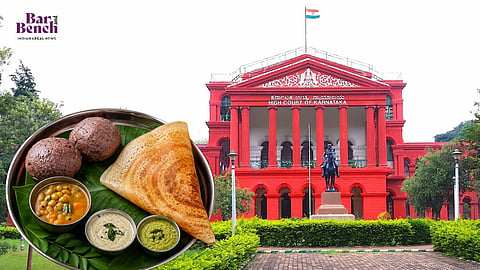
Further, allegations such as mother-in-law supervising her cooking and household work will also not attract the offence of cruelty, the Court said.
Justice M Nagaprasanna made the observations while quashing the criminal proceedings against a woman's mother-in-law and three of her husband's relatives.
The Court held that while the complaint contained several allegations against the husband, the accusations against his mother and other relatives were too general and lacked specific instances to justify prosecution under Section 85 of the Bharatiya Nyaya Sanhita (BNS) (cruelty by husband or relatives) .
In the August 5 order, the Court observed that allowing the investigation to continue against the relatives would amount to an abuse of the legal process.
"If the facts obtaining in the case at hand or the complaint is considered on the bedrock of the elucidation of law declared by the Apex Court... what would unmistakably emerge is, permitting further investigation even against these petitioners would become an abuse of the process of law and result in miscarriage of justice," said the Court.
The case stemmed from a complaint filed by a woman against her husband, mother-in-law and three other relatives after their marriage, solemnised in May 2024, broke down within a year. She accused them of demanding dowry before the wedding and later subjecting her to physical and mental cruelty.
Based on the complaint, police registered a first information report (FIR) under Section 85 of BNS (cruelty by husband or his relatives) and Section 3 (punishes giving or taking dowry) and Section 4 (punishes direct or indirect demands) of the Dowry Prohibition Act.
While the husband did not challenge the FIR, his mother and the other relatives approached the High Court seeking to have the proceedings against them quashed.
The woman narrated several incidents inside the matrimonial home. Among them was an allegation that the mother-in-law closely supervised the her household work, instructed her on how much spice to use while cooking, made her serve the husband before eating herself and denied her nutritious food.
Referring to these allegations, the Court noted,
"Another allegation is titled ‘Toxic mother-in-law’... The mother-in-law is said to be making ragi balls only to the husband. The complainant was not given food rich in nutrients."
The Court further noted that the complaint also contained several allegations directed specifically at the husband. These included accusations that he controlled the woman's appearance and personal choices.
"The husband is said to have forced her to apply some kind of shampoo which had resulted in her hair loss and used to body shame her for her appearance. These form the contents of the complaint among others. The grievances galore against the husband," recorded the Court.
Taking note of the submissions, the Court clarified that it was examining only the case against the mother-in-law and the three relatives who had approached it, and not the allegations against the husband, who had not challenged the FIR.
It held that the allegations against the relatives were insufficient to make out the offence of cruelty.
"Bald and vague allegations are made against the mother-in-law or even the other three accused. In the considered view of the Court, they do not form the ingredients of the offence under Section 85 of the BNS or Section 498A of the IPC, the earlier regime," said the Court.
In reaching its decision, the High Court relied on a series of Supreme Court rulings warning against routine prosecution of in-laws and extended family members in matrimonial disputes. It held that criminal proceedings could not be sustained in the absence of clear accusations identifying each accused's individual role.
Advocate Ankith S Reddy appeared on behalf of the mother-in-law and three relatives (petitioners).
High Court Government Pleader (HCGP) Deepthi Alva appeared for the State.
The complainant (woman) advocate appeared in person.
[Read Order]