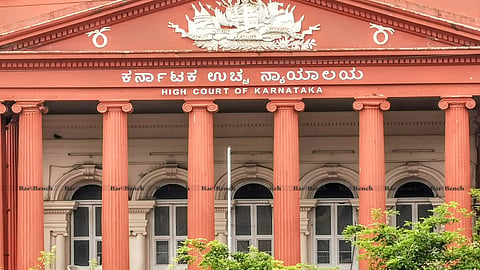
The Karnataka High Court on Thursday took strong exception to the practice of not paying the process fees in cases where interim orders had been passed months or even years earlier..Justice V Srishananda said the Court would not tolerate litigants obtaining interim orders and then allowing the cases to remain pending for years.“Don't think otherwise. I am harsh, I am required to be harsh. We cannot tolerate this. Taking an interim order and managing an internet copy, how is this?” the Court told an advocate.The judge warned that he will vacate the interim orders in the cases where process fee was yet to be paid.“Take your sweet time. A 2026 matter will reflect only in 2036," Justice Srishananda quipped..The Court was hearing a matter where the process fee had not been paid despite an order dated March 9, 2026. When the advocate cited oversight as the reason, the judge warned that he will dismiss the case. Justice Srishananda said he had come across several cases dating back to 2021 where process fees had not been paid.“I have cases from 2021. They have not paid the fee. I have 100 cases. I asked to list them. For five years, process fee has not been paid. What does it reflect?” the judge asked.The judge said the practice appeared to allow parties to obtain interim orders and then keep the proceedings stalled.“This is nothing but mischief. Get an interim order and keep quiet. Don't pay the process fee. Take the internet copy and place it before the concerned court. There also everything stops, here also. This case will come up after four or six years," he said..The Court also questioned the registry over the manner in which old matters were being listed.Justice Srishananda said that after he directed the registry to list old matters according to their serial numbers, the number of cases in the list appeared to increase rapidly — from 39 to 44 and subsequently to 113.“Where did all these cases come from? Where did they come up? Don't you think it is injustice?” the judge asked.The Court said that some cases had become infructuous as early as 2022 but had nevertheless remained pending.Justice Srishananda, who had earlier served as Registrar (Judicial), said physical verification of pending matters had been undertaken during his tenure. "They say it is continuing now also. If that is the case, how come these 111 cases?” he added..He also questioned why matters directed by a co-ordinate bench to be listed the following week had not come up even after several years.“One week in the meaning of the High Court is six years, is it?” the judge asked.The judge also said that after he directed the registry to list all old matters, several advocates had proceeded to pay the process fee.“After I asked the office to list the matter, I don't know how advocates came to know. Already 20-30 people have paid process,” the Court said.The Court observed that the responsibility for such lapses could not simply be shifted from one official to another.“They can't escape so easily,” the judge said.