Muslim man's second marriage under Special Marriage Act void if earlier marriage subsists: Karnataka HC

While Muslim personal law allows a man to enter more than one marriage, the legal position undergoes a change if the parties choose to get married under the Special Marriage Act, the Court said.
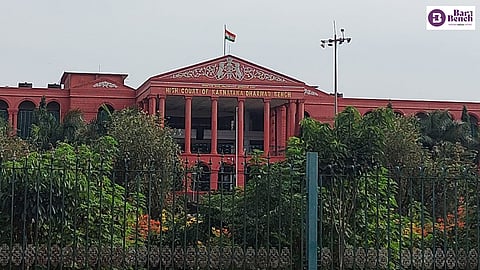
Karnataka High Court Dharwad Bench
Published on
2 min read

The Karnataka High Court recently ruled that a second marriage of a Muslim man under the Special Marriage Act, 1954, is void if it was entered into during the subsistence of the man's first marriage
Justice Sachin Shankar Magadum held that while Muslim personal law permitted men to enter multiple marriage contracts, this legal position prevails only if the marriages are solemnised under the personal law.

The legal position changes if parties choose the enter a marriage under the Special Marriage Act, which lays down that a person who is already married cannot enter into another marriage under the Act if the earlier marriage is still subsisting.

"Once parties consciously invoke the provisions of the Act instead of their personal law, they subject themselves to the mandatory statutory regime enacted by Parliament. The rights and obligations flowing from such marriage are therefore determined not by personal law but exclusively by the provisions of the Act," the Court held.

Justice Sachin Shankar Magadum

The Court made the observation in a case where a woman (petitioner) challenged a refusal to recognise her as a legal heir of a Muslim man that she had married in 2008 under the Special Marriage Act. A daughter was also born to the couple.

The man died in 2024 during the pendency of a partition suit filed by his brother. After the man's death, the petitioner and their daughter sought to be impleaded in the partition suit.

However, a trial court refused to recognise her as his legally wedded wife or to implead her as a party. The couple's daughter, however, was added as a party to the suit.

The petitioner challenged the trial court's ruling before the High Court.

On July 15, the High Court upheld the trial court's decision. The Court concluded that the marriage between the petitioner and the deceased man was void, since his first marriage was still existing when he entered the second marriage under the Special Marriage Act.

Section 4(a) of the Special Marriage Act did not permit such a second marriage when the first marriage had not been annulled.

"A marriage performed under the Act during the subsistence of an earlier marriage is void and does not confer the legal status of husband and wife upon the partiesm" the Court held.

The Court, however, agreed with the trial court's finding that the couple's daughter was entitled to be impleaded as a party to the partition suit, as a the deceased man's legal heir.

"Children born from a void marriage are entitled to statutory protection and are competent to represent their legal rights in appropriate proceedings. Bearing this settled legal position in mind, the Trial Court has permitted proposed defendant No.2(f), namely the daughter, to come on record," it said.

Advocate Chinmay G Bhat appeared for the petitioner.

Advocates Santosh Biranagi, and P Vadiraja appeared for the respondents.

[Read Order]

Attachment
PDF
Karnataka High Court order - July 15
Preview
Bar and Bench - Indian Legal news
www.barandbench.com