
Subscribe
Subscribe
- Latest Legal News
- News
- Law Firms
- Columns
- Interviews
- Law School
- Legal Jobs
- हिंदी
- ಕನ್ನಡ
The Supreme Court on Monday stayed the Madras High Court order directing the eviction of SASTRA University from 31.37 acres of government land in Tamil Nadu's Thanjavur [SASTRA University v. State of Tamil Nadu].
A Bench of Chief Justice of India (CJI) Surya Kant, Justice Joymalya Bagchi and Justice V Mohana also stayed all consequential directions that could lead to the university being dispossessed of the land.
The order was passed after the Court was informed that the Tamil Nadu government had rejected the options proposed by the university to settle the dispute.

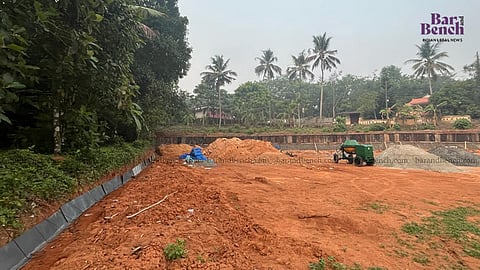
The dispute concerns 31.37 acres of government land in Thirumalaisamudram village in Thanjavur district. The land had been allotted to the State's Prison Department for establishing an open-air jail.
The State has maintained that SASTRA University occupied the land without authorisation. The university, however, had offered alternative parcels of land or monetary compensation to the government in an attempt to retain the disputed property and avoid the demolition of buildings that form part of its campus.
The dispute has been the subject of litigation for nearly three decades.
The Madras High Court in January of this year upheld the State's rejection of SASTRA's request for assignment or exchange of the land and ordered implementation of the eviction notice. It held that acceptance of alternative land was a matter within the government's discretion and could not be claimed as a right.
SASTRA University then approached the Supreme Court.
In an order passed on January 15, the Supreme Court had asked the university to submit a fresh proposal containing three alternative land options to the State government.
The Court had observed that the proposals appeared prima facie fair and asked the State to consider them sympathetically while ensuring that the public exchequer did not suffer any loss. It also suggested that a high-powered committee of three senior government officials hear the university before taking a decision.
Pending that exercise, the Court had stayed the university's dispossession and permitted it to continue its activities without hindrance.
The matter subsequently came up before the same Bench in September, when the Court again urged the State to consider an alternative arrangement rather than insist on the university's eviction and demolition of its buildings.
The Bench suggested that the State could identify a suitable alternative site for its proposed open-air jail and require the university to bear the cost of acquiring it.
The Court also indicated that the university could be asked to pay more than the market value of the disputed land to ensure that the arrangement did not encourage encroachment of government property.
The State opposed the proposal, arguing that accepting alternative land would set a precedent for other encroachers to seek similar concessions.
The latest order comes against this backdrop, with the State having declined the proposed options for resolving the dispute.
[Read Live Coverage]