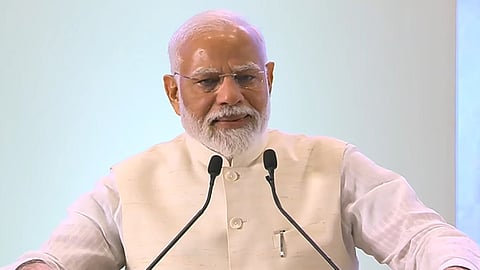
Prime Minister Narendra Modi on Thursday announced that the government will set up fast-track courts to ensure speedy trials and stringent punishment in cases involving examination paper leaks..The Prime Minister took to X (formerly Twitter) to announce the same. "Nothing is more important than the welfare and future of our youth! We have decided to set up fast-track courts to ensure swift and stringent punishment for those involved in paper leaks. Have directed the concerned authorities and officials to take all necessary steps in this regard. This continues our series of steps for safeguarding the interests of students. Those who try to harm the future of our youth will not be spared," the tweet said..Details regarding the number of fast-track courts, their territorial jurisdiction and the timeline for setting them up have not yet been disclosed. Fast-track courts are ordinarily established by State governments in consultation with the High Courts concerned..The announcement comes amid widespread protests in Delhi and other parts of the country over the alleged leak of the National Eligibility cum Entrance Test-Undergraduate (NEET-UG) 2026 question paper. The examination, taken by nearly two million medical aspirants, was cancelled and subsequently conducted afresh.Students from across the country and activists of Cockroach Janta Party (CJP), an online satirical collective, have been protesting at Jantar Mantar and others parts of Central Delhi demanding accountability for repeated examination paper leaks and also seeking resignation of Union Education Minister Dharmendra Pradhan. Earlier this week, Modi reportedly described the alleged leak as a “grave sin” and said that 13 persons had been arrested and sent to jail. The government has maintained that it acted promptly after receiving information about the leak and prioritised conducting the re-examination to prevent further disruption to students’ academic prospects. India already has the Public Examinations (Prevention of Unfair Means) Act, 2024, which criminalises question paper leaks and other organised malpractices in public examinations..The law provides for imprisonment ranging from three to five years, along with a fine of up to ₹10 lakh, for persons resorting to unfair means. Those involved in organised crimes may be imprisoned for a term between five and ten years and fined at least ₹1 crore.The Supreme Court recently considered a public interest litigation seeking a standard operating procedure for investigating paper leaks, time-bound probes and fast-track trials. The Court expressed reservations about the breadth of the reliefs sought and deferred the matter by a week.