Public institutions must be open to questioning: Supreme Court Justice Vikram Nath

Justice Nath said growing public awareness of rights has increased expectations from institutions, and accountability and transparency must remain central to maintaining public trust in the justice system.
Justice Vikram Nath
Justice Vikram Nath
Published on
3 min read
Listen to this article

Growing awareness of citizens' rights has raised expectations from public institutions, which must remain accountable for the power entrusted to them, Supreme Court Justice Vikram Nath recently said.
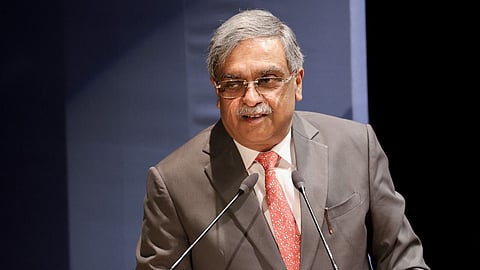
He further noted that citizens today are more aware of their rights and the institutions that govern them. This makes it necessary for institutions to account for the power entrusted to them, the apex court judge said.

“We are living through unprecedented times. People today are far more aware of their rights and of the institutions that govern them. This change was something that was long in coming… But this growing awareness also brings with it a quiet weight. Expectations rise, and rightly so. If citizens are expected to respect institutions, then institutions must be equally willing to account for the power entrusted to them,” said Justice Nath.

Institutions must be open to questioning, he added.

"That is part of their strength, not a threat to it,” said Justice Nath

He was speaking at a lecture organised on August 6 by the Supreme Court Advocates-on-Record Association (SCAORA) on the theme "The Future of Justice Delivery: Innovation, Inclusion and Integrity".

The event also featured other speakers including Chief Justice of India (CJI) Surya Kant, Supreme Court Justice V Mohana and Justice Abha Nayar Patel of the Supreme Court of Zambia among others.

In his address, Justice Nath also emphasised that the principles of justice must be reflected in the actual experience of people who approach the courts.

“Justice, fairness, and transparency cannot remain confined to the language of judgments, speeches, or statutes. They must be felt in the lived experience of those who approach the system,” said Justice Nath.

He said this was particularly important in the case of courts, which are often described as guardians of rights. Justice Nath noted that concepts such as liberty and equality acquire real meaning when tested against the experiences of individuals who come before the justice system.

He also stressed that the responsibility of ensuring effective justice delivery does not rest with judges alone. Lawyers, court staff and everyone involved in the judicial process contribute to a litigant's experience, he said.

Justice Nath further observed that while the values underlying the justice system must be preserved, this did not mean that courts should continue following every traditional method of functioning.

On the role of technology and inclusion, Justice V Mohana said access to justice should not be understood merely as the ability to physically reach a courtroom.

Justice Mohana further spoke about the growing use of artificial intelligence in the judiciary, including AI-assisted transcription of Constitution Bench hearings. However, she stressed that technological innovation must remain subject to human oversight and constitutional values.

Justice Mohana concluded by stressing that the future of justice delivery must focus not merely on speed and technology, but on ensuring that courts remain accessible and trustworthy.

Justice Abha Nayar Patel of the Supreme Court of Zambia said innovation, inclusion and integrity should not be treated as separate aspects of justice delivery but as principles that must work together.

“Innovation, I submit, without integrity is dangerous. Integrity without inclusivity is incomplete. Inclusivity without innovation is often too slow to matter,” she said.

Justice Patel observed that though technology could help courts address delays and improve access to justice, it could also also reproduce existing inequalities if they were introduced without adequate safeguards.

“Innovation, unexamined, does not eliminate inequality. It can simply digitise that inequality,” she said.

She further cautioned that technology used in courtrooms was not neutral, particularly when artificial intelligence systems were trained on historical data that could contain existing biases.

“Technology in a courtroom is not a neutral instrument. An algorithm trained on historic sentencing data will reproduce historic biases unless we build safeguards to prevent it. A virtual hearing may expand access for a litigant with a smartphone and a stable internet connection while silently excluding the litigant who has neither,” noted Justice Patel.

She suggested that every technological tool adopted in the justice system should be assessed on whether it improves the fairness of outcomes and whether it improves access to justice for those who need it most.

She also called for clear judicial and professional standards governing the use of technology in courts.

“I would suggest that integrity in the coming decades will not be secured through resistance to change, but through the governance of change. We need clear judicial and professional standards for the use of technology in our courts standards developed by the judiciary itself, not imposed upon it from outside, and not left to evolve merely by accident,” said Justice Patel.

[Read Live Coverage]

Bar and Bench - Indian Legal news
www.barandbench.com