Public space for dissent shrinking in India, students being arrested for protests: Justice Ujjal Bhuyan

Addressing students at NLIU Bhopal, Justice Bhuyan said peaceful dissent was increasingly being criminalised, while questioning delays and restrictive conditions in granting bail.
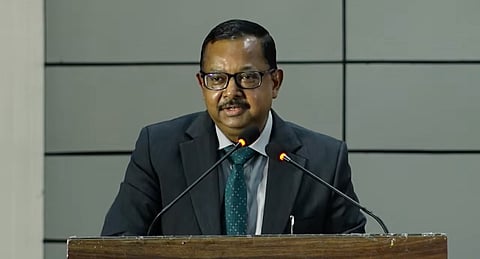
Justice Ujjal Bhuyan
Published on
5 min read
Listen to this article

Supreme Court Justice Ujjal Bhuyan on Saturday said public spaces for expressing divergent opinions are shrinking in India, pointing to the arrest of students for campus protests and delays in securing bail as he warned against the criminalisation of peaceful dissent.

Speaking on the role of courts in protecting constitutional freedoms, Justice Bhuyan said citizens were increasingly facing criminal action for exercising their right to protest. While courts were granting relief in many cases, he said it often came belatedly, and restrictive bail conditions risked discouraging legitimate dissent.

"It will not be an exaggeration to say that public space for expressing divergent opinion is shrinking in India. The right to express one's views and to demonstrate peacefully are fundamental freedoms of the citizens. Debate and dissent are the essence of democracy. Unfortunately, even normal activities are being criminalised," said Justice Bhuyan.

He observed that environmental protesters and students were increasingly facing criminal action.

"People who come to voice their anguish over environmental degradation, which is a reality, are chased away as if they are criminals. Students protesting in campuses are arrested and they do not get bail for 30-40 days. They are suspended for which they have to go to the court. It takes time," he noted.

He was addressing students at the Justice GP Singh 4th Memorial Lecture which was held at the National Law Institute University (NLIU) in Bhopal.

Relief from courts coming too late and with conditions

Justice Bhuyan said that while courts were granting relief, it often came too late and was accompanied by stringent conditions.

"These issues raise serious questions. Citizens are finding that though the courts are responsive and do grant bail, do grant relief, many a times it is belated. But it is the restrictive conditions which are imposed while granting bail that are causing the greatest concern. By such restrictive orders, are the courts indirectly telling the citizens or discouraging the citizens not to express their dissent?" he remarked.

Illustrating his point, he referred to the arrest of youngsters for consuming chicken biryani while breaking their fast on the banks of the Ganga. He observed,

"Take for example the case of a group of youngsters breaking their fast over the river Ganga by consuming chicken biryani. I am sure consuming chicken biryani is not an offence. It can't be an offence. There is no law prohibiting consumption of chicken over the Ganga river. They were arrested for that very reason and they had to remain in jail for 3 months."

He also referred to cases where individuals granted bail were directed not to attend public meetings, post on social media or leave the country.

Such conditions undermine fundamental freedoms, he said.

I am sure consuming chicken biryani is not an offence. It can't be an offence. There is no law prohibiting consumption of chicken over the Ganga river.
Justice Ujjal Bhuyan

Additionally, Justice Bhuyan recalled a Bombay High Court matter concerning a proposed demonstration in solidarity with Gaza. He said, he found it "very amusing" that a judge had questioned why people wished to protest over events outside India.

Universities must encourage questioning

Justice Bhuyan called on universities to encourage critical thinking instead of suppressing uncomfortable questions. He also asked for action to defend judicial independence and urged the judiciary to introspect if it wished to retain public trust.

On the role of universities, saying legal education should cultivate curiosity rather than conformity.

He said he had recently advised another National Law University to allow students to "be themselves" and encourage inquisitiveness instead of producing graduates who merely repeated what they were taught.

"I requested the university that allow the students to be themselves, encourage their inquisitiveness. Students should be encouraged to question. Unless we question, unless students question, they will only be parroting the texts, and they will become like a captive audience," said Justice Bhuyan.

He stressed that this questioning should extend to the judiciary itself, saying,

"Judgments, after being delivered, are required to be critically examined and criticised if necessary. Criticism of a judgment does not amount to criticism of a judge."

Referring to recent Supreme Court decisions, including the Economically Weaker Sections (EWS) reservation judgment, Justice Bhuyan said students should critically analyse judgments rather than accept them unquestioningly.

"If everybody goes and tells the judges, 'Sir, wonderful thing. Sir, what you say is excellent. Sir, you are a jurist,' then how will the system improve?" he asked.

Judgments, after being delivered, are required to be critically examined and criticised if necessary.
Justice Ujjal Bhuyan

He also expressed concern over reports that a National Law University had taken disciplinary action against a student for asking questions.

"Universities should be seen as encouraging students to engage in debate, to engage in uncomfortable questions. Comfortable question everybody can ask, everybody can answer; it's uncomfortable questions. And not seen as curbing or stifling such voices," he said.

Judicial independence and separation of powers

Justice Bhuyan also talked about the constitutional doctrine of separation of powers. He described it as the bedrock of democratic governance.

Using the analogy of a three-legged stool representing the legislature, executive and judiciary, he said,

"A three-legged stool would remain strong and effective if all the three legs remain strong independently. If there is asymmetry in alignment, there is a danger of the stool falling apart. The three are placed at equal distance. If we have two legs at one place, the stool will fall apart, it will fall down. This is the fundamental principle."

He recalled that former Chief Justice of India had said he joined the Rajya Sabha to bridge the gap between the judiciary and the executive.

"Therefore, when a former Chief Justice of India says, 'I am going to the Rajya Sabha to bridge the gap between judiciary and the Executive,' it is fundamentally wrong. It is completely wrong fundamentally. It goes against the principle of separation of powers. There is a fundamental fallacy in it."

Explaining the doctrine, he said it was designed to prevent concentration of power and ensure checks and balances among the three branches of the State. He noted that India's Constitution adopts a flexible rather than rigid model of separation of powers, with the Supreme Court occupying a unique position as the final interpreter of constitutional principles.

According to Justice Bhuyan, it ultimately fell upon the judiciary to protect the Constitution's essential features, including judicial independence, federalism, the rule of law and separation of powers.

When a former Chief Justice of India says, 'I am going to the Rajya Sabha to bridge the gap between judiciary and the Executive,' it is fundamentally wrong.
Justice Ujjal Bhuyan

Judiciary must earn public trust

Justice Bhuyan also called for greater judicial self-reflection, saying the judiciary derived its authority not from the "purse" or the "sword" but from the confidence of the people.

"For the judges and the judiciary to remain legitimate and to remain relevant, public perception is most crucial. It amazes me when we go on ourselves patting our own backs by saying how powerful the Indian Supreme Court is, how great Indian Supreme Court is... it is not for us to make that comment. It is for the citizens to assess. Perception of the citizens as to where the judiciary stands today, more particularly the Supreme Court, 75 years after we have become a Republic, is what matters," he noted.

He said introspection was essential for institutional improvement and that robust public debate, including criticism of the judiciary, strengthened rather than weakened democratic institutions. Both the judiciary and the media, he added, were foundational pillars of democracy and must complement each other.

Concluding on an optimistic note, Justice Bhuyan said he drew hope from the country's young lawyers and law students, whom he described as more committed to constitutional values than previous generations.

"I can certainly vouch for the fact that the new generation of lawyers and law students are far more committed to the rule of law and to the Constitution than my generation was. I see great hope in them," he said.

[Read Live Coverage]

Bar and Bench - Indian Legal news
www.barandbench.com