
Subscribe
Subscribe
- Latest Legal News
- News
- Law Firms
- Columns
- Interviews
- Law School
- Legal Jobs
- हिंदी
- ಕನ್ನಡ
There is a kind of professional growth no classroom or moot can prepare you for: stepping into an entirely unfamiliar legal ecosystem, a foreign arbitral institution, foreign governing law, foreign co-counsel, and a three-member tribunal drawn from three continents and being expected to deliver for your client.
That was Lexster Law's experience in an arbitration seated in Kigali, under the rules of the Kigali International Arbitration Centre (KIAC) and governed by Rwandan law. Our client supplied educational technology to a government body under a procurement contract worth several million dollars. What began as a payment dispute did not stay one. Over the years that followed, it drew in a contested performance guarantee, hard-fought battles over interim relief, a challenge to one of the arbitrators, and litigation running in parallel before the local courts.
This is a reflection on that journey and on what it means for an Indian firm to operate on the international stage.
One of the defining features of the matter was the tribunal itself: a president practising in Singapore, an arbitrator from the Malaysian arbitration establishment, and an arbitrator from the Nigerian bar. Advocating before European, Southeast Asian, and African legal sensibilities at once demands more than legal competence. It demands cultural fluency — an understanding of divergent arbitral traditions and the ability to craft submissions that land across all of them. Where the institutional rules were silent, the tribunal exercised its procedural discretion to build bespoke frameworks for the dispute, and our submissions had to anticipate that elasticity rather than rely on a fixed playbook.
The contract was governed by Rwandan law, a civil-law system with French-influenced traditions, far from the common-law framework Indian practitioners are trained in. Determining liability, damages, and discharge of obligations meant engaging genuinely with that legal order, not citing it superficially.
Operating inside that system meant building and directing a local capability. We engaged Kigali-based co-counsel for on-the-ground procedural execution and institutional familiarity with the KIAC, while strategy, case theory, and the conduct of the arbitration were led by us. International arbitration of this kind is rarely won by local knowledge alone or by foreign advocacy alone; it is won when a lead firm sets the strategy and orchestrates the right local resources to support it. That integration — not the local relationship in isolation — was the backbone of our approach.
The most intense phase was the fight over interim measures. Early in the proceedings, the counterparty moved to call our client’s performance guarantee and later facilitated the auction of the very equipment at the heart of the dispute by a third-party bank. We fought on several fronts at once: urgent applications under the institutional rules and the Rwandan arbitration statute; a succession of procedural orders restraining those steps; and responses to attempts to terminate those orders and to unseat the tribunal’s president.
When the equipment was auctioned in breach of the tribunal’s orders, we adapted rather than retreated, quantifying the resulting loss and folding it into the principal claim. The tribunal ultimately found the counterparty in breach of its own procedural orders, drew the appropriate inferences, and compensated our client accordingly.
The arbitration ran through some of the most disrupted years in recent memory. COVID-19 turned planned hearings in Kigali into deferred, rescheduled, and finally virtual proceedings; we managed time zones across Rwanda, Singapore, Malaysia, and Nigeria and kept the case moving through India’s own lockdowns.
In parallel, the counterparty took the dispute to the local commercial court to challenge the tribunal’s interim orders — and separately filed a formal challenge against the president, alleging bias. We worked through the interaction between the arbitral process and the national courts carefully and upheld the integrity of the tribunal throughout. The challenge was examined and dismissed; the tribunal’s impartiality was upheld without qualification.
The final award ran decisively in our client’s favour — a multi-million-dollar recovery across principal and contractual interest, further compensation for the loss of the auctioned equipment, and a full award of costs against the counterparty on the costs-follow-the-event principle. The tribunal recorded that our client was, in its words, the clearly prevailing party.
There is a persistent assumption that international arbitration, especially in Africa and other emerging seats, is the preserve of large, Western-headquartered practices. This matter is one data point against it.
We brought the full weight of Indian advocacy — rigorous analysis, disciplined document management, and composure under pressure to bear across three continents, inside an unfamiliar legal system, and secured a decisive result. The matter was led for our client by Mr. Ciccu Mukhopadhaya and Mr. Saurav Agrawal, whose advocacy across the interim-relief battles, the merits, and the procedural skirmishes was central to the result. A few lessons we carry forward:
Local resources matter — but they deliver most when directed within a coherent, lead-counsel-driven strategy.
Procedural agility — from interim relief to virtual hearings to arbitrator challenges — matters as much as a perfectly drafted memorial.
Institutional knowledge is earned through investment in research, preparation, and people.
Governing law is never a formality; a foreign legal order rewards genuine engagement and punishes superficiality.
Indian firms are ready. The era of confinement to domestic arbitration is behind us.
This matter reaffirmed something we hold deeply: geography is no longer a limitation in international dispute resolution. Whether the seat is Mumbai, Delhi, Geneva, Singapore, London, Maputo or Kigali, the standard of advocacy should not change. The experience has since proved its worth well beyond Rwanda. The instincts sharpened in Kigali — reading an unfamiliar procedural order, integrating local counsel under a single strategy, holding a line through interlocutory turbulence — have carried directly into our work on cross-border disputes seated in Maputo, Laos, Nairobi, Doha, and elsewhere. As African and other emerging states grow in prominence and institutions like the KIAC continue to mature, we expect to see far more cross-border workflow through them, and we intend to be part of it.
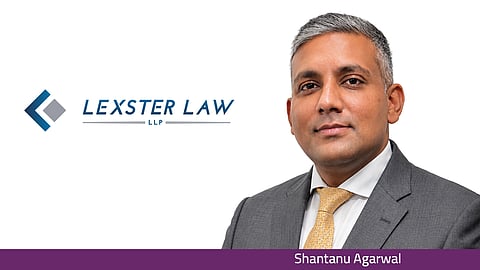
About the author: Shantanu Agarwal is the Managing Partner of Lexster Law.
Disclaimer: The opinions expressed in this article are those of the author(s). The opinions presented do not necessarily reflect the views of Bar & Bench.
If you would like your Deals, Columns, Press Releases to be published on Bar & Bench, please fill in the form available here.