
Subscribe
Subscribe
- Latest Legal News
- News
- Law Firms
- Columns
- Interviews
- Law School
- Legal Jobs
- हिंदी
- ಕನ್ನಡ
Every year, professional services firms announce marquee lateral hires with great optimism. Law firms welcome celebrated partners. Consulting firms recruit industry leaders. Accounting firms attract specialists with deep client relationships. Executive search firms hire rainmakers with impressive networks.
The expectation is familiar. The new hire will bring clients, build a practice and accelerate growth.
Sometimes it works spectacularly. Often, it falls short of expectations.
The problem, however, is rarely the individual. It is the assumption that hiring talent is, by itself, a growth strategy.
A senior lawyer should not be hired to discover the firm's growth strategy. The lawyer should be hired to accelerate a strategy that already exists.
A lateral appointment cannot compensate for the absence of a clear market strategy, institutional business development, collaborative partnerships or a culture that supports growth. These are leadership responsibilities that must exist long before the appointment is made.
A successful rainmaker rarely succeeds because of individual capability alone. Success is built over years through the support of a respected institution, a strong brand, collaborative partners, high quality execution teams and long standing client relationships. When firms hire the individual, they often assume those institutional advantages will transfer automatically. They rarely do.
This also explains why accomplished business development leaders and client development professionals from leading firms or the Big Four do not always replicate the same success in smaller organisations. Their capability has not diminished. The platform around them has changed.
Consider two contrasting examples. A senior client development leader moved from a Big Four firm to a leading Tier 1 law firm and flourished because the firm already had the scale, execution capability, leadership support and market positioning needed to convert relationships into growth. In another instance, a highly accomplished Head of Policy and Regulatory Affairs from a listed multinational corporation took over the leadership of a boutique law firm with the mandate as Practice Development. Despite exceptional credentials and who’s who in contact list, the transition struggled because the firm's institutional platform was not equipped to support mandates of a similar scale and complexity. Capability remained constant. The platform did not.
Across professional services, senior professionals are expected to perform two full time roles simultaneously. They are expected to build markets, develop relationships, create visibility and generate new opportunities while also leading engagements, managing teams, supervising quality and delivering exceptional client service.
Both are critical. Both create value. But both demand time.
Professional services firms often expect the same individual to build tomorrow's client relationships while simultaneously delivering today's work. In reality, growth and execution compete for the same finite resource: time.
Business development does not create revenue first. It creates relationships first. Revenue is the outcome.
Yet many firms measure business development as though it were an execution function. Monthly revenue expectations and immediate commercial pressure often leave little room for the patient relationship building that professional services demand. Business development requires accountability, but it also requires investment, trust and time.
In reality, business development has a gestation period. Trust takes time. Credibility takes time. Relationships take time. It may take six months, sometimes much longer, before meaningful commercial outcomes begin to emerge.
Yet many institutions begin evaluating the success of a lateral long before the business development cycle has had an opportunity to mature.
The question every Managing Partner should ask is simple:
Does the firm have the patience to wait for the fruits of business development?
Most firms devote significant effort to identifying and recruiting senior talent. Far less attention is given to what happens after the appointment is announced. The incoming partner is expected to build internal relationships, understand the firm's culture, generate new business, lead delivery and integrate into existing teams almost immediately.
That is an unrealistic expectation.
The responsibility for success should not rest solely on the incoming lawyer. The Managing Partner, practice leaders and the business development team must jointly own the integration.
Introducing the lateral to key clients, encouraging collaboration across practices, aligning execution teams and positioning the new capability in the market are leadership responsibilities. Integration is not an HR process. It is a commercial strategy.
When a lateral hire fails, firms often question the individual's ability to originate business.
They should equally question whether the institution provided the platform, relationships, team and time required for that individual to succeed.
Was the partner given sufficient time to build relationships before being measured on revenue? Were existing teams encouraged and incentivised to collaborate? Did leadership actively sponsor the integration? Or was the lateral simply expected to hit the ground running?
Professional services firms do not grow through individual brilliance alone. They grow when institutions create environments where talented professionals can succeed together.
Hiring a senior lawyer is an investment in capability. It is not a substitute for strategy.
A lateral hire can accelerate growth, but only when the firm has already built the leadership, systems, culture and patience required to sustain it.
Perhaps the real question is not whether a lateral can build a practice.
It is whether the institution has already built the conditions in which that practice can succeed.
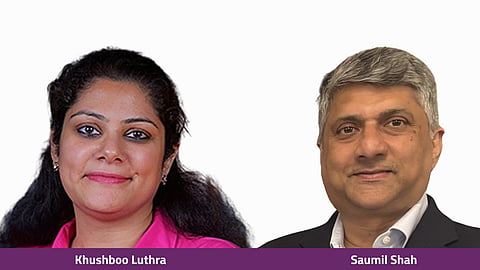
About the authors: Khushboo Luthra is the Founder of METPRO Advisors and LEXEL LegalTech Advisors.
Saumil Shah is a seasoned strategy and growth advisor.
Disclaimer: The opinions expressed in this article are those of the author(s). The opinions presented do not necessarily reflect the views of Bar & Bench.
If you would like your Deals, Columns, Press Releases to be published on Bar & Bench, please fill in the form available here.