Present system favours candidates who can afford coaching: CLAT reform panel co-convener Prof Tarunabh Khaitan

Prof Khaitan called for reliable question-setting, proper internal review and strict confidentiality in how the exam is conducted.
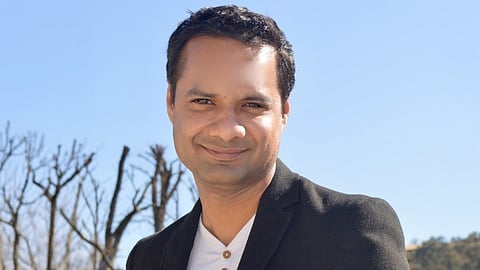
Prof. Tarunabh Khaitan
Published on
3 min read
Listen to this article

The Common Law Admission Test (CLAT) rewards knowledge that can be drilled through coaching and disadvantages those who cannot afford it, according to Prof Tarunabh Khaitan, co-convenor of the Expert Committee that reviewed the conduct of the entrance exam.
The Consortium of National Law Universities (NLUs) published the Committee's report on Tuesday night but decided against changing the syllabus or pattern for CLAT 2027 which is scheduled tentatively for December this year.

The Consortium has decided to hold the recommendations, including the shift to aptitude-based testing that Prof Khaitan describes below, for a separate committee that will examine them ahead of CLAT 2028.

This came more than 5 months after the Committee's report was submitted on February 2. A letter attached with the report had urged the Advisory Board to publish it "at the earliest opportunity" and had said that its proposed 2027 rollout was feasible only if the public got access to the report soon after. 

Prof Khaitan, Chair of Public Law at the London School of Economics, heads the Committee constituted by the Consortium's Advisory Board on September 15, 2025, alongside Prof Dev Saif Gangjee of the University of Oxford.

The report draws a distinction between broad access to legal education, which was outside its mandate, and the narrower question of whether the CLAT's own design unfairly favours some candidates.

Speaking to Bar & Bench, Prof Khaitan explained how the Committee found that fixing quality and widening access had a partially common answer - an assessment that tests legal aptitude rather than acquired knowledge.

"A recurring concern in our public consultations was access to legal education for candidates from disadvantaged backgrounds. Although our terms of reference focussed on improving the quality of the exam rather than access to it, we found that both problems have - at least partially - a common answer: an assessment that tests legal aptitude rather than acquired knowledge," he said.

Prof Khaitan then discussed why he considers a test of aptitude fairer than a test of knowledge. He explained,

"Aptitude for legal training, especially logical reasoning and critical thinking, is a much better criterion for admission than general or legal knowledge. The present CLAT, by rewarding knowledge that can be drilled in advance, tends to favour candidates who can afford sustained coaching; the fees such coaching commands are themselves a significant barrier for students from less privileged backgrounds. Ability to think is harder to coach for and gives a fighting chance to candidates who cannot pay for coaching. I say this partly from my own experience: as a seventeen-year-old, my family could not afford any coaching. Had it been essential in my day, I would not have secured a place at an NLU."

Prof Khaitan then moved to the Committee's second major concern - that the exam's administration must be made more professional and transparent. He proposed a mechanism - ring-fencing CLAT's own revenue to help pay for it.

"Our second main concern was that the exam should be administered professionally. It is a question of fairness, competence and integrity: reliable question-setting, proper internal review and strict confidentiality in how the paper is produced and the exam conducted. The system must credibly guarantee a fit-for-purpose paper, administered and assessed fairly. Ring-fencing the considerable CLAT income towards professionalising the exam infrastructure (and allocating any remainder to student scholarships) should be able to secure an exam that deserves the trust of the candidates and inducts the best minds from every stratum of our plural society into India's legal profession and academy. The report is offered in this constructive spirit and I look forward to the debate I hope it will generate," he stated.

Bar and Bench - Indian Legal news
www.barandbench.com