

The Delhi High Court ruled on Friday that the President of India can nominate politicians to the Rajya Sabha under the category of 'persons possessing special knowledge or practical experience' laid down by Article 80(3) of the Constitution.
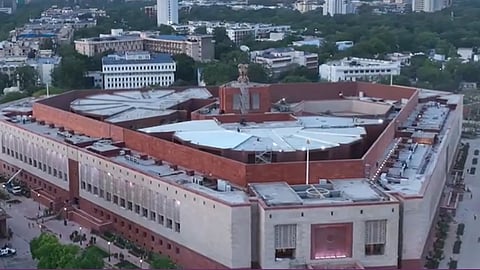
Article 80 deals with the composition of the Council of States (Rajya Sabha) and provides that it will consist of 12 members nominated by the President. Article 80(3) states that the persons nominated by the President “shall consist of persons having special knowledge or practical experience in respect of such matters as the following, namely literature, science, art and social service”.
A Division Bench of Chief Justice Devendra Kumar Upadhyaya and Justice Tejas Karia held that the discretion vested in the President extends to the nomination of persons possessing special knowledge or practical experience in the fields expressly mentioned in Article 80 or in cognate fields related to those expressly mentioned.
The Bench further observed that the constitutional text of Article 80 neither prescribes any specific procedure for identifying persons to be nominated nor does it furnish any further definitional elaboration of the categories enumerated in Article 80(3) of the Constitution of India.
“This legislative design indicates an intention to confer a broad discretion, subject to the constitutional requirement that the person nominated must possess special knowledge or practical experience relatable to the fields contemplated by the provision,” the Court stated.
It underscored that merely because a nominated member has previously contested elections does not, by itself, render such a person ineligible for nomination under Article 80(3).
“As already observed, the categories specified in Article 80(3) of the Constitution of India are broad in their amplitude and do not exclude a person with a political background, provided such person otherwise possesses special knowledge or practical experience relatable, inter alia, to the field of social service,” the Court said.
The Bench rendered these findings while rejecting a public interest litigation (PIL) petition challenging the nomination of BJP leader C Sadanandan Master to Rajya Sabha.
The PIL was filed by advocate and social activist Subhash Theekkadan to quash Sadanandan Master’s nomination to the Upper House. He argued that Sadanandan Master lacked the “special knowledge or practical experience” required under Article 80(3), which permits the President to nominate individuals with expertise in literature, science, art, or social service.
However, the Court observed that the constitutional provision grants wide discretion to the President and that the categories mentioned in Article 80(3) are “illustrative and not exhaustive.”
Advocates Vineeth S Varkalavila and MP Raju appeared for the petitioner.
Central government was represented by Additional Solicitor General (ASG) Chetan Sharma, Central Government Standing Counsels (CGSCs) Manisha Agrawal Narain and Ankur Mittal along with advocates Amit Gupta, Ipshita Dutta, Rabaica Jaishwal, Naman, Shubham Sharma and Yashwardhan Sharma.
[Read Judgment]