
Subscribe
Subscribe
- Latest Legal News
- News
- Law Firms
- Columns
- Interviews
- Law School
- Legal Jobs
- हिंदी
- ಕನ್ನಡ
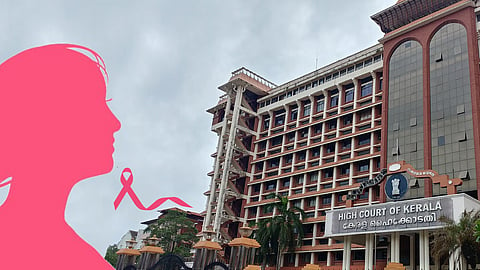
The Kerala High Court on Monday suggested that the Central government could invoke its powers under the Patents Act, 1970, to improve access to heavily priced patented breast cancer medicines.
Justice Harisankar V Menon observed that Section 100 of the Act would include the entitlement of the government to use a patent or invention for manufacturing the medicine covered by the patent, and sell the same to a person, including a needy patient, on a non-commercial basis.
"Section 100 is required to be invoked in circumstances where the Government is required to intervene, such as an instance where the medicine manufactured on the basis of a patent is being sold at an exorbitant price," the Court ruled.
The government is required to collate the required data and arrive at a decision as to whether a particular medicine is affordable or not. On that basis, the government has to proceed in accordance with Section 100 of the Act, if such intervention is found necessary, the judge held.
Section 100 empowers the Central government to use compulsory licenses in circumstances such as national emergency, extreme emergency or public, non-commercial use, enabling others to manufacture a patented product without the patent holder's permission.
Detailed order awaited.

The case before the Kerala High Court involved the issue of whether the Central government needs to invoke its powers under the Patent Act, 1970, to improve access to expensive patented medicines, particularly drugs used for treating breast cancer.
The case centred around Ribociclib, a patented breast cancer drug manufactured by Novartis, and Palbociclib, another breast cancer drug whose patent expired and is available from several manufacturers at a significantly lower price.
The question before the Court eventually turned to whether Palbociclib could be used as an alternative drug to treat the cancer.
The Court had earlier observed that if Palbociclib could be used for the same treatment, then prima facie, there may be no need for the Central Government to invoke compulsory licensing provisions under Sections 92 or 100 of the Patents Act.
The proceedings trace its origin to a petition filed in June 2022 by a cancer patient in need of life-saving drugs that were flagged for being exorbitantly expensive.
The petitioner had sought directions for affordable access to Ribociclib, a patent drug manufactured by Novartis, which currently costs about ₹78,468.75 per month.
The petitioner had contended that the drug remained expensive and inaccessible for many patients due to the patent protection which prevented other manufacturers from producing or selling the medicine at a lesser price without the consent of the patent holders.
In September 2022, the petitioner succumbed to her illness.
On September 16, 2022, the Court decided to continue considering the matter as a suo motu case under the title 'In Re Exorbitant Pricing of Life Saving Patented Medicines.'
Advocate Maitreyi Sachidananda Hegde served as amicus curiae.
[Live Coverage]