Implicated to satisfy public anger: Tahir Hussain moves Delhi HC against conviction for IB officer murder

Hussain has argued that the investigation against him has been tainted since the very beginning, aimed at implicating him in order to satisfy public anger.
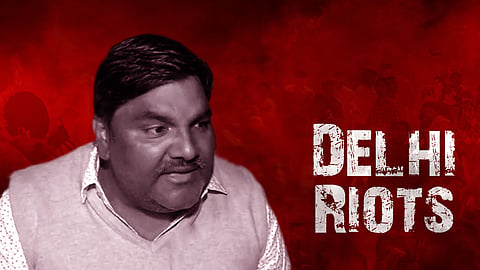
Tahir Hussain and Delhi Riots
Published on
2 min read
Listen to this article

Former Aam Aadmi Party (AAP) councillor Tahir Hussain has approached the Delhi High Court against his conviction and life sentence for the murder of Intelligence Bureau (IB) officer Ankit Sharma during the Delhi Riots of 2020. 
A division bench of the High Court is likely to hear Hussain's appeal next week.

Hussain has argued that the investigation against him has been tainted since the very beginning and was aimed at implicating him in order to satisfy public anger.

According to his appeal,

"The FIR is ante-dated and ante-timed, no material investigation was carried out until 06.03.2020, i.e. till after the Appellant was arrested in another case, witnesses have been planted, statements of genuine eyewitnesses manipulated and the actual perpetrators have not been brought to book."

Investigation against me has been tainted since the very beginning, aimed at implicating me in order to satisfy public anger.

Tahir Hussain

The FIR related to Sharma's death was lodged on February 26, 2020, by his father Ravinder Kumar. He alleged that protests against the Citizenship Amendment Act (CAA) at Chand Bagh Pulia had witnessed violence.

Kumar accused then councillor Tahir Hussain and his associates of pelting stones, using petrol bombs and firing from his office. After Ankit went missing on February 25, his body was recovered from a nearby drain, prompting Ravinder to suspect Hussain and his associates.

Additional Sessions Judge (ASJ) Parveen Singh of the Karkardooma Court on July 13 convicted Hussain and four others - Nazir, Asim, Javed and Anas.

They were held guilty for the offences under Sections 302 (murder), 188 (disobedience to an order promulgated by a public servant), 153A (promoting enmity between groups), 147 (rioting), 148 (rioting armed with a deadly weapon), 149 (unlawful assembly), 365 (kidnapping or abducting with intent to secretly and wrongfully confine a person) of the Indian Penal Code (IPC).

On July 31, the Court awarded them life imprisonment for these offences. Notably, the Delhi Police had sought the death penalty for them.

In his appeal, Hussain has argued that the trial court acquitted him of criminal conspiracy, abetment and exhortation for public mischief, but convicted him with the aid of Section 149 IPC, based primarily on his alleged membership of an unlawful assembly.

According to his plea, even though the FIR was based on Ravinder Kumar's complaint, he "completely disavowed the complaint on record" and made no allegations against him (Hussain).

The appeal also challenges the prosecution’s reliance on five witnesses to establish Hussain’s presence in the alleged unlawful assembly. He has also disputed the evidence of two brothers (cited as witnesses by the prosecution), alleging that they were “planted” as chance witnesses and that there were contradictions in their accounts regarding their presence at the spot.

Hussain's appeal was filed through advocates Rajiv Mohan, Tara Narula, Sonal Sarda and Shivangi Sharma.

Bar and Bench - Indian Legal news
www.barandbench.com