
Subscribe
Subscribe
- Latest Legal News
- News
- Law Firms
- Columns
- Interviews
- Law School
- Legal Jobs
- हिंदी
- ಕನ್ನಡ
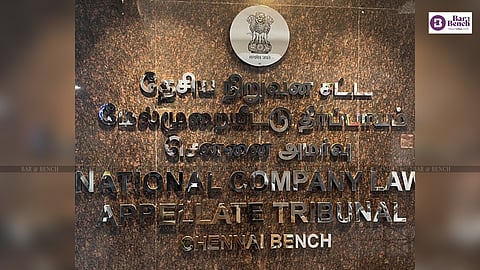
The Chennai bench of the National Company Law Appellate Tribunal (NCLAT) on Thursday strongly criticised Senior Advocates, particularly those engaged from Delhi, for prolonging arguments and monopolising judicial time, observing that their hefty fees and professional standing cannot justify making other litigants wait or forcing judges to work on Saturdays.
The Bench of Justice N Seshasayee (Judicial Member) and Jatindranath Swain (Technical Member) expressed displeasure over lengthy arguments by senior lawyers and warned that it would impose strict time limits if the practice continued.
The Court said that the hefty fees charged by "superstar" lawyers and professional standing cannot justify making other litigants wait.
"You cannot have the screen space merely because you are a superstar of the Bar and you have been paid heavily. That's your problem and your client's affordability. It has got nothing to do with us," the Bench remarked.
The tribunal also took exception to how judges were being made to work on Saturdays because of prolonged arguments by lawyers.
"Like this Saturday, we are going to work. Who pays us? None. Why should we work?" the Bench asked.
The tribunal specifically referred to lawyers engaged from Delhi, observing that they must be mindful of the time available for arguments.
It warned that unless advocates exercised restraint, the Bench would prescribe an outer time limit for submissions, irrespective of the stature of the counsel appearing.
"And especially lawyers from Delhi, whoever who engage in the lawyers from Delhi, you have to move forward. Otherwise, I will give an outer time limit within which let God come to argue for any of the parties, we worry least," the Bench said.
The observations came against the backdrop of mounting pressure on the NCLAT to accommodate matters requiring priority hearings.
On October 27, the Supreme Court had criticised the NCLAT's Principal Bench in New Delhi for failing to hear an appeal despite its request for expedited consideration.
In Sona Bansal v. Vashisht Kumar Goyal, a Supreme Court Bench of Justices JB Pardiwala and K Vinod Chandran had said that requests made by the apex court to courts and tribunals must be treated as binding directions. It warned that non-compliance would be viewed seriously.
The Chennai Bench on Thursday highlighted the pressure created by Supreme Court-directed cases, observing that several such matters were already pending before it.
"Please understand, there are about more than half a dozen Supreme Court-directed cases which people think that the entire NCLAT Chennai is running only for those five, six cases," the Bench remarked.
It also criticised the tendency of advocates to consume the entire duration allotted for hearings.
"Without an outer time limit, people think that entire three days, if I allot, it is only for the appellant, and take all the days," the Bench observed.
The tribunal described the practice as "advocatorial irresponsibility" and asked lawyers appearing virtually to convey its concerns to their instructing counsel.
It also asked why judges should be required to work additional hours, including Saturdays, merely because advocates failed to conclude their arguments within a reasonable time.
The tribunal said prolonged arguments disrupted its schedule and prevented other litigants from securing hearing time.
"We are not able to allot time. We are not able to plan our days, and the entire things get sabotaged," it observed.
The Bench also questioned why experienced advocates required several days to convince judges when their principal arguments could be advanced within a few hours.
"We are intelligent enough. We have been here in the business for last 40 years. Can't we understand? If I don't understand, I am going to ask for clarification," it said.
The issue resurfaced again when a lawyer sought accommodation for Senior Advocate who was engaged in proceedings elsewhere.
Although the Bench agreed to accommodate him in the afternoon, it cautioned against unnecessarily lengthy submissions.
Using a cricket analogy, the tribunal observed that merely because Sunil Gavaskar adopted a particular batting style, every other batsman was not required to follow the same approach.
"The team that has a Rahul Dravid also had a Sehwag. So you can also play the Sehwag. Need not match the time taken by the other side," the Bench remarked.
It urged the Senior Advocate to use his experience and expertise to present arguments efficiently rather than matching the time consumed by opposing counsel.
The tribunal also criticised lawyers who became excessively absorbed in their own oratory.
"Those who are carried away by their eloquence literally [are] consumed by their eloquence. They start loving their own eloquence. Please push forward," the Bench remarked.
It clarified that advocates were not being prevented from advancing their arguments but must remain conscious of the limitations of judicial time.
The Bench further observed that attempts to regulate arguments sometimes created an impression that judges were being discourteous towards lawyers.
The tribunal also took exception to lawyers frequently invoking the principle that the bar and bench were two sides of the same coin, while failing to appreciate the pressure placed on judges.
It pointed out that even matters listed among the first 10 or 12 items sometimes remained unheard until noon because earlier cases consumed excessive time.
