
Subscribe
Subscribe
- Latest Legal News
- News
- Law Firms
- Columns
- Interviews
- Law School
- Legal Jobs
- हिंदी
- ಕನ್ನಡ
On July 24, 2026, Justice Amit Bansal of the Delhi High Court delivered a judgment that may likely be a foundational stepping stone towards the establishment of an analytical framework on how the Indian judiciary could approach copyright disputes involving the training of large language models (LLMs).
In ANI Media Pvt. Ltd. v. Open AI Opco LLC [CS(COMM) 1028/2024], the Court declined to grant ANI Media an interim injunction against OpenAI, holding that process of training LLMs underlying ChatGPT undertaken by Open AI using stored literary work of ANI falls, prima facie, under “private or personal use, including research” as provided in Section 52(1)(a) of the Copyright Act, 1957, and that ChatGPT’s outputs did not amount to substantial reproduction of the news articles of ANI.
While the current pronouncement is only an ‘interim order’ and is likely to be appealed, its reasoning on territorial jurisdiction, concept of fair dealing including private or personal use, and non-infringement of copyright will shape how AI developers, publishers and Indian courts deliberate about training data and generative outputs going forward.
ANI instituted a suit for copyright infringement against OpenAI on the basis of two primary arguments. Firstly, ANI argued that OpenAI copied and stored ANI’s copyrighted news articles for training the LLMs without any license; and secondly, that ChatGPT substantially reproduced portions of ANI’s copyrighted news articles while generating responses to user prompts.
On the other hand, OpenAI countered ANI’s arguments on several fronts including that: (i) the Delhi High Court has no jurisdiction to entertain this suit since OpenAI servers and training activity were located outside India; (ii) ANI’s use of open accessible content for training its LLMs was non-infringing and amounted to ‘private’ use under Section 52(1)(a); and (iii) ChatGPT’s Retrieval-Augmented Generation (RAG) based responses were distinct summaries or paraphrased responses rather than substantial copies of ANI’s articles.
Territorial jurisdiction
OpenAI argued that training of its LLMs occurred entirely abroad and that applying the Indian Copyright Act to it would be an impermissible extraterritorial extension of Indian law. The Hon’ble Court rejected this contention and held that since ANI’s principal place of business is located in Delhi and OpenAI also actively offers and monetises its services in India. Accordingly, it observed that Indian courts possess territorial jurisdiction under both Section 62(2) of the Copyright Act and Section 20 of the Code of Civil Procedure to entertain this suit.
The Court further held that since the outputs generated by ChatGPT were consumed and reproduced within India, and that OpenAI actively targeted Indian users, the location of servers and acceptance of OpenAI’s terms of use could not be used to insulate an entity from Indian copyright law when the effects of the alleged infringement were felt domestically. Hence, the place of adjudication of disputes provided under the ChatGPT’s Terms of Use (as San Francisco, USA), was not considered relevant. Thus, the Court clarified here that entities cannot evade the applicability of the Indian Copyright Act merely by locating their infrastructure outside India while their products and services are offered within India.
Fair dealing under Section 52(1)(a): A broad interpretation
The most significant aspect of the judgment was to examine the applicability of Section 52(1)(a), which exempts fair dealing for “private or personal use, including research” from infringement.
In particular, the Court rejected two threshold objections (as raised by ANI).
As regards the ANI’s submission that commercially operated AI systems are automatically excluded from the exception (of fair dealing), the Court held that Section 52(1)(a) does not impose a mandatory requirement that the use of the copyrighted work should be non-commercial in nature. Specifically, the Court held that merely because OpenAI’s use is commercial would not mean that it would not be entitled to take the exemption of fair dealing, as the requirement of non-commercial use is conspicuously absent in Section 52(1)(a).
Secondly, on the aspect of whether ‘private’ use could extend beyond individual human beings to an entity/corporation, the Court held that (temporary) storage of ANI’s works by OpenAI for training its LLMs qualified as ‘private’ use, including ‘research’. Notably, the Court mentioned that the term “private” cannot be confined to an individual and can apply to a closed group or a company. While the expression “personal” may be confined to individual persons, the term “private” would include other private entities, including private companies.
Having found the purpose test satisfied, the Court also applied a fairness test to assess fair dealing in the AI/LLM context, focusing on: (a) whether OpenAI’s use of the ANI’s copyrighted works is limited to training LLMs; (b) whether that use causes economic competition or actual/potential harm to the ANI’s legitimate commercial interests; and (c) whether the functions performed by OpenAI serve broader public interests such as research, innovation and dissemination of knowledge.
Further, the Court added a broader interpretive point that laws must be interpreted to take into account technical advancements, as research is no longer confined to humans, as it’s now being done through Artificial Intelligence as well. Therefore, the acts of ‘research’ cannot be confined to acts of human beings alone and the same would extend to machine learning as well.
No Prima Facie Copyright Infringement owing to ChatGPT’s outputs
As regards the ANI’s contention that ChatGPT’s responses constituted prima facie infringement of its copyrighted articles, the Court examined the specific examples ANI had pleaded and found that none of them predated the cut-off dates of OpenAI’s training data, which essentially meant that ANI could not establish that the disputed articles were in fact used by Open AI to train its LLMs.
Further, the Court determined that ANI has failed to satisfy that any memorization and regurgitation of ANI’s original literary works has happened through the responses/outputs generated through OpenAI’s use of the RAG technique and hence, there is no case of copyright infringement under Section 51 of the Copyright Act.
Legal significance and implications
It is the first time in India that a court has articulated a structured, factor-based test for assessing fair dealing exemption in the AI/LLM context, and this order is likely to be used by other courts and litigants in future disputes involving usage of copyrighted text by AI systems.
Firstly, the Court has adopted a technologically neutral approach to statutory interpretation as the judgment acknowledges that copyright law must evolve to accommodate emerging technologies while preserving its underlying objectives.
Secondly, the judgment appears to significantly strengthen the position of AI developers in India. With the refusal to grant an interim injunction and the recognition of AI training as potentially falling within ‘research’, the Court has provided a very broad interpretation of Section 52 of the Act, thereby providing some amount of relief to developers of AI products.
Thirdly, the order raises important commercial implications for content licensing markets. Subject to the final judgment of the Court in this case, this order makes it considerably difficult for publishers/authors to compel AI platforms to enter into licensing arrangements for the purpose of training of LLMs of AI platforms.
Being an interim order, the Court’s findings are explicitly prima facie and interlocutory as several fundamental questions remain unanswered (since it would require further deliberation). The Court has expressly left open issues relating to memorisation of copyrighted works, reproduction through Retrieval-Augmented Generation, whether AI training on copyrighted material is lawful, and the precise limits of fair dealing under Section 52, which remain to be conclusively determined at the stage trial. For now, this decision effectively reduces the pressure on AI platforms to enter into licensing arrangements with Indian publishers and the final judgment is likely to play a defining role in shaping India’s AI copyright framework.
Given that OpenAI faces parallel litigation in multiple jurisdictions around the world, this decision is likely to be studied closely both within India and abroad as an early judicial articulation of how the doctrine of fair dealing can be adapted to the realities of generative AI. Consequently, content businesses, AI developers and policymakers are expected to monitor the litigation proceedings and the consequent evolving jurisprudence closely.
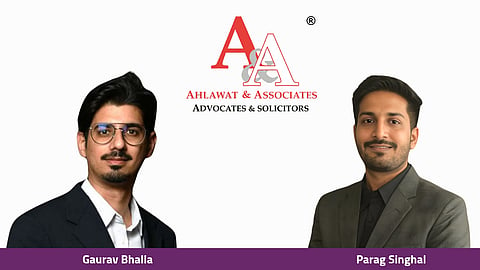
About the authors: Gaurav Bhalla is a Partner and Parag Singhal is a Senior Associate at Ahlawat & Associates.
Disclaimer: The opinions expressed in this article are those of the author(s). The opinions presented do not necessarily reflect the views of Bar & Bench.
If you would like your Deals, Columns, Press Releases to be published on Bar & Bench, please fill in the form available here.