
Subscribe
Subscribe
- Latest Legal News
- News
- Law Firms
- Columns
- Interviews
- Law School
- Legal Jobs
- हिंदी
- ಕನ್ನಡ
In the early days of the Competition Commission of India, hearings did not always look like hearings. There was no great courtroom theatre. No raised dais, no ritualised distance, no excessive formality. Lawyers, Commission members, officers and economists often sat around a conference table, working through facts, economics and law in a manner that was sometimes untidy, often searching, but almost always sincere.
For a young competition lawyer, it was a wonderful room to be in. The law was new, the regulator was new, and the bar was in its infancy. Many of us had only a few years of practice behind us, or had moved into competition law from other fields. Everyone was learning. There was curiosity on all sides: about due process, market definition, evidence, economics and institutional design.
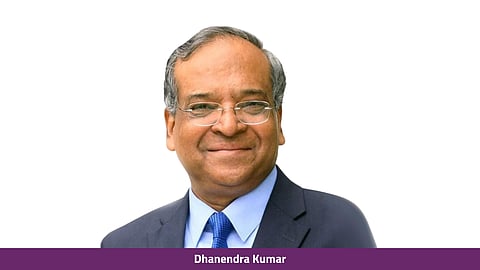
At the centre of that room sat Dhanendra Kumar.
He was the first Chairperson of the Competition Commission of India when the law was first enforced. That alone would have secured him a place in the history of Indian economic regulation. But titles do not fully explain a legacy. His real contribution lay in how he occupied that office. He brought to it calmness, kindness, practicality and a deep instinct for consensus.
The Commission then sat in a bench of seven. Questions could fly from any direction. A submission could be interrupted by a query on law, then by one on fact, then by a sharp turn to antitrust economics. The room could become animated very quickly. Mr Kumar had a way of bringing it back. In his characteristic voice, with his gentle “dekhiye”, he would quieten the moment, simplify the question, and return the discussion to the point that mattered.
That was his gift. He made difficult issues less grand, less intimidating and more capable of solution.
He also made young lawyers feel heard. That was no small thing. The Competition Act was still settling into practice. The bar was still discovering how to argue before a competition regulator. To appear before the CCI in those years was like sitting in a classroom of shared learning. And, Mr Kumar allowed that learning to happen with dignity. Pointing out a defect in an investigation report was not treated as an affront. Filing a writ petition or an appeal was not seen as an act of hostility; it was accepted as part of the process. A regulator confident in its purpose could afford to listen.
That approach mattered. It helped create a culture in which disagreement did not have to become disrespect. It also helped build a generation of competition lawyers who understood that advocacy before a regulator was not merely about winning a point; it was about helping a young institution arrive at the right answer.
His greatest institutional legacy may be the introduction of merger control in India. It is easy now to forget how uncertain that moment was. Businesses were anxious. Lawyers were cautious. Government had to be persuaded. Industry had to be heard. The bar had to be involved. The regulator had to design a system that protected competition without paralysing corporate transactions.
Mr Kumar’s method was characteristically collaborative. A group from the bar was called into the CCI conference room. The message was simple: the Commission wanted to introduce merger control and needed help in shaping the combination regulations. The goal was not to copy another jurisdiction blindly. It was to create a regime that was business-friendly, but faithful to the regulatory objectives of the Competition Act.
We were asked, in effect, to drop everything else for the next few days, sit in that room, and not leave until there was at least a workable draft. Much hard work followed, both from the Commission and the bar. But Mr Kumar did not stop with the drafting. He went out and built consensus. He spoke to industry. He spoke to government. He spoke to stakeholders who needed to believe that this new regime would be firm, but fair.
Like most new laws and regulations, the merger-control regime was not perfect at birth. But it worked. More importantly, the dialogue that preceded it created a habit of engagement. That habit has allowed Indian merger control to evolve constantly through regulations, guidance, practice and conversation. That culture of improvement owes much to him.
His second great contribution was more dramatic. The DLF decision, with a penalty of ₹630 crore, made headlines across the country. Suddenly, India had woken up to a new regulator. This was not the old MRTP regime. This institution had teeth.
The debate over DLF will continue. Was it correctly decided? Was it truly a competition law case, or a consumer dispute framed as one? Should a competition regulator have entered that terrain at all? Reasonable people may disagree. But no one can dispute its effect. It cemented the CCI’s position as a serious market regulator. It also caused real estate developers across India to look again at their builder-buyer agreements. Whether out of conviction, caution or fear, they came to competition lawyers and asked whether their documents could survive scrutiny. In that sense, the decision changed behaviour.
Mr Kumar understood that enforcement and legitimacy had to grow together. A regulator could not merely command respect; it had to earn it. It had to be accessible without being weak, firm without being brittle, and independent without being aloof. He helped the CCI find that balance in its earliest years.
After demitting office, he did not step away from competition law. He continued to write, speak and advise on competition policy. He chaired the committee on the National Competition Policy, where again his instinct was to bring people together, hear them out, and get things done. Even at 80, he seemed to have much more to contribute. His interest in the subject remained alive, practical and generous.
For many of us at the competition bar, however, his memory will not rest only in regulations, orders or policy documents. It will rest in smaller things: the calm voice in a crowded hearing room; the willingness to listen; the refusal to treat challenge as disrespect; the belief that institutions are built by taking people along.
On the day he passed away, he sent me a congratulatory message on my completing 20 years at the bar. I did not get a chance to reply. The next morning, when former CCI member Ms Sangeeta Verma messaged me about his passing, I felt the sharp guilt that comes with an ordinary human omission made permanent by death. Life can be cruel that way.
But perhaps the better response is gratitude.
Thank you, sir, for what you did for competition law in India. Thank you for what you did for the Competition Commission of India. Thank you for what you did for the competition bar. And thank you for your kindness, encouragement and blessings.
For a new regulator, he provided steadiness. For a new bar, he provided confidence. For a new area of law, he provided a beginning.
Karan Singh Chandhiok is a lawyer and the acting Secretary of the Competition Law Bar Association. He is also a Partner and Head of Competition and Regulatory at Chandhiok & Mahajan.