
Subscribe
Subscribe
- Latest Legal News
- News
- Law Firms
- Columns
- Interviews
- Law School
- Legal Jobs
- हिंदी
- ಕನ್ನಡ
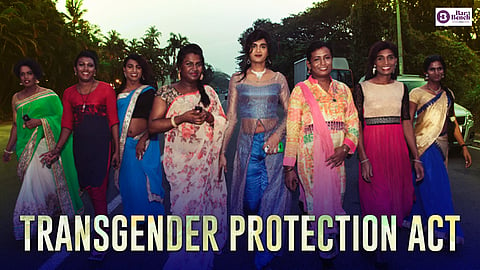
Debates around proposed amendments to the Transgender Persons (Protection of Rights) Act have largely been framed as a contest between two positions: the autonomy of self-identification on the one hand and the risk of State control through certification and verification on the other.
This framing, while important, remains incomplete. It overlooks a prior question that law must necessarily confront: how does a legal system identify and structure protection in the absence of stable categories?
The issue is not whether self-identification is normatively desirable. The Supreme Court in NALSA v. Union of India (2014) has already affirmed gender identity as an aspect of dignity, autonomy and personal liberty. The question, rather, is how this principle translates into a legal framework of protection - one that can allocate rights, enforce protections and adjudicate competing claims without rendering them indeterminate.
At the heart of this problem lies the logic of “protected categories” in law. Legal protection is not abstract; it is relational. It presumes identifiable forms of vulnerability and corresponding sites of harm. Anti-discrimination law, affirmative action and statutory protections all operate by identifying groups that are structurally disadvantaged and directing remedies towards them.
This requires that the law be able to determine, with some degree of stability, who constitutes the protected class. Without this, there is a risk that rights will become difficult to administer and enforce.
Indian constitutional practice illustrates this clearly. In EV Chinnaiah v. State of Andhra Pradesh (2004), the Supreme Court initially rejected sub-classification within the Scheduled Castes on the ground that the category was constitutionally homogeneous. This position was subsequently revisited, most recently by a Constitution Bench in State of Punjab v. Davinder Singh (2024), which recognised that internal differentiation within Scheduled Castes may justify sub-classification to ensure that legal remediation can reach the most disadvantaged.
These developments underscore a structural point: legal categories are not merely descriptive; they are instruments for directing the scope of protection. Where disadvantage is unevenly distributed, the law is compelled to refine its classifications rather than abandon them.
It is in this context that the tension with self-identification becomes apparent. A framework that treats gender identity as entirely self-determined raises questions about how the law is to distinguish between those who are structurally vulnerable and those who are not.
This is not primarily a concern about misuse. It is a question of legal coherence. If entry into a protected category is entirely unmediated, the ability of law to target protection towards specific forms of disadvantage becomes uncertain. The issue is not whether identity is genuine, but how legal systems operationalise recognition in ways that remain consistent, predictable and justifiable.
At the same time, this concern must be situated within a broader political context in which documentary governance has expanded across multiple domains of life. Systems of verification have often produced exclusion, delay and harassment, particularly for marginalised groups. The problem, therefore, is not resolved by defaulting to certification. Rather, it highlights the difficulty of designing frameworks that neither collapse into unstructured self-identification nor reproduce regimes of intrusive verification.
A further complication arises from the fact that transgender communities are not internally homogeneous. As with other marginalised groups, hierarchies of caste, class and social location persist within them. Public contestations - including those articulated through caste - indicate that vulnerability is unevenly distributed even within the category of “transgender persons”.
This unevenness is not merely sociological; it has legal consequences. Indian law has long encountered situations where claims from one protected category are met with counter-claims from another. For instance, where allegations under the Scheduled Castes and Scheduled Tribes (Prevention of Atrocities) Act are met with counter-allegations under general criminal law, or where caste-based discrimination claims intersect with claims of gender-based harassment [as in Subhash Kashinath Mahajan v. State Of Maharashtra (2018)]. These are not aberrations but features of an adversarial legal system in which protection is asserted, contested and reframed through competing narratives of harm.
A similar dynamic is likely to arise within the legal recognition of transgender persons. If transgender identity is treated as a single, undifferentiated category, the law risks flattening important distinctions in how vulnerability is experienced. For instance, individuals located within historically marginalised transgender communities - such as Hijra or Aravani groups - may face forms of structural disadvantage that are materially different from those experienced by individuals whose gender non-conformity is less socially visible or is articulated primarily through self-identification without comparable histories of collective marginalisation.
In such situations, a purely formal recognition of identity may not be sufficient to direct protection where it is most needed. If all claims to transgender identity are treated as equivalent for the purposes of legal protection, the law may fail to adjudicate between competing claims or to prioritise interventions in contexts of heightened vulnerability. The issue is not to question the legitimacy of any particular identity claim, but to recognise that vulnerability operates along a spectrum, and that legal frameworks must, at some point, decide how protection is to be allocated within that spectrum.
This returns us to a familiar constitutional problem. Just as the move towards sub-classification within Scheduled Castes reflects an attempt to address internal hierarchies rather than deny them, the challenge in the present context is whether, and how, law can acknowledge internal differentiation within transgender communities without undermining the foundational commitment to self-identification.
None of this diminishes the importance of self-identification. Legal recognition of gender identity has played a crucial role in affirming dignity and autonomy, particularly in contexts marked by long histories of misrecognition and enforced categorisation.
However, autonomy does not exhaust the concerns of law. Legal systems must also ensure that protections are directed towards identifiable forms of disadvantage, that entitlements remain administrable and that enforcement is possible in practice.
The challenge, therefore, is not to treat self-identification as an absolute principle, nor to subordinate it entirely to institutional control. It is to develop forms of legal recognition that can hold together autonomy and protection, without collapsing into either indeterminacy or over-regulation.
Current debates on transgender law present an opportunity to engage more carefully with the relationship between identity and protection. They invite a shift from viewing recognition solely as an affirmation of selfhood to examining how it operates within the broader architecture of rights.
This requires attention not only to liberty, but also to equality and the conditions of social life through which recognition becomes meaningful. Without such attention, legal frameworks risk either affirming identity without securing material protections or structuring protection in ways that reproduce exclusion.
The question is not whether identity should be recognised, but how recognition can be structured so that it remains both meaningful and justifiable within the framework of law. The task, then, is not to choose between self-identification and structure, but to confront the harder question: how a legal system can recognise identities while still taking responsibility for how protection is unevenly needed and unevenly distributed.
Sumit Baudh is Professor of Law at Jindal Global University.
Views are personal.