Bombay High Court quashes Bank of India’s ‘fraud’ tag on Kishore and Rakesh Biyani

A division bench of Justices BP Colabawalla and Firdosh P Pooniwalla held that the bank’s order lacked reasons and breached the Reserve Bank of India’s 2024 Fraud Master Directions.
Kishore Biyani with Bombay High Court
Published on
2 min read
Listen to this article

The Bombay High Court has set aside Bank of India’s decision to classify the accounts of Kishore and Rakesh Biyani, promoters of Future Lifestyle Fashions Ltd (FLFL), as 'fraud' [Kishore Biyani & Anr v. Bank of India & Anr].
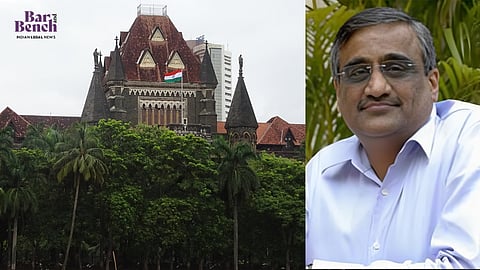
A division bench of Justices BP Colabawalla and Firdosh P Pooniwalla held that the bank’s order lacked reasons and breached the Reserve Bank of India’s 2024 Fraud Master Directions.

The order was passed on a plea by the Biyani brothers challenging Bank of India’s order dated June 21, 2025, declaring Future Lifestyle’s account, and consequently their own names, as 'fraud' under RBI’s 2024 Fraud Master Directions on Fraud Risk Management. 

They also assailed the earlier show cause notice and the forensic audit report of August 7, 2024, and sought to restrain the bank from acting on these, including reporting them to the Central Fraud Registry. 

FLFL had availed credit facilities from Bank of India with Kishore Biyani as guarantor. Its account was later classified as a non‑performing asset following which the bank ordered a forensic audit and issued a show cause notice. This culminated in the fraud classification order.

Biyanis assailed the bank’s order primarily on the ground that it merely reproduced portions of the forensic audit report and then jumped to the conclusion of fraud without independently recording reasons. 

They argued that FLFL’s managing director had submitted a detailed reply to the show cause notice but the bank's order did not deal with this reply at all. 

Furthermore, the forensic audit itself was inconclusive and carried an addendum prepared at the behest of Bank of Baroda exonerating the petitioners on related‑party transactions. 

They also contended that BOI had not carried out any independent internal investigation as required by the Master Directions.

Bank of India argued that the promoters had neither filed any reply nor adopted the Managing Director’s reply, and therefore could not “piggyback” on his response. 

They maintained that the order was not without reasons because the forensic audit report contained the necessary reasoning, which the bank was not obliged to restate, and a holistic reading of the report justified the fraud classification.

The Court rejected this argument by the bank.

It held that under the Fraud Master Directions, banks are required to serve a reasoned order when they classify an account as fraud. 

It found that the order was bereft of any reasons as to why the accounts of FLFL and the Biyanis were treated as fraud, particularly in light of the unaddressed reply of the Managing Director. 

It quashed the order, finding it to be wholly unreasoned and contrary to the RBI framework.

It directed Bank of India to ensure that the Biyanis’ names are not reflected as 'fraud' in the Central Fraud Registry.

Other grounds were left open if the bank chooses to restart proceedings in strict compliance with the 2024 Fraud Master Directions.

Senior advocate Gaurav Joshi with advocates Ankit Lohia, Petrushka Dasgupta, Krishna Baruah, Altamash Qureshi, Kewal Buddhen briefed by Link Legal appeared for Biyani. 

Senior advocate Mustafa Doctor and advocates Spenta Kapadia, Ricky Sampat, Surekha Yadav briefed by MV Kini Law Firm appeared for Bank of India. 

Advocates Huzan Bhumgara and Riddhi Badhekar briefed by Desai and Diwanji appeared for RBI. 

[Read Order]

Attachment
PDF
Kishore Biyani & Anr v. Bank of India & Anr
Preview
Bar and Bench - Indian Legal news
www.barandbench.com