
Subscribe
Subscribe
- Latest Legal News
- News
- Law Firms
- Columns
- Interviews
- Law School
- Legal Jobs
- हिंदी
- ಕನ್ನಡ
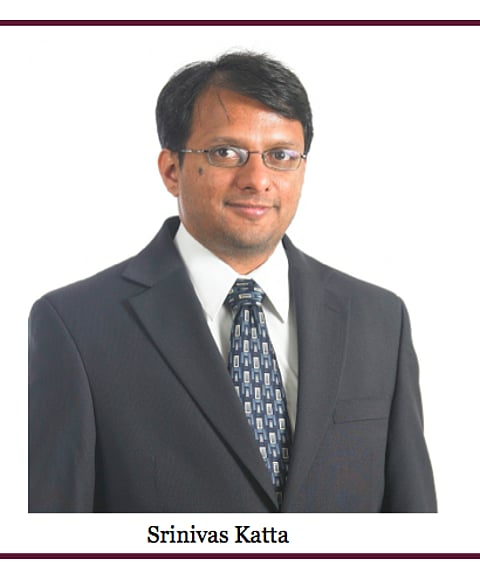
Bar & Bench recognizes Srinivas Katta as the Dealmaker for his role in Softbank’s investment in Snapdeal. We understand that the complex transaction included multiple legal and commercial issues. Katta not only provided valuable legal advice to his client, but also helped the investors and management come together and close the deal.
The Deal
Japanese telecom major SoftBank Corp. invested $627 million in Snapdeal, becoming the largest investor in the Indian online retailer. IndusLaw acted for Snapdeal with a team led by Bangalore Partner Srinivas Katta along with Senior Associate Winnie Shekhar and Associates Piyush Bhawalpuria and Priyanka Chandrasekhar.
Kochhar & Co. acted as Indian legal counsel for Softbank while Morrison & Foerster LLP acted as international legal counsel. The existing investors were advised by AZB & Partners, Khaitan & Co, Goodwin Proctor, Amarchand Mangaldas, Trilegal, and Bingham McCutchen LLP.
Bar & Bench spoke to Srinivas Katta on the transaction, and on some of the larger aspects of PE transactions. This is what he had to say.
An introduction
Srinivas Katta, a graduate of National Law School of India University, Bangalore co-founded IndusLaw in 2000 along with Gomatham Sridhar, Suneeth Katarki and Srinivasa Raghavan – all alumni of NLSIU Bangalore.
About the deal and role on the deal
“This is one of the larger private equity transactions in India. This is Softbank’s largest investment in India and one of the largest transactions in the consumer internet space in India. A financial investor having permanent capital is making a long term bet.
We represented the Company in the transaction. Apart from coordinating the process, we see our role as finding a balance that works for all investors and the management.”
High point of the deal
The highpoint is managing expectations of investors who have invested at various points of time to agree to a transaction structure that they believe adequately protects the interests of the Company and their respective interests. This needs to be aligned with management’s goals. The key was in finding the right balance.
Biggest challenge in the transaction
Apart from the usual challenges in a transaction of this size, the biggest challenge was the timelines to get things closed. Lawyers were told that everything needs to be done by 26th October. That was a hard deadline – not something that was artificially imposed. We also had lawyers and parties from multiple time zones including Japan, Singapore and New York – it was like working 20 hours a day.
Having said that, the transaction got done fairly quickly given the size of the company, the number of parties and the complexity involved.
Special/Unique feature of the deal
Bringing financial investors with limited fund life, financial investors with permanent capital, strategic investors, other investors, angels and management to a common understanding that works for all.
On working with the Snapdeal team
They had an extremely involved and committed finance and legal team. They would work through the details of the transaction with us. It’s a very mature team that understands deal dynamics and understands what will work and what will not. It’s also easy to work with them because they respect our expertise and our experience on issues.
Talking about the PE market in general, how has the private equity market evolved in India over the last few years?
All of us today understand that deal structures, terms, rights and obligations vary based on the nature of the deal, the kind of investment, expectation of investors, stage of the company, sector long term prospects etc. The complexity of deals, structures and regulations has certainly stepped up over the last 2 decades.
There was a bit of a lull for a couple of years. However things have changed from the early part of this year. Based on our interactions with various parties and meetings with various people who form the deal eco-system across several geographies, we see that there is a renewed interest in India. There seems to be many reasons for this. Key amongst these appear to be the resilience of the economy, the large and addressable domestic market, domestic talent, and the promise of policy clarity.
What is the kind of activity that you see in the PE investment market in India? Which are the sectors where you are seeing more demand for PE funds? Do your see more investment coming in Indian e-commerce sector?
People are no longer scared about making large investments in India. We did not see many large deals in the last couple of years. However, investors are getting comfortable making investments now. We expect to see many more transactions in consumer-based internet companies.
There are and will be more and more sophisticated offerings as the Indian consumer begins to get comfortable buying goods and services online. Phase 1 was about Snapdeal, Flipkart, Amazon etc., who offer a wide range of products and services.
We are now seeing companies having reasonable scale in varied specialised offerings – taxi services, grocery, home products, furniture, education service providers, baby products, tea, interior services, jewelry, online aggregators etc. This is apart from the success of businesses such as job sites, matrimonial sites etc. This, in our view, is just the beginning.
As technology gets sophisticated so will the offerings. Given the cost of good retail space, challenges in building scale, traffic woes, parking issues, importance of speed in the transaction process; India is ripe for consumer internet.
We are also seeing a significant interest in healthcare. Interest also seems to have come back to real estate. Defense should open up with the new regulatory changes. The big game changer though would be infrastructure. Billions of dollars will need to go into infrastructure companies.
Infrastructure is a sector that needs significant regulatory support. Several sectors can grow without governmental support – all they need is limited interference. However, infrastructure needs positive actions from the government. Keynesian economic theory will certainly come into play when that happens; particularly because investments will create jobs across the socio-economic spectrum and in many parts of the country.
What goes into making a good M&A/PE lawyer?
First the similarities – A PE or an M&A lawyer needs to have high quality legal skills, a good understanding of the regulatory environment, ability to deal with complex situations, people skills, negotiation skills, drafting skills, project management, patience, good legal and commercial judgment, lack of paranoia etc.
When somebody is paranoid, deal making becomes very complex. Another significant skill is to understand how to use the law to one’s favour and not look at documents as the solution for all issues / problems. Sometimes it is also important to be practical. This is probably common to several other practices.
But there are differences as well.
PE and M&A are commercially and structurally very different animals. PE requires an understanding of how exits happen, understanding governance issues, building structures for efficient decision making on the business side when there are multiple stake holders – finding the right balance between investor rights and efficient decision making. Skills that are very important but not often talked about is commercial savvy, understanding numbers, cap tables, scenario analysis, using and understanding excel. Indian lawyers are quickly evolving and acquiring these skill sets.
As lawyers, we like to see clarity on several issues and particularly the important once. In PE it is almost impossible to legislate on all aspects of transactions; the possibilities and outcomes are diverse. Therefore, in several situations it becomes important to put in place structures that provide enough leverage to the stake-holders. Trying to cover all aspects often creates complications and is sometimes counter-productive. It is important to read the situations well and then address the issues appropriately.
In general in PE transactions the various stakeholders are broadly aligned towards the same goal – of creating long-term value. They are not counter parties in the real sense of the term. Of course there can be conflict – and sometimes the conflict can go out of hand.
The issues and complexity in PE transactions can vary depending on the sector in which the investment takes place and the nature of the business.
On the contrary M&A involves counter parties. The sellers want to maximize valuation and want to move on. The buyer wants greater value that is sustainable. M&A often does not involve purchase of 100% upfront and therefore the buyer and seller need to work together over extended periods. Conflicts are inherent in these structures. We lawyers, need to be cognizant of that. Several aspects such as cultural and people issues, integration issues etc., can cause conflict. When there is conflict, people look at agreements to resolve the conflict. Therefore, agreements tend to play a far greater role.
Further, the nature of the transaction is such that one party is putting money into another party’s pocket and providing them an exit. The risk is inherently high for the buyer and therefore documents provide significant protection to the buyer. As a buyer’s lawyer, understanding all scenarios and documenting them becomes important. Unlike in PE, leverage is not enough. On the contrary, the seller’s lawyer needs to pick and fight the important battles. After all, the seller has a better understanding of the risks and issues.
Based on skill sets and personality, some lawyers are good PE lawyers and some are good M&A lawyers. Great lawyers are able to handle both well.