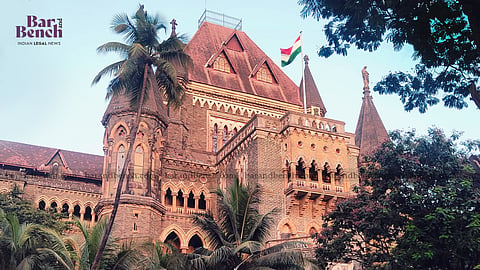

The Bombay High Court recently reiterated that even a potentially perverse finding in an international commercial arbitration (ICA) award cannot be interfered with by a court under Section 34 of the Arbitration and Conciliation Act [Oil and Natural Gas Corp Ltd v. Sapura Fabrication SDN BHD].
Justice Sandeep Marne made the observation while rejecting a plea by the government-owned Oil and Natural Gas Corporation (ONGC) challenging a multi‑million dollar arbitral award in favour of Malaysian contractor Sapura (now VTEB Fabrication).
The judge acknowledged ONGC's claim that the arbitral tribunal appeared to have ignored key correspondence and meeting minutes when it allowed one of the claims by Sapura.
However, he went on to point out that the Court did not have the power to review such patent illegality claims in awards passed in international commercial arbitration.
The judge explained that patent illegality, which includes any allegation that the arbitral award is perverse, is not available as a ground on which the Arbitration Act allows parties to challenge international commercial arbitration awards.
In this regard, the Court noted that the ground of patent availability is mentioned in Section 34(2A) of the Arbitration Act. This provision states that an arbitral award arising out of arbitrations "other than international commercial arbitrations" may be set aside if the award is vitiated by patent illegality.
In view of this, the Court held,
"The instant Award therefore cannot be challenged on the ground of patent illegality ... Though (a claim) appears to have been awarded by ignoring evidence on record and (ONGC) may be in a position to demonstrate patent illegality in award of the claim, the hands of this court are bound by the language of Section 34(2A) of the Arbitration Act. Had this been a domestic arbitration, the ground of patent illegality would have been available for ONGC by demonstrating perversity in the findings recorded in the award,” the Court held.
On this issue, the judge also relied on the Supreme Court’s interpretation of Section 34(2A) in Ssangyong Engg & Construction Ltd. v. NHAI, which stated that the grounds of patent illegality will not apply for setting aside arbitral awards in international commercial arbitrations.
Justice Marne reasoned that since Sapura is incorporated in Malaysia, the arbitration with ONGC qualified as an international commercial arbitration, even though the seat of arbitration was in Mumbai.
The Court went on to observe that there were other grounds on which international commercial arbitration awards can be challenged under Section 34. However, after examining the case at hand, the Court eventually found no reason to interfere with the award against ONGC.
The case concerned a dispute arising from an agreement tied to the redevelopment of ONGC’s Mumbai High South Field.
ONGC had entered into a turnkey contract with Sapura in 2015 for a broad package of offshore works.
The works were completed on time and ONGC paid over $214.71 million, €7.81 million and ₹344.42 crore under the contract.
After completion, Sapura raised six claims for extra work of which ONGC partly admitted two as additional work/ change orders and rejected four.
The dispute was referred to arbitration.
A three‑member arbitral tribunal led by former Chief Justice AP Shah passed a unanimous award in May 2024, rejecting one claim, partly allowing two and fully allowing three claims by Sapura.
It directed ONGC to pay substantial additional sums to the tune of over $24 million plus post‑award interest and nearly ₹1.88 crore in costs.
Aggrieved, ONGC approached the High Court under Section 34.
Justice Marne refused to interfere with the arbitral tribunal’s findings on five out of six claims, holding that ONGC had not shown any ground to interfere.
The Court also found no grounds to interfere with the awarded amount and costs imposed and dismissed ONGC’s petition upholding the tribunal’s award.
With ONGC having already deposited the entire awarded amount and interest in court during the proceedings, the dismissal of the petition clears the way for Sapura to seek release of the funds.
Senior advocate Zubin Behramkamdin with advocates Sana Khan, Sakshi Kashyap, Arundhati Korale and Paras Gupta briefed by Jurisperitus Mumbai appeared for ONGC.
Advocates Naresh Thacker, Alok Jain, Samarth Saxena, Ria Garg and Vanshika Kainya appeared for Sapura.
[Read judgement]