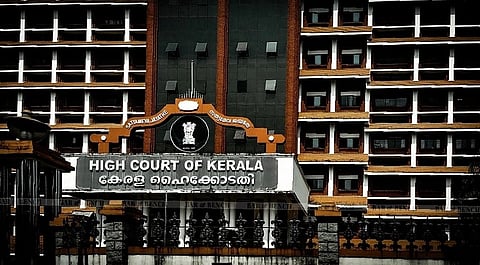
Kerala High Court grants actress Honey Rose relief in GST case

The Court passed the common order on a batch of petitions filed by several taxpayers, including Honey Rose. The Court held that authorities cannot issue a single show cause notice covering several assessment years.
Kerala High Court
Kerala High Court
Published on
3 min read

The Kerala High Court recently set aside a large number of composite show cause notices issued by the Goods and Services Tax (GST) authorities for multiple financial years to several taxpayers, including Mollywood actress Honey Rose [Dhanlaxmi Bank Limited v State of Kerala & ors and connected cases].

Justice Ziyad Rahman AA delivered a common judgment on over a hundred petitions by several taxpayers, including one filed by the actress, all challenging composite GST notices issued for multiple assessment years.

The Court held that tax authorities cannot issue a single composite notice covering several assessment years under the Central Goods and Services Tax (CGST)and State Goods and Services Tax (SGST) Acts, 2017.

The Court observed that such consolidated notices issued to the taxpayers were legally unsustainable as they were not supported by the statutory scheme of Sections 73 and 74 of the GST laws and were unfair to the taxpayers.

Sections 73 and 74 deal with recovery of tax, not paid, short paid, or where input tax credit was wrongly availed, with or without fraud.

The Court relied on earlier Division Bench rulings M/s Lakshmi Mobile Accessories v Joint Commissioner (Intelligence & Enforcement) and Tharayil Medicals v The Deputy Commissioner, which had held that authorities must issue separate notices for each year to the taxpayers under the GST framework.

"In Lakshmi Mobile (supra) and Tharayil Medicals (surpa), the prejudices that are caused to the tax payers in various ways due to issuance of the composite notices have been dealt with in detail and also taking note of the fact that, there is no provision in the CGST Act that enables the officers concerned to issue a composite notice, findings were entered into by this Court, interfering with such notices and order, holding that such notices/orders are beyond the powers of the officers concerned. After carefully going through the observations and the reasons mentioned in those judgments, I do not find any scope for a different view. More over, the said decision is also binding upon this Court," Justice Rahman held.

Justice Ziyad Rahman

The petitions had challenged a practice adopted by GST authorities of issuing a single show cause notice and passing a single assessment order covering multiple financial years.

The petitioners argued that such composite notices were legally unsustainable because each assessment year under the GST framework was independent and required a separate adjudicating process.

Opposing the petitions, the State and Central government contended that there was no statutory bar against issuing a common notice for multiple years and even referred to the Supreme Court's dismissal of Special Leave Petitions (SLPs) against decisions of the Delhi High Court which had upheld the validity of composite proceedings.

The government added that the Court could take a contrary view on composite notices from that of the High Court's Division Bench.

The Court, however, rejected this argument by clarifying that the dismissal of an SLP by the Supreme Court without a reasoned order did not create a binding precedent.

It further went on to explain that the earlier decisions of the High Court's Division Bench had explained why officers were not permitted to issue consolidated notices for multiple years, because it was beyond their authority under the GST framework.

The High Court proceeded to allow the writ petitions and quashed the show cause notices and orders issued to the petitioners.

However, it permitted tax authorities to initiate fresh proceedings by issuing separate notices for each financial assessment year in accordance with law and directed that the period during which the writ petitions were pending would be excluded while computing limitation for issuing fresh notices.

[Read Judgment]

Attachment
PDF
Dhanlaxmi Bank Limited v State of Kerala & ors and connected cases
Preview
Bar and Bench - Indian Legal news
www.barandbench.com