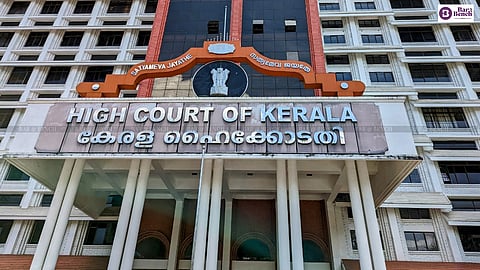

The Kerala High Court has dismissed a plea by Jollyamma Joseph, the prime accused in the Koodathayi cynaide murder cases, challenging a trial court order allowing the examination of a forensic expert who was earlier not included in the witness list [Jollyamma Joseph @ Jolly v State of Kerala].
The said expert had analysed and issued reports on an allegedly forged will that is tied to the mass murders case.
Justice CS Dias on June 5 held that the prosecution's failure to include the expert in its witness list was only an oversight.
The judge ruled that the prosecution's request to examine the expert could not be treated as an attempt to unfairly strengthen its case at a later stage, especially since the expert's reports were already part of the judicial records.
The Court observed that the disputed documents had been sent for forensic examination even before the chargesheet was filed and that the reports received from the Forensic Science Laboratory (FSL) were already before the trial court.
"The prosecution had already initiated the process of obtaining expert opinion before filing the charge sheet, and the resulting FSL reports are part of the records. Consequently, the omission to cite the author of the reports (expert) as a witness can only be regarded as an inadvertent lapse and not as an attempt to fill an inherent lacunae in the prosecution case," the Court held.
The High Court also emphasised that criminal courts have wide powers to summon witnesses whenever their evidence is necessary for arriving at a just decision.
It added that a trial must be fair not only to the accused but also to the prosecution and society.
The Koodathayi cyanide murders refer to the mysterious deaths of six persons in Kerala's Koodathayi village. All the victims were close relatives of the prime accused, Jollyamma Joseph.
The criminal case was registered by the Kodenchery Police Station in Kozhikode.
During its trial, the prosecution had moved an application seeking permission to examine Remya KK, an Assistant Director (Documents) working at the Regional Forensic Science Laboratory in Kannur, as an additional witness and to produce four forensic reports relating to a disputed will and other documents.
The application was filed after more than 130 witnesses had already been examined.
Joseph opposed this request arguing that the move came at a very late stage of the trial.
She stated that the charge sheet did not mention disputed documents or the forensic examination and added that allowing the expert to testify would prejudice her case.
However, after examining the records, the High Court found that the prosecution had begun the process of obtaining the expert's opinion before filing the charge sheet.
It also found that the forensic reports were already available before the trial court and that the expert's evidence relating to the documents was already on record.
More importantly, the Court noted that Joseph would still have opportunity to cross-examine the expert and challenge the findings contained in the reports. No prejudice would be caused to her by allowing the witness examination, the High Court concluded.
Thus, finding no error in the trial court's decision to allow the expert's examination, the Court dismissed Joseph's plea and allowed the forensic expert to testify in the case.
Joseph was represented by advocates KP Prasanth, TA Ajmal Hussain, Arunraj S, Hijas TT, Sunitha KG, Anitha VA, Aswin TP and Rahul C Chellappan.
Senior public prosecutor CS Hrithwik appeared for the State.
[Read Order]