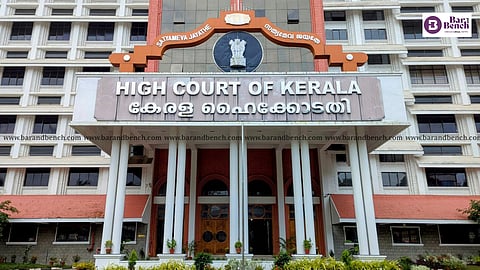
Lack of accused's postal address not ground for trial judge to return private complaint: Kerala High Court

The Court also pointed out that in cybercrimes, the offenders often operate anonymously, making it difficult to furnish their postal addresses while filing a complaint.
Kerala HC
Kerala HC
Published on
4 min read

The Kerala High Court recently held that a magistrate cannot return a private complaint in a criminal case merely because the complainant failed to furnish the postal address of the accused, particularly in cybercrime cases where offenders often operated anonymously [Mr Anagh v State of Kerala & ors].

Justice CS Dias observed that in the present digital age, offences such as cyberbullying, impersonation, online stalking and social media defamation were continuously committed using fake or anonymous identities.

In such cases, the Judge noted that victims usually did not have the actual physical address of the accused and only possessed electronic identifiers such as phone numbers, email IDs or social media addresses of the accused, as the accused often concealed their real identities.

The Judge, thus, stated that courts should not insist on furnishing the postal address of the accused as a precondition for entertaining a private complaint as even the law allowed filing of complaints against an unknown person.

"To return a complaint solely for want of a postal address is to subordinate substantive justice to procedural rigidity. Courts must interpret procedural laws that further justice in a technologically evolving society. Hence, I am convinced that the order returning the complaint for want of the accused's postal address is ex facie erroneous and unsustainable in law," the Court held.

Justice CS Dias
Justice CS Dias

The Court was dealing with a plea by one Anagh (petitioner), the Joint Secretary of a non-governmental organisation.

He had filed a private complaint after a woman posted false and defamatory allegations against him on social media platforms and circulated such content through WhatsApp to his organisation's President and others.

The petitioner claimed that such circulation of defamatory content caused him mental distress and damage to his reputation. He added that despite issuing legal notices to her social media accounts, the accused woman continued making defamatory posts.

However, his private complaint was returned by the magistrate on the sole ground that he (the complainant) had not furnished the accused's postal address.

Challenging this, the petitioner approached the High Court and argued that neither the Bharatiya Nagarik Suraksha Sanhita, 2023 (BNSS) nor the Bharatiya Nyaya Sanhita (BNS) mandated disclosure of a physical address as a condition for filing a complaint.

The Court examined the legal framework governing complaints and noted that Section 2(1)(h) of the BNSS defined complaint (whether oral or written), as an allegation against a person 'known or unknown'.

It meant that the law itself allowed filing off complaints against unidentified individuals and the lack of a physical address could not be a reason to return a complaint.

"Nowhere does it elevate the furnishing of a postal address as a condition precedent for filing a complaint. The above statutory architecture also acknowledges digital communication as a legitimate mode of judicial procedure, and furnishing the name or postal address of the accused is not a condition precedent to the presentation or acceptance of a complaint on file," the Court said.

Addressing concerns that trial proceedings may become ineffective without a known address, the Court clarified that magistrates have the power to conduct enquiries, direct police investigations, and even seek assistance from authorities to ascertain the identity and location of the accused.

It further stressed that criminal procedural laws must evolve with technological realities especially since cyber offences were usually committed anonymously.

The Court also highlighted how the BNSS regime brought significant changes in the procedure for taking cognizance of complaints.

The Court pointed at the crucial role of intermediaries under the Information Technology Act, 2000 (Act) and stated that several provisions of the Act imposed statutory obligations on internet intermediaries to preserve user data, subscriber information, access logs, etc. and to disclose such information when required by law, thereby enabling authorities to trace offenders operating under concealed digital identities.

Analysing the existing law on the subject of filing complaints and service of notice in cybercrimes, the Court held that insisting on a postal address at the initial stage of filing a complaint would only deny access to justice and encourage offenders to hide behind anonymity.

Accordingly, the Court found the magistrate's order returning the complaint in the present case as legally unsustainable and set it aside.

It directed the magistrate to accept the complaint and issue notice to the accused through the disclosed electronic communication addresses mentioned in the complaint. The High Court added that if the accused failed to respond, further actions may be taken as per law.

The Court also directed the Registrar (District Judiciary) to place the matter before the competent authority of the High Court to consider whether amendment to the Criminal Rules of Practice was required to effectively deal with cybercrimes, as the absence of provisions for electronic summons in the rules of practice should not be used as a ground to reject complaints which are otherwise permitted under the law.

Advocates Gayathri Muraleedharan along with Archana B, Ajin K Kuriakose and Sruthilakshmi Shaji appeared for the petitioner.

Senior public prosecutor CS Hrithwik represented the State.

Advocate S Krishna appeared for the Registrar of the High Court.  

[Read Judgment]

Attachment
PDF
Mr Anagh v State of Kerala & ors
Preview
Bar and Bench - Indian Legal news
www.barandbench.com