

The Central government on July 24 introduced a bill in the Rajya Sabha proposing a 3-year jail term for anyone disrupting the singing of national song Vande Mataram.
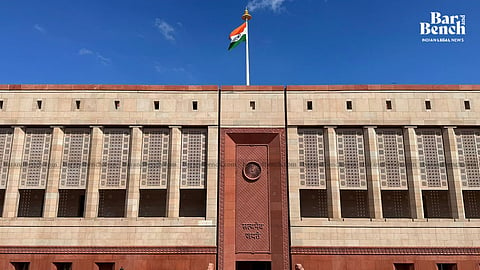
The bill, introduced by Union Home Minister Amit Shah, seeks to extend the statutory protection currently given to national anthem Jana Gana Mana to the national song.
The bill substitutes Section 3 of the Prevention of Insults to National Honour Act, 1971. The existing provision criminalises only the intentional prevention of, or disturbance to, the singing of the national anthem. The amendment brings the national song within the same clause, subjecting it to an identical penal consequence.
The Prevention of Insults to National Honour (Amendment) Bill, 2026, seeks to make intentionally preventing the singing of Vande Mataram, or causing disturbance to any assembly engaged in such singing, punishable with imprisonment for a term which may extend to three years, or with fine, or with both.
The statement of objects and reasons accompanying the bill traces the rationale to the constituent assembly. At its meeting on January 24, 1950, assembly president Dr. Rajendra Prasad had stated that Vande Mataram, composed by Bankim Chandra Chatterjee, would be honoured equally with Jana Gana Mana and accorded equal status with it.
Despite this, there has been no specific legal provision protecting the singing of Vande Mataram in the manner the national anthem is protected, the bill notes. The amendment is intended to close that gap.
The bill comes amid a year-long commemoration of the 150th anniversary of Vande Mataram, which was written by Bankim Chandra Chatterjee in 1876 and later published in his novel Anandamath in 1882. It was adopted as India's national song by the constituent assembly in 1950.