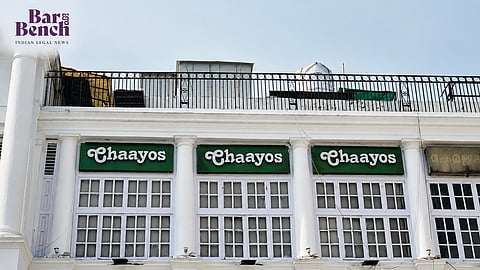
The Central Consumer Protection Authority (CCPA) has imposed a penalty of ₹50,000 on tea cafe chain Chaayos for automatically adding service charges to customers’ bills through its software-generated billing system..Chief Commissioner Nidhi Khare and Commissioner Anupam Mishra held that a charge added by default through billing software cannot be considered a voluntary payment by a customer.“Therefore, it shall be erroneous to presume that the service charge was voluntary,” the CCPA ruled..The order was passed on July 14 in a suo motu case initiated after a customer, Shashank Sood, registered a grievance with the National Consumer Helpline on March 30, 2025.Sood alleged that a Chaayos outlet had separately charged him a “service tax” in addition to Central Goods and Services Tax (CGST) and State Goods and Services Tax (SGST). The bill reproduced in the order showed a service charge of ₹15.33 on an order worth ₹438. The final bill amount was ₹476.The customer alleged that the outlet refused to refund the charge and claimed that it was mandated by the company management and was non-refundable..The CCPA noted that the grievance was lodged shortly after the Delhi High Court’s March 28, 2025 judgment upholding CCPA's 2022 guidelines on service charges.The High Court had held that restaurants cannot compulsorily collect service charges. While customers are free to voluntarily pay a tip, such an amount cannot be added by default to the bill..Chaayos, operated by Sunshine Teahouse Private Limited, told the CCPA that its service charge was entirely voluntary. It claimed that customers were informed through signage at points of sale that they could seek its removal or refund.The company also denied that Sood had sought a refund. It said the service charge had been waived on an earlier order placed by him on March 27, 2025.However, the CCPA found that Chaayos had not explained why an “Optional Service Charge” was automatically added to bills despite the guidelines expressly prohibiting restaurants from doing so..The Director General (Investigation) subsequently found that Chaayos had added the charge by default after the Delhi High Court’s ruling. The company had also failed to resolve the grievance despite communications from the National Consumer Helpline.The CCPA rejected the company’s contention that the charge was voluntary, observing that its origin was a command embedded in the billing software.It further found a “clear pattern of deliberate non-compliance” with both the CCPA guidelines and the Delhi High Court’s judgment.“The restaurant has demonstrated a blatant violation of both judicial and regulatory directives,” the order said..The CCPA held that the practice violated consumer rights under Section 2(9) of the Consumer Protection Act, 2019 and amounted to an unfair trade practice under Section 2(47). It also found a violation of the provisions relating to misleading advertisements..Chaayos informed the Authority that it had discontinued service charges across all outlets and ordering channels from May 1, 2025. It also produced invoices showing that the charge was no longer being levied.The CCPA directed Chaayos to refund the service charge paid by Sood, remove the default charge from its billing software and pay a penalty of ₹50,000 penalty. A compliance report must be filed within 15 days of receiving the order..Chaayos was represented by advocate Nikhil Mandhotra..[Read Order]