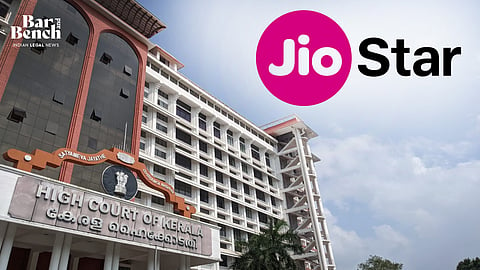

The Kerala High Court on Wednesday ruled that the Competition Commission of India (CCI) has the authority to investigate allegations of abuse of dominance, even when the dispute involves a sector regulated by the Telecom Regulatory Authority of India (TRAI). [JioStar v. Competition Commission of India]
A Bench of Justices SA Dharmadhikari and Syam Kumar VM underscored the superiority of the Competition Act, 2002 in matters of anti-competitive conduct:
"The non-obstante clause under Sec. 60 of the Comp. Act read with the definite and specific purpose for which it has been enacted must be allowed to have a full play without being restricted by any overlapping legislation".
The case originated from a complaint filed by Asianet Digital Network Private Limited (ADNPL) against JioStar and its group companies. ADNPL alleged that JioStar, one of the largest broadcasters in India with exclusive rights to major sporting events and dominant channels like Asianet, was abusing its dominant position in the market.
The complaint centred on:
Discriminatory pricing and conduct: Allegations that JioStar violated Section 4 of the Competition Act by imposing discriminatory pricing and conduct.
Denial of market Access: Claiming that JioStar's actions resulted in the denial of market access to ADNPL.
"Sham" agreements: The specific grievance related to JioStar allegedly offering excessive discounts (reportedly more than 50%) to a competitor MSO, Kerala Communicators Cable Limited (KCCL). These discounts were allegedly facilitated through "sham marketing agreements" to circumvent the 35% limit on cumulative discounts mandated under Regulation 7(3) and 7(4) of the TRAI Regulations, 2017.
The CCI passed an order on February 28, 2022 directing the Director General (DG) to investigate into the complaint after forming a prima facie opinion of violations.
This was challenged before a single-judge of the Kerala High Court, which in May 2025 dismissed the plea. As a consequence, the matter reached the Division Bench.
JioStar argued that the TRAI Act should prevail as the special sectoral legislation, suggesting the complaint was a masked violation of TRAI Regulations that should be first addressed by TRAI.
The High Court, however, dismissed this argument by focusing on the distinct legislative intent and scope of the two enactments:
Competition Act as special law: For issues of abuse of dominant position and anti-competitive practices, the Competition Act is the special law that prevails over the TRAI Act, ensuring that the market is scrutinised for effects that distort competition. It held,
"A monopolistic position under Sec. 19(4)(g) may be enjoyed by any business goliath may be attributable to a singular or pluralistic league of factors. It is for the CCI to determine whether any enterprise/ entity actually enjoys a dominant position in the market or not. Clearly, TRAI is handicapped statutorily in doing so. This is yet another reason why we are persuaded to hold that CCI is the only agency competent to determine the ‘monopolistic’ and ‘dominant position’ of any enterprise."
Bharti Airtel distinguished: The Court found the Supreme Court's Bharti Airtel ruling distinguishable, noting that the earlier case involved a dispute over the enforcement of licensing conditions where TRAI was already seized of the matter. In contrast, the present case involves "marketing agreements" which the TRAI itself typically excludes from its regulatory domain regarding discount caps. The core issue is market dominance and its abusive misuse, an exclusive domain of the CCI, the Court held.
"The Bharti Airtel (supra) is distinguishable on facts and therefore the ratio of the said judgement has to be understood and be treated as binding only in the facts of said case specifically. The ratio cannot be telescoped to be treated as a universal proposition of law that wherever the powers of TRAI stretch up to, CCI cannot exercise its powers."
Co-existence and overriding effect: The Court held that both Acts can co-exist parallelly. However, the non-obstante clause in Section 60 of the Competition Act ensures that if a conflict arises, its provisions will take precedence over any inconsistent provisions in the TRAI Act.
Administrative order: The Court affirmed that the order passed under Section 26(1) directing the DG investigation is a purely administrative order and was, therefore, not violative of the principles of natural justice for lack of a prior hearing.
On these grounds, the Court dismissed the appeal.
Jio Star was represented by Advocates Mathew Nevin Thomas, Arun Thomas, Saikrishna Rajagopal, Sidharth Chopra, Sneha Jain, Ruby Singh Ahuja, Swikriti Singhania, Ranjeet Singh Sidhu, Kuber Mahajan, Veena Raveendran, Karthika Maria, Anil Sebastian Pulickel, Shinto Mathew Abraham, Kurian Antony Mathew, Aparna S, Karthik Rajagopal, Leah Rachel Ninan, Noel Ninan, Arun Joseph Mathew and Adeen Nazar.
CCI was represented by Additional Solicitor General N Venkataraman with Advocates Jaishankar Nair, Cristy Theresa Suresh and Avinash Amarnath.
Asianet was represented by Senior Advocate Ritin Rai along with Chandhiok and Mahajan Partner Avinash Amarnath, Senior Associate Tarun Donadi and Associates Uday Bali and Naman Golechha.