Delhi High Court restrains FSSAI from cancelling ITC licence over 100% Atta, 0% Maida claims

The Court will first decide whether ITC’s challenge to the improvement notice can be heard in Delhi.
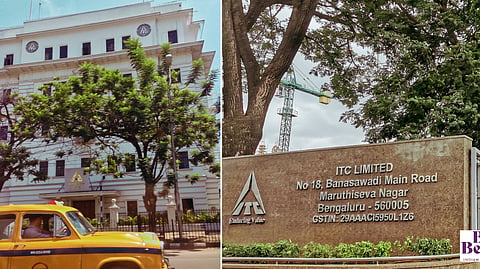
ITC Headquarters
ITC Headquarters
Published on
2 min read
Listen to this article

The Delhi High Court on Tuesday restrained the Food Safety and Standards Authority of India (FSSAI) from taking any decision to cancel ITC Limited’s food business licence over its use of the claims “100% Atta”, “100% Madhya Pradesh Wheat” and “0% Maida” for Aashirvaad MP Chakki Atta. [ITC Limited v. Union of India]

Justice Swarana Kanta Sharma granted the interim protection after ITC said that the deadline for complying with an August 13 improvement notice would expire on August 28. The matter will be heard next on September 9.

The Court clarified that it was yet to decide whether it had territorial jurisdiction to examine ITC’s challenge. It asked the parties to file brief notes on the question of jurisdiction.

Justice Swarana Kanta Sharma

The proceedings arise from an August 10 show cause notice alleging that ITC had violated FSSAI’s May 2025 advisory asking food businesses to discontinue the use of “100%” on product labels, packaging and promotional material. While that notice gave ITC 30 days to respond, the regional authority issued the improvement notice 3 days later and allowed only 15 days for compliance.

ITC has argued that the improvement notice was issued before it could respond to the show cause notice and, therefore, violated principles of natural justice.

The company has also challenged the validity of the May 2025 advisory itself. It has contended that FSSAI cannot introduce a binding prohibition through an advisory without following the procedure prescribed for framing regulations, including prior publication, Central government approval and scrutiny by parliament.

ITC has stressed that FSSAI has not alleged that the product contains maida (refined flour), includes any ingredient other than atta (whole wheat flour) or uses wheat sourced from outside Madhya Pradesh.

During Tuesday’s hearing, the FSSAI questioned the maintainability of the petition in Delhi. It argued that the improvement notice was issued by its regional authority in Kolkata and that ITC had a statutory remedy under Section 32 of the Food Safety and Standards Act, 2006.

Section 32(4) allows a person aggrieved by an improvement notice, refusal to issue a certificate or cancellation of a certificate to appeal to the Commissioner of Food Safety.

ITC countered that the dispute concerned a central licence. It relied on Section 10(5) of the Act, under which FSSAI’s Chief Executive Officer exercises the powers of a Commissioner of Food Safety while dealing with matters concerning food safety under the central licensing authority. Since the Chief Executive Officer is based in Delhi, part of the cause of action arose within the territorial jurisdiction of the Delhi High Court, ITC argued.

The Court said that it would decide the jurisdictional question after considering the parties’ written notes. In the meantime, FSSAI was directed not to take any decision concerning cancellation of ITC’s licence.

ITC was represented by Senior Advocate Sandeep Sethi with Advocates Rohit Sharma, Nikhil Purohit Jatin Lalwani, Krisna Gambhir and Shreya Sethi.

Bar and Bench - Indian Legal news
www.barandbench.com