Five reasons why NCLAT upheld Adani’s bid for Jaiprakash Associates, dismissed Vedanta's challenge

The NCLAT reiterated that the Committee of Creditors (CoC) is not bound to accept the highest-value bid in a corporate insolvency resolution process (CIRP).
NCLAt
NCLAt
Published on
4 min read
Listen to this article

The National Company Law Appellate Tribunal (NCLAT) on Monday upheld Adani Enterprises’ resolution plan for Jaiprakash Associates Ltd (JAL). dismissing Vedanta Ltd’s challenge.
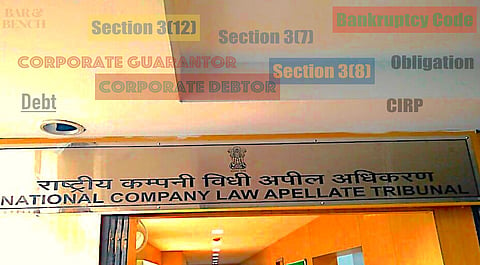
The NCLAT dismissed Vedanta Ltd’s challenge to Adani's resolution plan and reiterated that the Committee of Creditors (CoC) is not bound to accept the highest-value bid in a corporate insolvency resolution process (CIRP).

The tribunal emphasised that plan evaluation is not confined to headline value, noting that there is nothing in the Request for Resolutions Plans (RFRP) that Net Present Value (NPV) of the bids shall be the sole criteria for approving a resolution plan. The CoC can assess bids on multiple parameters including upfront recovery and feasibility, the NCLAT underscored.

The CIRP against Jaiprakash Associates began in June 2024 on ICICI Bank’s application. After initial bids were found sub-optimal, the CoC conducted a challenge process.

While Vedanta emerged highest on net present value during that stage, Adani’s plan ultimately secured 93.81% of the CoC vote based on overall evaluation.

Vedanta challenged the outcome before the NCLT and NCLAT, arguing that its higher-value bid should have been accepted. Both fora rejected the challenge.

Below are five reasons why NCLAT upheld Adani’s winning bid:

1. CoC’s commercial wisdom cannot be second-guessed

The NCLAT reaffirmed that judicial review over CoC decisions is limited. It found that the CoC had evaluated all plans in accordance with the Insolvency and Bankruptcy Code and applicable regulations, leaving no scope for appellate interference.

Supreme Court has laid down that judicial intervention in the commercial wisdom of the CoC is narrow and statutorily confined," the judgment said.

2. Highest value is not the sole criterion

Vedanta’s case rested on offering higher value. The tribunal rejected this, holding that NPV alone cannot determine the outcome. The CoC os entitled to weigh:

  • Upfront cash recovery;

  • Feasibility and viability; and

  • Overall evaluation score.

This justified selecting Adani’s plan despite a lower headline value.

"The RFRP clearly provided that CoC was not bound to approve any Plan, which has maximum NPV value or maximum marks under the Evaluation Matrix," the NCLAT said.

3. Last-minute addendum was an impermissible bid revision

Vedanta attempted to improve its bid through an addendum after the 23rd CoC meeting. The tribunal held that this was a substantive modification, not a clarification, and could not be entertained once the process had moved to voting.

"Sending Addendum was unilateral and unsolicited action by the Appellant, which was to improve its resolution plan," the NCLAT ruled.

4. Challenge process had concluded; no second chance allowed

The CIRP had already provided a challenge mechanism for bidders to improve their offers. Once that stage ended and final plans were submitted, no further changes were permissible.

The tribunal held that accepting Vedanta’s revised proposal would violate Regulation 39(1A) (which permits only one structured opportunity to revise bids or a challenge process, not post-deadline modifications).

5. No material irregularity by the Resolution Professional

The NCLAT held that Vedanta had failed to establish any material irregularity in the manner in which the Resolution Professional (RP) conducted the CIRP. This was important because under Section 61 of the IBC, an appeal against approval of a resolution plan can succeed only on limited grounds, including material irregularity.

"Where the RP acts on the instructions of the CoC, such conduct cannot, by any stretch of imagination, be characterised as a ‘material irregularity’ within the meaning of Section 61(3)(ii),” the tribunal said.

Vedanta was represented by Senior Advocate Abhijeet Sinha along with Advocates Deep Roy, Anuj Lakhotiya, Aridaman Raghav, Heena Kochar, Bhavit Baxi, Shrishti Agnihotri, Rishi Badraj, Aditya Narayan Sharma, Sourabh Goyal and Abhishek.

The Resolution Professional was represented by Senior Advocates Abhishek Manu Singhvi and Arun Kathpalia with a team from Shardul Amarchand Mangaldas (SAM) comprising advocates Anoop Rawat, Advocate, Sagar Dhawan, Vaijayant Paliwal, Aditya Marwah, Nikhil Mathur, Ahkam Khan, Rashi Sharma and Kirti Gupta.

Dr Abhishek Manu Singhvi
Arun Kathpalia
Arun Kathpalia

The Committee of Creditors was represented by Solicitor General Tushar Mehta and Senior Advocate Niranjan Reddy along with advocates Bishwajit Dubey, Madhav Kanoriya, Srideepa Bhattacharyya, Neha Shivhare, Rajeshwari Mukherjee and Anoushka Chauhan

Solicitor General Tushar Mehta
Niranjan Reddy
Niranjan Reddy

Adani was represented by Senior Advocate Ritin Rai with a team from Karanjawala & Co. comprising advocates Sandeep Singhi, Ruby S Ahuja, Seema Sundd, Rituraj Srivastava, Ravneet Kaur Malik, Shruti Pandey and Vedant Singh.

Abhishek Swaroop (Partner at Saraf & Partners) also appeared in the case.

Ritin Rai
Ritin Rai

[Read Judgment]

Attachment
PDF
JAL Vedanta Vs Adani
Preview
Bar and Bench - Indian Legal news
www.barandbench.com