

The Madras High Court recently refused to quash proceedings initiated against a group of lawyers accused of disrupting trial proceedings before a Judicial Magistrate in Madurai.
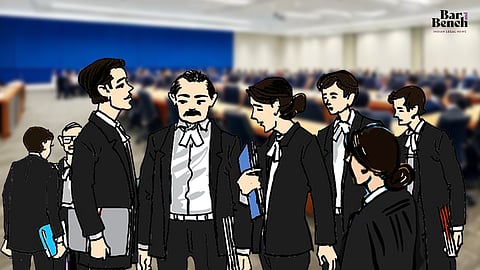
In the order dated April 30, Justice L Victoria Gowri observed that the case raised serious issues concerning the functioning and authority of courts.
The Court also commended the Magistrate for maintaining firmness in the face of alleged pressure from members of the Bar.
“In the case at hand, this Court is witness to a young judicial officer who, unmindful of the age, stature, or experience of the members of the Bar, chose not the path of convenience, but that of conviction. Faced with a charged atmosphere and competing pressures, she did not yield to expediency, nor retreat into silence, but acted with resolute determination to uphold the dignity and authority of the institution she represents. What may be perceived by some as stubbornness, this Court views as principled firmness, an essential attribute in the discharge of judicial duty,” the High Court said.
The case arose from an incident in January 2026 when several advocates, including office-bearers of a Bar Association, allegedly intervened during remand proceedings before a Judicial Magistrate in Madurai.
According to the Magistrate, the lawyers collectively interrupted proceedings, attempted to influence the course of the hearing and created a situation that compelled her to briefly rise from the Bench.
Proceedings were subsequently initiated against the lawyers under Section 384 (summary action for in-court offences) of Bharatiya Nagarik Suraksha Sanhita (BNSS) and Section 267 (intentional insult or interruption of a public servant during judicial proceedings) of Bharatiya Nyaya Sanhita (BNS).
Before the High Court, the petitioners (the lawyers) argued that the allegations were vague and that the statutory procedure had not been followed. They contended that the incident was a misunderstanding which arose during the course of professional duties and pleaded for proceedings to be quashed. They also relied on CCTV footage to argue that there was no disruption as alleged.
The High Court rejected these contentions and held that the material on record disclosed a clear case warranting examination in appropriate proceedings.
It reiterated that inherent powers to quash proceedings must be exercised sparingly, particularly where disputed facts and evidence are involved.
The Court also addressed concerns of bias, noting that although the language used by the Magistrate appeared strong, it was not sufficient to invalidate the proceedings at this stage.
On the broader relationship between the Bar and the Bench, the Court stressed the need for discipline and mutual respect, cautioning against attempts to influence judicial proceedings.
“The justice delivery system cannot function in an atmosphere of mutual suspicion between the Bar and the Bench. The answer, however, is not institutional indulgence at the cost of discipline. Nor can judicial process be stifled under the plea of preserving harmony. True harmony rests not on silence about misconduct, but on restoration of principled boundaries,” observed the Court.
The Court underscored that a lawyer is an officer of the court and not its adversary.
“An advocate is not a mere agent of the litigant. He is an officer of the Court. The Court, in turn, is not an adversary of the Bar. The dignity of one sustains the honour of the other. If the Bar fails in restraint, the institution suffers; if the Bench fails in fairness, the institution suffers equally. The law, therefore, expects both to remain within their constitutional and professional discipline,” the High Court emphasised.
Hence, it dismissed the petitions and allowed the proceedings before the Magistrate to continue in accordance with law.
Senior Advocate SR Rajagopal along with advocates Prabu Rajadurai, Thirunavukkarasu and CM Arumugam appeared on behalf of the advocates who had sought quashing of the proceedings.
Advocate D Sivaraman appeared for the Judicial Magistrate.
[Read Order]