Supreme Court raises alarm over Punjab drug crisis, urges police to target big sharks instead of small players

“Perhaps Central government intervention may be needed. Do not think as if the Centre is interfering. The common goal should be to curb the drug menace,” added CJI Kant.
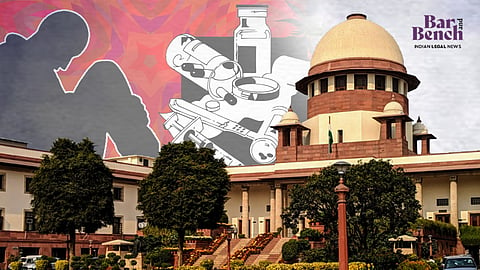
Supreme Court and Drugs
Published on
2 min read
Listen to this article

The Supreme Court on Friday expressed deep concern over the growing drug crisis in Punjab and the alarming human toll of narcotics abuse.

A Bench comprising Chief Justice of India (CJI) Surya Kant and Justice Joymalya Bagchi indicated that the situation may require structural as well as policy-level intervention, including the possible involvement of the Central government.

It referred to a distressing incident to underscore the scale of the crisis.

“See what we read. A mother is crying. She lost her fifth son to drugs. She lost all her children to drug addiction... Police need to be sensitised," said CJI Kant.

The Bench noted that the situation in Punjab, particularly in areas like Ludhiana, had reached alarming proportions.

The Court went on to observe that intervention by the Union government may be required, while cautioning against viewing such involvement politically.

“Perhaps Central government intervention may be needed. But when they do intervene, do not think as if the Centre is interfering. The common goal should be to curb the drug menace,” said CJI Kant.

CJI Surya Kant and Justice Joymalya Bagchi

The crisis has been linked to heavy pendency of drug cases and structural strain on courts dealing with such cases under the Narcotic Drugs and Psychotropic Substances Act (NDPS Act).

The Court underlined the need for strengthening specialised courts and institutional mechanisms to handle the rising caseload.

“The increase in cases is so alarming that the situation needs revisiting. I will ensure all High Courts are provided help to create NDPS courts," said CJI Kant.

The Court added that enforcement efforts were disproportionately focused on small-time offenders, while larger traffickers and influential players often escaped scrutiny, contributing to the continued spread of the drug trade.

The Bench opined that law enforcement efforts needed recalibration to ensure that major traffickers are targeted instead of low-level offenders.

"The bigger sharks or influential ones should be arrested. The issue is, you get hold of a small person and police gets publicity in newspapers,” remarked CJI Kant.

[Read Live Coverage]

Bar and Bench - Indian Legal news
www.barandbench.com