

The Karnataka High Court on Monday orally remarked that it was very rare for public servants or political leaders in Karnataka to be involved in heinous offences, adding that such instances appeared to be more common in some other States.
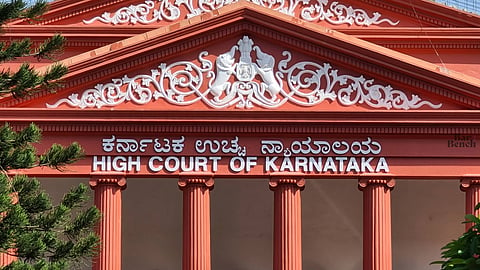
The Court was hearing former Congress MLA Vinay Kulkarni's appeal against his conviction and life sentence in the case concerning the murder of BJP leader Yogesh Gowda.
A similar appeal by co-convict Chandrashekar Indi is also being heard by the same Bench comprising Justices Mohammed Nawaz and G Basavaraja.
The appeals were opposed by Additional Solicitor General SV Raju who represented the Central Bureau of Investigation (CBI). He also objected to pleas for bail or for a suspension of the accused's prison sentence while their appeal remains pending.
The ASG highlighted that this was a case where a public representative (Kulkarni) is alleged to have abused his position to eliminate a political rival.
"A public personality holding a high post of responsibility indulged in a conspiracy to commit the murder of a political rival. Then an attempt was made to save the real assailant by substituting him with a dummy assailant and thereafter tampering with evidence to shield the actual offenders. The plan failed because the investigation was transferred to the CBI, which unearthed the actual conspiracy, leading to Accused Nos. 7 to 14 also being arraigned. How can such a person holding an important public office be granted bail?" he argued in yesterday's hearing.
Responding to the submissions, the Justice Nawaz observed,
"As far as public servants or political personalities involving in heinous offences are concerned, we have found that in other States it is more. Very rarely in the State of Karnataka. Both on this side and that side. There are so many instances where public personalities or political personalities are involved in heinous offences."
ASG Raju replied that he was happy to note that such incidents were rare in Karnataka, but cautioned that if such a trend had begun, it should be nipped in the bud.
"We should not permit anyone to enjoy the fruits of such a gruesome crime. We should not create an impression that because I am an MLA, I can do anything and get away with it. If the sentence is suspended and bail granted, that impression will prevail—that I can do anything because I am high and mighty. That should be nipped in the bud," he submitted.
He further argued that this was the rationale behind the striking down of Section 8(4) of the Representation of the People Act, which had earlier protected sitting legislators from immediate disqualification upon conviction.
The Court went on to take critical note that in some cases, offences involving politically influential persons are viewed lightly.
"In some cases, it is viewed very lightly. Maybe because of connections or contacts—we do not know. In fact, we use the expression that a public servant or a highly politically influential person is involved. That is why we are making this observation. In some cases, the government is also not interested."
Raju agreed, stating that there were several instances where governments had protected influential politicians.
"There are cases where governments protect corrupt politicians. I can give a list of such cases. There are also cases where prosecutions are withdrawn when there is a change in government," he said.
The matter is listed for further hearing today.