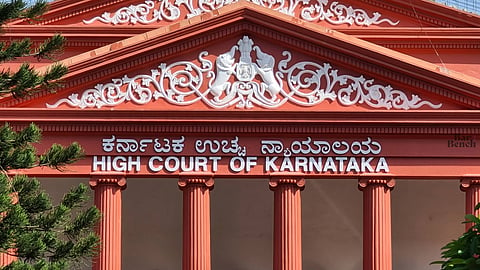

There should be public interest in politics and not politics in public interest, the Karnataka High Court recently said while setting aside the State government's decision to close down Janaushadhi Kendras set up in Karnataka under a Central government scheme to provide the public with affordable medicines [Jagadeesha Moger v. State of Karnataka].
The State had reasoned that it has already come out with its own schemes to provide free medicines and that there was no need for the continued operation of the Janaushadhi Kendras.
Therefore, it had ordered the eviction of those who were operating these Kendras at government hospitals. Such persons then challenged the State's move before the High Court.
On December 10, Justice M Nagaprasanna allowed a batch of such petitions filed by those who ran Janaushadhi Kendras, while criticising the Congress-led State government for attempting to shut down such centres.
The Court quashed an order issued by the State in May directing the closure of Janaushadhi Kendras in government hospitals. The Court further ordered the State authorities not to interfere with the continued operation of Janaushadhi Kendras at the premises allotted to various operators at government hospitals.
The State argued that the continued operation of Janaushadhi Kendras was impeding the State's supply of free medicines as there was confusion as to who would provide such medicines.
The judge held that the reasons given by the State were not adequate, and ruled that the State's sudden move to shut down these Kendras had violated the legitimate expectations of people who held valid licenses to operate them.
Administrative confusion cannot become a licence for administrative caprice, the Court said.
"The sole reason to close the Kendra/s and directing eviction of these petitioners from the premises is that the State wants to deliver free medicine – yet another slogan of providing a freebie or outside medicine is not allowed inside the hospital. The petitioners have pursuant to the agreement with the State have been running the kendras uninterruptedly for 7 years. They do have a legitimate expectation to continue the Kendra/s. It is not the case of the State that there is a single complaint against any of the Kendra/s," the Court said.
The Court also expressed doubts about whether the State's scheme of free medicine supply is as efficient as projected.
"The State proclaims its commitment to free medicine. If medicines are indeed freely and adequately available, no patient would voluntarily purchase them from the Kendra/s. If the patients in the hospitals are being administered medicine procuring them from the Kendra/s, it would demonstrate that there are no free medicines available in the hospitals. Therefore, the intent of supply of free medicine, appears to be an intent only," it remarked.
The Court concluded that the continuance of the Kendras was in public interest.
"The State cannot now throw a spanner in the wheel of smooth functioning of the Kendra/s by the impugned action, which on the face of it, is antithetical to public interest ... Public interest must be the soul of governance, not a slogan to justify abrupt policy reversals. The State has not shown that continuation of the Kendra/s is illegal or harmful. Therefore, it cannot renege on its prior commitments ... this Court is constrained to observe that, there should be public interest in politics and not politics in public interest," Justice Nagaprasanna added.
Advocates Anirudh A Kulkarni, Vasista Ramprasad and Shreyas S appeared for the petitioners.
Additional Advocate General JM Gangadhar along with advocate Hanumareddy represented the State of Karnataka and various authorities in the State.
Advocate Venkatesh M Kharvi appeared for the Pharmaceuticals And Medical Devices Bureau of India.