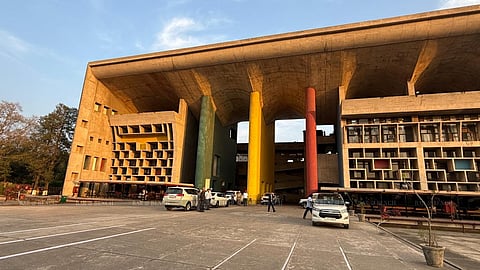
The Punjab and Haryana High Court has emphasised that litigants who withdraw their case cannot later backtrack and blame their lawyers for such withdrawal [Ankit Rawal v State of Haryana].Justice Sumeet Goel said that litigants backtracking on their earlier withdrawal by under the guise of ‘lack of instructions’ to their counsel amounts to “procedural heresy” that strikes at the very root of the advocate-client relationship and is an affront to the adjudicatory process.“The judicial process operates on the foundational presumption that statements made by a counsel at the Bar are made with full authority and reflect the true intent of the litigant concerned. This principle ensures that the Court can effectively adjudicate without being compelled to verify the internal communications between a lawyer and the client at every state of proceedings. By executing a Vaqalatnama, a litigant clothes the counsel engaged with express as well as implied authority to plead, act and appear in the best interest of the client,” the Bench said.It added that acceptance of such claim would would render every court proceeding tentative and every judicial order vulnerable to being reopened, simply because the litigant has had a change of heart or has engaged a new counsel“Pertinently, entertaining such a plea would pave the way for a dangerous precedent, effectively allowing a second bite at the apple. It is to be borne in mind that a counsel is an officer of the court and not merely a mechanical agent of the litigant; and owes a duty to the court to ensure the smooth administration of justice. If an act, conduct or concession given by a counsel is not deemed to be authorized by the litigant, the entire adjudicatory framework would stall, as no opposing party or presiding officer could ever rely upon a statement made by a legal representative,” the Court stressed..The Bench was dealing with the anticipatory bail plea of an accused in a murder case. In January, the plea was withdrawn with the liberty being granted to the accused to appear before the trial court within seven days and to seek regular bail. However, he later moved an application for recall of the order, stating that he had never authorised his previous counsel to give such undertaking but only instructed withdrawal of the bail plea.However, the Court called the application an attempt to circumvent the consequences of the previous order. It also noted that no material was placed before it to substantiate the allegations.“The averment that the previous counsel was ‘not properly instructed’, stands in the face of the integrity of the legal profession. The applicant-petitioner having put his signature on the Vaqalatnama, cannot be permitted to act as a stranger to the actions taken by his earlier counsel in open court, especially when such action was intended to mitigate a legal damage. To accept this plea would virtually allow the applicant-petitioner to abuse the process of law by turning this Court into a laboratory for experimental litigation,” it added..Further, the Court emphasized that others should be discouraged not to venture along the same path in the hope or on a misplaced expectation of judicial leniency or indulgence.“Exemplary costs, in such a situation are inevitable and necessary, so as to ensure that in litigation, as in the law which is rather practiced in our Country, there is no premium on the truth. Such misleading plea(s) which are deficient in any reasonability, have to be construed as trifling with the Courts and the process of justice,” the Bench said.It, therefore, dismissed the application seeking recall of the earlier order with costs of ₹20,000.Advocate Gaurav Grover represented the applicant.Senior Deputy Advocate General Mahima Yashpal Singla represented the State of Haryana..[Read Order]