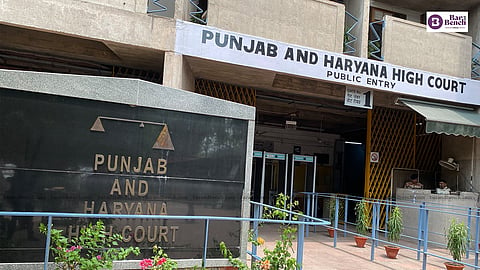
The Punjab and Haryana High Court recently quashed a rape case against an Army officer accused of having developed a sexual relationship with a woman on a false promise of marriage..Justice Alok Jain observed that a consensual relationship cannot forcibly be converted into a life-long relationship by launching criminal prosecution once it fails to due incompatibility. “It is apposite to mention here that human relationships are dynamic and may change with time. A consensual relationship by itself cannot give rise to criminal liability under Section 376 IPC unless statutory ingredients necessary to constitute the said offence are clearly made out. Merely because consensual relationship does not culminate into marriage due to incompatibility, cannot be forcibly converted into life long relationship,” the bench said..The Court was dealing with a plea moved by an Army Captain for quashing the FIR registered against him by Pathankot police in 2020. The complainant had told the police that the officer had ruined her life and had sexual relationship with him “by bluffing about marriage”.However, a counsel representing the accused submitted that they had even performed a roka ceremony but he later refused to marry the complainant due to temperamental differences. It was further stated that there was also communication gap between the couple due to the officer’s posting in sensitive areas. Her threats to commit suicide further aggravated the situation, the Court was told.In response, a counsel for the complainant said that she was a “simple educated girl” who was unable to foresee the intentions of the accused. State also opposed the quashing plea, submitting that he had established physical relations with her on repeated occasions by alluring her with his sweet talk and on the false pretext of marriage. .Considering the record and submissions, the Court opined that essential ingredients of the offence of rape under Section 376 of Indian Penal Code (IPC) were not made out in the case. “The complainant is an educated woman who has fully aware, at all the times that while entering into physical relations with the petitioner that they were not married. A merely consensual relationship even if it subsequently breaks down cannot be termed as a rape, particularly when there is neither any allegations of force nor of any misrepresentation or false promise at the inception by the petitioner much less any such fact narrated by the complainant,” it added.The Court found that the roka ceremony was performed even after a complaint had been lodged by the woman. This shows that he had made sincere efforts to restore the relationship, it opined.“However, when the things went out of hand and the complainant repeatedly started threatening the petitioner with dire consequences, including allegations that the petitioner was provoking her to commit suicide, the petitioner withdrew from the relationship and categorically informed the complainant that he could not get married to her,” it added..The Court also found that when there were irreconcilable differences between the couple, the complainant had chosen to pressurize him by making repeated complaints and subsequently lodging the present FIR. “Therefore, from the perusal of the record, it does not appear that the initial promise to marry allegedly made by petitioner was false to begin with . Perusal of FIR further itself suggests that the alleged promise to marry could not be fulfilled by petitioner due to intervening circumstances consequently the relationship ended and the present FIR came to be registered,” it said.The Court, thus, said that forcing the petitioner to face the trial would be nothing but an abuse of the process of law which it cannot permit. “The present FIR seems to be an abuse of process of law, as it is apparent that both the parties were major and in a consensual relationship and the subsequent fall out of the relationship was only on account of the temperament differences,” it added while quashing the FIR..Advocates Raman B Garg, Mayank Garg and Navdeep Singh appeared for the petitioner.Additional Advocate General Amandeep Singh Samra appeared for the State.Advocate Tanheer Singh appeared for the complainant.