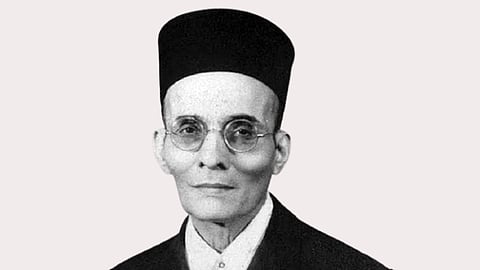
Vinayak Damodar Savarkar was not released from prison because of his mercy petitions to the British but due to political efforts, his grandnephew Satyaki Savarkar told a Pune court on Wednesday [Satyaki Savarkar v. Rahul Gandhi].He was deposing before judicial magistrate Amol Shinde in a criminal defamation case filed by Satyaki Savarkar against Congress leader Rahul Gandhi for making adverse remarks against Savarkar..While referring to petitions mentioned by Gandhi, Satyaki volunteered that these did not secure Savarkar’s release. “The witness voluntarily states that, Savarkar was not released due to the petitions but efforts made in National Assembly in 1937. The assembly was non-Congress governed,” the Court recorded Satyaki's claim..The matter concerns a defamation complaint filed by Satyaki Savarkar against Rahul Gandhi over a March 2023 speech delivered by Gandhi in London.In the speech, Gandhi allegedly cited Savarkar's writings to claim that Savarkar and others had assaulted a Muslim man and found the act "pleasurable." Satyaki moved the Court contending that no such incident is referred to in Savarkar’s published works. Satyaki has accused Gandhi of making factually incorrect, misleading and defamatory remarks that distort history and damage Savarkar’s reputation. He has sought Gandhi’s conviction for criminal defamation under Section 500 of the Indian Penal Code and damages.Satyaki's cross examination by Gandhi in this defamation case is currently progressing before the Pune trial court..Satyaki told the Court on Wednesday that according to Amritkaal website, Savarkar was lodged at Andaman cellular jail for 12 years starting from 1911 after which he was brought to prisons in Indian mainland in 1924 and was subsequently put on internment. He was released from this internment in 1937..Satyaki also drew attention to the political support for Savarkar in the earlier phase. He stated that in 1923, the Kakinada Congress session passed a resolution for Savarkar’s release. “Witness voluntarily states that, Savarkar was not released because of petitions he sent. In the year 1923 Kakinada Congress passed resolution under the president Mohammad Ali Johar to release Savarkar. Because popularity of Savarkar was increasing day by day and public pressure was increase for his release,” the Court recorded. .Satyaki also stated that similar political intervention could have saved Bhagat Singh from the gallows.“If the similar bill had been passed by the Congress before the execution of Bhagat Singh, the execution of Bhagatsingh, Sukhdev and Rajguru would have been avoided,” it was submitted..With regard to the claim that Savarkar wrote the mercy petitions to the British, Satyaki said he could not affirm whether Savarkar requested release from prison on the condition that he would not participate in any political and revolutionary movement.“I cannot say that in petition dated 14 November 1913 (produced in court) a desire is expressed to loyalty to the British Government. I cannot say that, Savarkar expressed his willingness to serve with British,” the Court recorded Satyaki's submission..Satyaki's cross-examination will continue on July 7 when advocate Milind Pawar is expected to further question Satyaki Savarkar on behalf of Rahul Gandhi.