Secured creditors’ dues must take priority over government revenues: Punjab and Haryana High Court

There are lot many litigations involving the question of priority of charge, the Court noted.
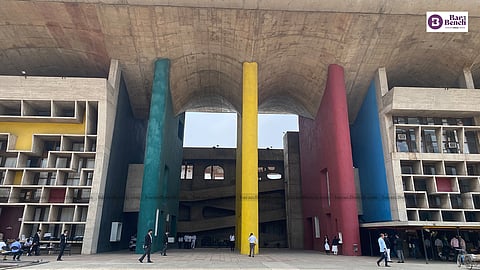
Punjab and Haryana High Court, Chandigarh.
Published on
3 min read

The Punjab and Haryana High Court has emphasized that, under Section 26E of the SARFAESI Act, debts owed to a secured creditor must be given priority over all other debts and over revenues payable to government authorities [State Bank of India v Sub Registrar, Sub Tehsil Nighdu Karnal and Others].

The Division Bench of Chief Justice Sheel Nagu and Justice Sanjiv Berry flagged that numerous cases continue to be filed on the issue of priority of charge, despite the statutory provision clearly addressing it.

“We feel it apt to mention that there are lot many litigations involving the question of priority of charge pertaining to the transactions where the charge was created after the stipulated date i.e. 24.01.2020, when Section 26E of SARFAESI Act was notified. It is made clear that in such cases, after the registration of security interest, the debts due to any secured creditor shall be paid in priority over all other debts and all revenues, taxes, cesses and other rates payable to the Central Government or State Government or local authority in terms of the provisions contained in Section 26E of the SARFAESI Act,” the Court said.

Chief Justice Sheel Nagu and Justice Sanjiv Berry

The Court was dealing with a petition moved by the State Bank of India against a Sub Registrar’s failure to register a sale deed in favour of a successful auction purchaser, Mahadev Foods. 

The bank contended that due to the official inaction, it was unable to recover outstanding dues of over ₹6.38 crore from a borrower, Mahavir Cereals, who had earlier defaulted in repayment of a credit facility ₹8.10 crore availed in 2013. The default had led to the initiation of proceedings under the Securitisation and Reconstruction of Financial Assets and Enforcement of Security Interest Act, 2002 (SARFAESI Act.)

The Sub Registrar had declined to register the sale deed on the ground that the secured asset had been attached in 2018, as tax dues were outstanding against the borrower Mahavir Cereals.

Considering the opposing stands, the Court found that while the charge arising out of Custom Milling Agreements in favour of the State government over the secured asset was created in 2018, the bank’s interest over it was created much earlier upon deposit of original title deeds by the borrower, Mahavir Cereals in 2013.

The Court noted that prior to the Amendment Act No.44 of 2016 (an amendment to the SARFAESI Act), the concept of priority of charge in favour of a particular secured creditor was not statutorily codified.

It added that Section 26E of the SARFAESI Act was introduced to give priority of security interest due to any secured creditor under the SARFAESI Act over all other debts payable to the Central or State government or local authority, except in cases where the Insolvency and Bankruptcy Code, 2016 becames applicable.

Considering that Section 26E was notified only in 2020, the Court opined that it cannot be a basis for adjudicating which entity gets priority in repayment in the present matter.

Nevertheless, the Court said it would not dwell upon this aspect in detail as the State had not pointed to any statute creating a statutory first charge in its favour regarding the dues arising out of Custom Milling Agreements. 

Such dues, even if validly claimed, remained contractual or policy-based recoveries and do not enjoy statutory status, the Court ruled.

The rapat entry itself does not decide rights of parties, it is merely an administrative note and cannot defeat a prior statutory right of mortgage of petitioner Bank. Therefore, respondent No.1- Sub Registrar could not rely on this later-in-time attachment to refuse registration of SARFAESI sale deed,” it added.

Thus, the Court directed the authorities to register the sale deed presented by the auction purchaser and file a compliance report within two months. 

It also quashed the charge existing in the revenue records in favour of the District Food and Supply Department. However, the Court granted the State a liberty to recover its dues after the SBI has satisfied its outstanding dues, or by any other means permitted by law.

Senior Advocate Vikas Chatrath with advocate Preet Agora appeared for the SBI.

Additional Advocate General Neeraj Gupta appeared for the State of Haryana. Advocate Diwan Sharma appeared for Mahadev Foods.

[Read Judgment]

Attachment
PDF
State Bank of India v Sub Registrar, Sub Tehsil Nighdu Karnal and Others
Preview
Bar and Bench - Indian Legal news
www.barandbench.com