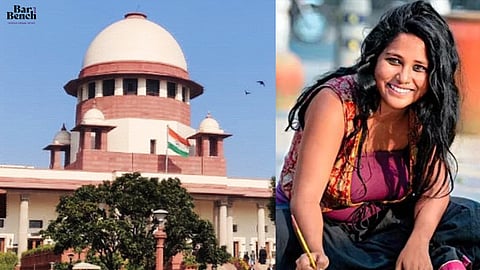
The Supreme Court on Monday rejected a plea filed by Pinjra Tod activist and Delhi riots accused Devangana Kalita seeking reconstruction of the case diaries in a criminal case linked to the 2020 riots..A Bench of Justices Aravind Kumar and PB Varale refused to interfere with a Delhi High Court order that had earlier refused Kalita’s request for reconstruction of the case diaries maintained by the investigating officers..Kalita had sought reconstruction of the diaries on the ground that the Delhi Police had allegedly tampered with them and ante-dated witness statements recorded during the investigation. The case relates to a criminal complaint registered over protests and a road blockade near the Jafrabad metro station in Delhi during the anti-Citizenship Amendment Act (CAA) demonstrations in 2020.The dispute over the case diaries first arose before a trial court. In November 2024, the trial court declined Kalita’s request to secure the case diaries. It observed that statements recorded under Section 161 of the Code of Criminal Procedure (CrPC) are not substantive evidence and that the court could not examine the truthfulness of allegations regarding tampering at that stage.Kalita challenged this decision before the Delhi High Court, seeking directions to the police to preserve and reconstruct the case diaries..In December 2024, the High Court passed an interim order directing the Delhi Police to preserve the relevant case diaries, particularly volume numbers 9989 and 9990.However, in September 2025, the High Court refused Kalita’s request for reconstruction of the diaries. The Court held that pages which were not part of the case diary in the present case could not be reconstructed, particularly since the investigating officers may have used the same diary booklets to record statements in other FIRs being investigated at the time.At the same time, the High Court confirmed its earlier interim direction requiring the police to preserve the case diaries. It also clarified that Kalita would be free to raise her allegations regarding ante-dating of witness statements during the course of the trial.It was this decision that Kalita challenged before the top court. .After briefly hearing her counsel, the Supreme Court dismissed her plea.