United Spirits, Bacardi India move Bombay HC challenging Maharashtra Made Liquor policy

The three companies have argued that the new policy arbitrarily limits who can manufacture MML by creating a preferential group of licence holders and excluding similarly placed players.
Liquor
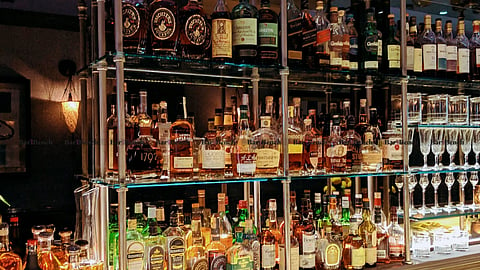
Liquor Image for representative purpose
Published on
2 min read

Three liquor companies recently moved the Bombay High Court against a Maharashtra government resolution (GR) that sets the framework for a new liquor category, Maharashtra Made Liquor (MML) [United Spirits, Bacardi India, John Distilleries v. State of Maharashtra & Ors.].
The petitions have been filed by United Spirits, John Distilleries, and Bacardi India - the Indian arm of global spirits major Bacardi.

They have argued that the August 7, 2025 resolution arbitrarily limits who can manufacture MML by creating a preferential group of licence holders and excluding similarly placed players.

They seek to have the GR issued by the State Excise Department struck down in its entirety, or at least to the extent of key clauses that lay down eligibility criteria. 

These clauses have been described as “onerous and exclusionary” by the liquor companies, because they create a privileged class of Potable Liquor Licence (PLL) holders who alone can manufacture MML, even though other PLL holders operate distilleries in Maharashtra.

The MML policy stems from a January 2025 decision to set up a committee to boost excise revenue and an April 2025 report recommending MML as a new category to be produced only in Maharashtra. 

In June and July 2025, the State increased excise duty on Indian Made Foreign Liquor (IMFL), defined MML. It also fixed its duty and pricing formula, before issuing the August 7 resolution laying down detailed conditions on who can produce MML.

This MML policy has been challenged as violating Article 14 of the Constitution on the ground that the distinction drawn between eligible and ineligible PLL holders is arbitrary. The petitioners opposing the policy contend that there is no real difference between those deemed eligible to produce MML and those who are not. The distinction drawn in the policy has no clear link to the State’s stated objectives of increasing revenue, investment and employment, the petitioners argue.

It is further alleged that the restrictions impose unjustified curbs on trade and commerce. The petitioners have also sought directions to the authorities to process and decide their MML manufacture and label applications without applying the eligibility clauses in the GR under challenge.

The present batch of petitions follows an earlier challenge mounted by the International Spirits and Wine Association of India (ISWA), which represents several global liquor majors. 

In response to the ISWA's plea, the State had defended the MML regime as a policy tool to promote local manufacturers and revive idle capacity, pointing to an almost 17 per cent jump in excise revenue between July and November 2025 after duty revisions and the rollout of MML. 

The High Court had allowed the State and stakeholders to take preparatory steps for implementing the policy in November 2025 while making it clear that these would be subject to the outcome of the litigation.

Bar and Bench - Indian Legal news
www.barandbench.com