
Subscribe
Subscribe
- Latest Legal News
- News
- Law Firms
- Columns
- Interviews
- Law School
- Legal Jobs
- हिंदी
- ಕನ್ನಡ
In October 2025, actor Chiranjeevi issued a press note announcing that the City Civil Court at Hyderabad granted an ad interim injunction protecting his personality rights. The note detailed that the order restrains several named defendants as well as unnamed parties from unauthorised commercial use of Chiranjeevi’s name, image, voice, and other recognisable attributes.
The press note explains that the action was prompted by widespread unauthorised usage of his identity on merchandise, digital platforms, and through the use of artificial intelligence technologies. The court is said to have recognised Chiranjeevi as an iconic personality in Indian cinema whose reputation and economic interests faced harm due to misrepresentation and digital exploitation, including memes, imaging, and merchandise sales without consent.
There has been a spate of ad interim injunctions from the Delhi High Court as well in favour of celebrities like Karan Johar, Aishwarya Rai Bachchan, Jaya Bachchan, Sri Sri Ravi Shankar, Salman Khan, Shilpa Shetty, to name a few, protecting their personality rights from unauthorized use to gain undue commercial benefit and revenue.
However, there is also now a growing recognition from courts of the importance of proportionality of the protective orders.
At its core, a personality right is the individual’s legal right to control the commercial use of their identity, whether it be their name, likeness, image, or voice. Where such attributes are used for commercial gain or to mislead the public, the law recognises a clear cause of action for misappropriation and passing off. In the age of AI-generated content and engagement-driven digital platforms, the risk of unauthorised use of celebrity images, voices, and likenesses is real and increasingly pervasive. The press note’s reference to AI-based manipulation highlights a legitimate concern where deepfakes and imitation clips may not only deceive consumers but also erode a personality’s reputation and goodwill.
There is, therefore, a justifiable rationale for approaching the courts to prevent such misuse. The press note issued in October 2025 underlines that Chiranjeevi personally met with the Commissioner of Police, Hyderabad, to explore criminal enforcement mechanisms reflecting a larger anxiety about digital impersonation and fraudulent commercial use. Such steps are consistent with the broader evolution of personality rights jurisprudence in India, where courts have extended injunctive relief to prevent unauthorised commercial exploitation of well-known personalities.
That said, proportionality must remain the guiding principle in designing relief. The protection of a legitimate right should not morph into an overbroad restraint on lawful expression or reference. Every legal right, whether property, intellectual property, or personality rights, operates within limits. They are not absolute. The balance lies in tailoring remedies to the nature and gravity of the injury proved.
An injunction that effectively prohibits any and all references to a person’s name, likeness, or stage title, irrespective of context, risks over extension. The objective of personality rights is to curb commercial misappropriation and fraudulent exploitation, not to shield the personality from criticism, parody, satire, or unflattering commentary. Courts must therefore ensure that injunctive relief remains focused on preventing unauthorised monetisation or deceptive misuse rather than silencing legitimate public discourse.
If such orders are drawn too broadly, they can inadvertently chill speech, journalism, and artistic expression. The legitimate anxiety of celebrities to protect their persona must be balanced with society’s equal interest in preserving open commentary, fair criticism, and cultural reference. The vitality of personality rights depends on this equilibrium.
It is with this equilibrium in mind that courts are increasingly mindful while granting restraint orders in personality rights cases. Recent observations from the Delhi High Court and the Madras High Court reflect a cautious judicial approach, where questions are being raised about how to balance the right against unauthorised commercial exploitation with the equally vital right to free expression and public discourse.
In the Raj Shamani case, the Delhi High Court balanced the rights of creators of parody, satire and fan uses by restricting the ad interim injunction to unauthorized use of personality traits for commercial benefit and fake endorsements. More recently, in the Bhuvan Bam case, the Delhi High Court granted a proportional ad interim injunction by directing the removal of images uploaded without his consent, but refrained from granting an injunction on the broader issue of personality rights on the first day. Similarly, the Madras High Court refused to grant a blanket ad interim injunction in favour of chef and entrepreneur T Rangaraj in the absence of any prima facie material showing commercial exploitation.
The courts are, in essence, signalling the need for proportionality and restraint even while recognising the legitimacy of personality rights protection.
The press note regarding the injunction obtained by Chiranjeevi, as also the remarks from courts dealing with such litigation, offers an important occasion to reflect on the evolving contours of personality rights in India. The concern over unauthorised use of identity, likeness, or image, especially in the context of AI-generated content and digital exploitation, is both real and serious. Protecting individuals against such misuse is a legitimate exercise of legal rights, and courts are justified in extending protection where there is clear commercial misappropriation or reputational harm.
At the same time, the conversation must extend beyond any single order or personality. The larger challenge lies in ensuring that the protection of personality rights does not become a tool of over protection. Rights must always be balanced against competing freedoms, including free speech, artistic expression, and legitimate commentary. The law must guard against the misuse of broad injunctions that could chill discussion, criticism, or even cultural reference.
These court orders should therefore be viewed not as the end point but as a means to examine the wider question of proportionality in enforcement. Personality rights are vital to preserving dignity and preventing exploitation, yet their strength lies in moderation and precision. The goal must be to secure genuine protection without compromising the openness of discourse that sustains both art and democracy.
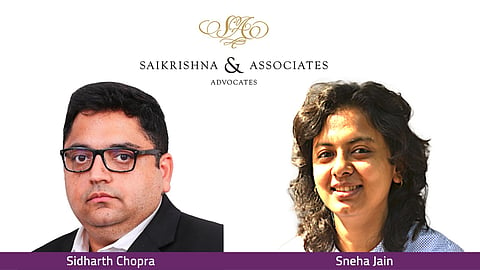
About the authors: Sidharth Chopra and Sneha Jain are Partners at Saikrishna & Associates.
Disclaimer: The opinions expressed in this article are those of the author. The opinions presented do not necessarily reflect the views of Bar & Bench.
If you would like your Deals, Columns, Press Releases to be published on Bar & Bench, please fill in the form available here.