
Subscribe
Subscribe
- Latest Legal News
- News
- Law Firms
- Columns
- Interviews
- Law School
- Legal Jobs
- हिंदी
- ಕನ್ನಡ
Financial fraud in India has moved far beyond the confines of a single organisation’s internal affairs. Today, a single case of banking fraud could involve internal surveillance units, external forensic analysts, police departments, enforcement agencies, lawyers, and regulatory reporting requirements, all working in parallel. However, the systems that monitor these cases are still piecemeal.
What begins as a transaction alert can quickly escalate into a multi-party process: FIR filing, investigation updates, legal hearings, asset recovery, regulatory reporting, and more. At every turn, the lack of structured visibility creates risk - not only operational risk but also regulatory and reputational risk. The problem is no longer detecting fraud. The problem is now managing it in a transparent, auditable, and compliant manner.
Fraud monitoring today extends beyond internal audit logs into law enforcement processes and judicial timelines. For banks to effectively participate in or support this extended process, they have to track police case statuses across jurisdictions, coordinate with investigating officers, monitor charge sheets and developments in the courts, meet timelines for regulatory reporting, and maintain audit-ready documentation. Furthermore, they must accurately complete submissions to Reserve Bank of India (RBI) Fraud Monitoring Reports (FMR) within strict timelines.
When workflows like these are managed through spreadsheets, email threads, and manual follow-ups, institutional clarity is lost. Legal professionals, in particular the counsel for banks in fraud-related litigation, are the first to be impacted by any systemic inefficiencies resulting from this sort of fragmented data. This can lead to delays in developing and implementing a strategic plan, difficulties with courtroom preparedness, and confusion in compliance reporting. This is where systemic digitisation should start.
Law professionals dealing with banking fraud cases find themselves in a distinct position. They witness delays due to the absence of updates from investigations, misalignment between the reporting of branches and the compliance team at the central level, inconsistencies in documentation during the trial, and the challenges faced by institutions as the intensity of regulatory focus increases.
In most instances, legal professionals are the first to suggest the implementation of more effective internal monitoring systems for banks, not only for better operational effectiveness but also for maintaining legal defensibility. A systematic and digital case management system is beneficial not only for operations but also for legal purposes. When institutions can show centralised monitoring, updates with timestamps, escalation records, standardised documentation, and systematic compliance trails, they convey maturity in governance to courts and to regulators alike.
The Reserve Bank of India’s Fraud Monitoring Report (FMR) system requires institutions to make timely and accurate reports of fraud cases exceeding specified levels. These reports are not mere paperwork; they are part of the regulatory process, risk evaluation, and systemic integrity analysis. The revised Master Directions on Fraud Risk Management (2024) have introduced stricter timelines, reducing the reporting window to 14 days from the date of classification, and mandating flash reports for frauds involving ₹50 million and above within a week of detection .
However, in most instances, the preparation of FMR reports involves manual data retrieval, interdepartmental coordination, integration of investigative update reconciliations, and a high risk of data inconsistency. In high-volume institutions, this process can become resource-intensive and prone to delays. Non-compliance with these reporting timelines can attract penal action under Section 47(A) of the Banking Regulation Act, 1949 . RBI FMR-compliant reporting must move from reactive compilation to structured automation. Institutions that treat compliance reporting as an integrated workflow, rather than an end-stage task, are better positioned to maintain regulatory confidence.
With convergence as the future of fraud case management, we see the necessity for convergence among various areas: investigation tracking, legal coordination, internal vigilance updates, compliance reporting, and executive oversight dashboards. The digitisation of records must go beyond merely maintaining records. The introduction of real-time case visibility, automated status updates, centralised document repositories, escalation protocols, and reports aligning with the RBI FMR requirements is essential. This isn't about replacing processes for investigations, but rather strengthening our institutional governance surrounding them.
IIRIS Consulting Pvt Ltd has worked with many different financial institutions that are struggling with similar challenges. In all cases we have been involved with, there has been a common thread: banks have the right intent to work through these problems, but lack an integrated perspective of the organisation. The fragmentation of data across departments, law enforcement agencies, and external stakeholders creates blind spots that expose institutions to regulatory risk and operational inefficiency.
To address this governance gap, we have developed IntelliTracker, an innovative case intelligence platform purpose-built for the complex realities of modern banking fraud management. IntelliTracker transforms fragmented workflows into a unified, audit-ready system that serves the specific needs of legal counsel, compliance teams, and executive leadership.
What IntelliTracker Delivers:
Centralised case tracking – Real-time visibility of all fraud and law enforcement cases across multiple jurisdictions in a single, secure dashboard.
Integrated investigation management – Automated tracking of investigation progress, police updates, charge sheet developments, and legal proceedings with timestamped records.
RBI FMR compliance engine – Pre-configured reporting templates that align with RBI's Fraud Monitoring Report requirements, reducing manual compilation time and minimising submission errors.
Defensible audit trail – Complete documentation of all case actions, decisions, and communications in a format that withstands regulatory scrutiny and courtroom review.
Escalation intelligence – Automated alerts for critical timelines (14-day FMR reporting windows, 7-day flash report deadlines, investigation milestones) ensuring no compliance deadline is missed.
Legal coordination hub – Centralised repository for legal documents, court filings, and correspondence with law enforcement agencies, enabling seamless collaboration between internal counsel and external legal teams.
Executive dashboards – Real-time analytics on pending cases, resolution timelines, fraud trends, and compliance status—the data law firms and boards increasingly demand.
IntelliTracker is not a replacement for existing investigation processes; it is a governance layer that strengthens institutional controls and demonstrates maturity to regulators and courts.
Fraud cases tend to get stuck because of communication silos between banks and enforcement agencies. A structured monitoring system facilitates follow-ups with investigating officers on time, clear escalation matrices, a consolidated view of the case status, and executive-level monitoring. When there is better visibility, there is better coordination. When there is better coordination, there is better performance on cases. This is not just an improvement in operations; it is an alignment of the ecosystem.
In the current context of increased regulatory focus and increased sophistication of financial crimes, maturity in governance is emerging as a key differentiator. The revised RBI guidelines place a strong emphasis on the role of the Board of Directors in the governance and oversight of fraud risk, mandating a Board-approved Fraud Risk Management Policy and a Special Committee of the Board. Boards are increasingly asking: How many fraud cases are pending with law enforcement agencies at any given time? What is the average time taken for resolution? Are RBI reporting requirements met on time? Can we provide data on structured monitoring if asked?
Institutions that can provide data instead of estimates are institutionally stronger. Structured intelligence is no longer a choice. It is a foundation.
The Indian financial ecosystem is still improving its mechanisms for fraud detection. The next level needs to be improvement in fraud case lifecycle management. There is a shared interest between lawyers, compliance professionals, and law enforcement agencies: clarity, accountability, and coordination.
Digitisation is not about technology adoption for its own sake. It is about ensuring that once a fraud is identified, the institutional response is structured, traceable, and regulator-ready. If the first line of reform focused on detecting fraud, the next must focus on managing it with intelligence.
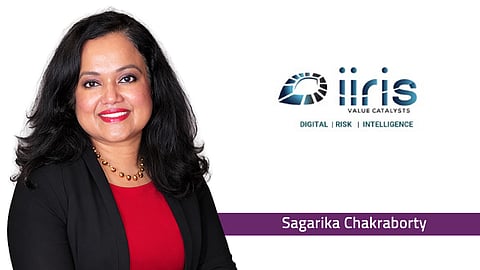
About the author: Sagarika Chakraborty is the CEO for India and the Gulf at IIRIS Consulting, a global risk, security, and intelligence advisory firm operating across more than 10 countries with investigative reach in over 150 jurisdictions.
Disclaimer: The opinions expressed in this article are those of the author(s). The opinions presented do not necessarily reflect the views of Bar & Bench.
If you would like your Deals, Columns, Press Releases to be published on Bar & Bench, please fill in the form available here.