
Subscribe
Subscribe
- Latest Legal News
- News
- Law Firms
- Columns
- Interviews
- Law School
- Legal Jobs
- हिंदी
- ಕನ್ನಡ
At a recent Pentagon Christian service, US Defence Secretary Pete Hegseth framed the ongoing conflict with Iran in explicitly religious terminology. Invoking biblical language, he is said to have called for "overwhelming violence of action against those who deserve no mercy".
In the past, Hegseth called for an American crusade, describing it as a holy war for the righteous cause of human freedom. He accused the military’s chaplain corps of having been "infected by political correctness and secular humanism" until they were "watered down" to "nothing more than therapists" who focused more on "self-help and self-care" rather than faith or virtue. He called for them to don religious insignia on their uniforms, in pursuit of "making the chaplain corps great again".
The call for war based on a higher civilisational struggle strikes at the heart of a fundamental constitutional premise based on Thomas Jefferson’s metaphor of the wall of separation between the Church and the State. The First Amendment to the US Constitution declares that Congress shall make no law "respecting an establishment of religion, or prohibiting the free exercise thereof". These twin guarantees - the establishment clause and the free exercise clause, require that the State refrains from either imposing religion or suppressing it.
In the backdrop of Hegseth’s recent utterances, the question that arises is this: when political or military actors use religious language and couch it in civilisational terms, would it fall within the parameters of protected speech? If the utterances fall within protected speech, does the State’s religious neutrality collapse? Would minority rights suffer and does it mean that the State will privilege those affiliated to the majority religion?
The standards of American free speech are regarded as absolutist - a theory which has been criticised by Princeton professor Fara Dabhoiwala, in his book titled What is Free Speech: The History of a Dangerous Idea (2025). He argues that free speech is a power-propelled historical construct rather than an inherently natural or virtuous right. He writes that the American tendency to treat free speech as absolute and the belief that the marketplace of ideas leads to the discovery of truth, is often counter-productive and engenders hate, misinformation and inequality.
The exhortation of troops in the name of religion in a religiously diverse army is deeply problematic. Even though such exhortation may not fall foul of the absolutist standards of free speech in the United States, it is necessary to determine the fine line between assertions of religious or cultural identity on the one hand while maintaining neutrality and non-discrimination on the other. This may be as relevant for India as it is for liberal democracies across the world.
The jurisprudence in the United States has evolved over the years to become far more accommodating of religion in the public sphere. In the landmark case of Lemon v. Kurtzman, the US Supreme Court laid down what came to be known as the Lemon test, requiring that any State action involving religion must satisfy three conditions. It must have a secular purpose; its primary effect must neither advance nor inhibit religion; it must avoid ‘excessive entanglement’ with religious institutions.
In recent years, there has been a doctrinal drift from the theory of strict separation between State power and religious identity to a more accommodationist approach under which there is much less resistance to manifestations of religion in public life. For instance, in Marsh v. Chambers, the US Supreme Court upheld the constitutionality of legislative prayer, on the ground that such practices were historically embedded in Christian tradition. Such an approach found reiteration in Town of Greece v. Galloway, where sectarial prayer in local government meetings was upheld. The Court emphasised tolerance and tradition over strict neutrality. The majority held that the prayer at the opening of the session was intended to lend gravity and reflect values embedded in the nation’s heritage. Absent a pattern of prayers over time that proselytise or denigrate non-believers, there was no constitutional violation so long as there was no discrimination against minority faiths and no forced participation of non-adherents.
The gradual shift from the Lemon test reached a new level in Kennedy v. Bremerton School District, where the Court upheld individual religious expression in a public space. Clearly, the jurisprudential appreciation of secularism underwent a metamorphosis from preventing entanglement to protecting religious visibility within state associated settings.
Another interesting instance of the intersection between the sacred and the State was a recognition of the special role of Catholicism within Italian society in Lautsi v. Italy. The European Court of Human Rights upheld the presence of crucifixes in public school classrooms. The Grand Chamber ruled that the crucifix was a ‘passive symbol’ and part of Italy’s cultural and historical identity. The decision seems to affirm an interpretation of secularism that does not entail the eradication of religious symbols from public life, but permits their integration in a manner that is consistent with pluralism and tolerance.
In recent years, across the world, religion has gained ground as a facet not only of individual identity, but also national identity. Religious nationalism has grown across the world, including in the United States, a country long regarded as the bastion of liberalism. The trend coincides with what is regarded as the gradual decline of the modern nation state. In After Nations: The Making and Unmaking of a World Order, writer Rana Dasgupta argues that the modern nation state is not a natural or permanent entity, but a historically contingent construct. A large number of contemporary states emerged from the collapse of empires, including the Ottoman Empire and the British Empire, which governed diverse populations. He argues that the boundaries and identities of modern states are, therefore, artificial consolidations rather than organic formations.
With globalisation and digital interconnectedness, these constructs are gradually crumbling. Individuals carry multiple identities – religious, ethnic and cultural, among others. Quite often, these identities transcend the constraints of the nation state. Shared spaces in a globalised world and competing claims for economic, cultural or demographic power have led to the rise of identity politics and religious nationalism.
The right to express and assert identity - both collective and individual - has long been regarded as a facet of the freedom of expression. That right includes the right to express a religious identity in many different ways – through speech, writing, art, attire, food, methods of worship and religious, social or cultural practices. The courts are often called upon to define the limits of the right to assert a religious identity, particularly when it interferes with competing constitutional commitments relating to the rights of others. There are a range of diverse contexts where the need to lay down the legitimate limits arises. It may arise in the context of political actors exercising rights of free speech; the extent of religious expression in public spaces or matters of institutional discrimination between citizens. It may also arise in the context of a conflict between individual rights and the collective rights of a community or belief system, as for instance in the Sabarimala case.
Courts are tasked with determining the fine line, but the challenge is to do so without being drawn into the thicket of religious or scriptural interpretation, which only an ecclesiastical authority is equipped to do. An accommodative constitution must be able to balance the right to equal status on the one hand and the right to freedom of conscience and expression on the other. Utterances or expressions in the name of religion that have the effect of excluding others from civic or religious participation in a fundamental way must be struck down as unconstitutional.
That said, a community or society cannot be denied the right to assert its heritage or history, so long as such assertion does not result in discrimination or othering of any section of citizens, whether from within or outside. Secularism should not be conflated with secularisation. Nor should it be a recipe for homogenisation, which is itself anathema to pluralism and diversity - the very hallmark of a multi-cultural society.
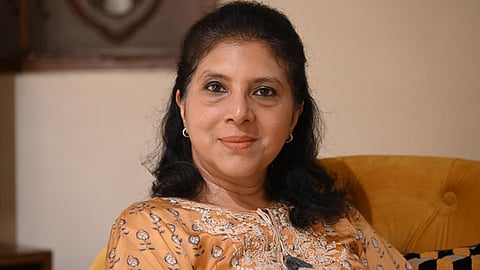
Madhavi Goradia Divan is a Senior Advocate and the author of 'Facets of Media Law'.
The author acknowledges the contributions made by Advocates Ridhima Laharia and Atharva Kotwal.