
Subscribe
Subscribe
- Latest Legal News
- News
- Law Firms
- Columns
- Interviews
- Law School
- Legal Jobs
- हिंदी
- ಕನ್ನಡ
When the Delhi High Court disposed of a decade-old litigation on pilot fatigue rules in April 2025, it did so with an air of finality.
The Court noted that the process of notifying Civil Aviation Requirements 2024 (CAR 2024), India’s comprehensive fatigue-management framework, had been “set into motion” and that nothing further survived in the petitions filed by pilot unions against the aviation regulator.
On April 7, 2025, Justice Tara Vitasta Ganju recorded the government’s commitment that 15 clauses of CAR 2024 would be implemented by July 1, 2025 and the remaining seven by November 1, 2025.
Airlines were directed to submit their Flight Duty Time Limitation (FDTL) schemes to DGCA within three weeks, a filing the Court assumed would bridge the gap between law and practice
The petitions were closed on the understanding that rollout was underway and enforcement would follow.

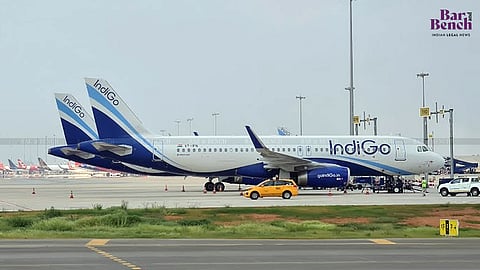
Eight months later, India’s largest airline was cancelling hundreds of flights because the very rules the Court thought were settled, became the flashpoint for operational chaos.
Various pilot unions, the Indian Commercial Pilots Association, Indian Pilots Guild and Federation of Indian Pilots, had in 2012 sought implementation of fatigue-mitigation norms aligned with global safety practice. They alleged that Indian scheduling pushed crew to unsafe limits.
The High Court litigation sought two outcomes:
1. Modernised FDTL regulations;
2. Mandatory enforcement through operator-specific fatigue schemes.
By April 2025, DGCA and the government told the Court it had done precisely that.
CAR 2024 was notified, timelines fixed, schemes to be filed and so petitions closed.
But regulatory rollout is one thing, industry compliance turned out to be quite another.
The key provisions that drastically affect crew scheduling, particularly for an airline with extensive night-time flying like IndiGo, include:
1. Extended Night Duty Window
The definition of time period for night duty was revised and extended.
Original WOCL: The Window of Circadian Low (WOCL), the deepest fatigue period, is defined as 0200h to 0600h local time.
Night duty definition: Any Duty Period encroaching upon any portion of the time between 0000 hrs and 0600 hrs in the time zone to which the crew is acclimatised.
2. Strict Limits on Night Landings
This limits how many flights a crew can complete when operating late at night.
The maximum number of landings during operations encroaching night duty was restricted to two (2) landings per flight duty period within the acclimatised zone (for a standard two-pilot crew).
The maximum Flight Duty Period (FDP) for night-encroaching operations was also reduced to 10 hours (for up to 2 landings/sectors).
3. Increased Minimum Weekly Rest
The required duration for the crew's long rest period was significantly increased.
An operator must ensure a minimum weekly rest of continuous 48 hours.
This rest must include two local nights.
The rest must start within 168 hours (7 days) of the end of the preceding weekly rest period.
According to various media reports, a combination of the above rules created a "manpower and scheduling challenge":
Pilot Shortage: The strict limits on night landings and the requirement for a longer weekly rest (48 hours) meant that a larger percentage of the available pilot roster was constantly placed into mandatory rest periods.
Rostering Complexity: Airlines found it difficult to restructure their flight rosters to comply with the revised FDTL, particularly after increasing operations for the winter schedule.
Cascading Delays: Minor operational issues or weather delays caused flights to push past midnight. Once the flight landed in the night duty window, the pilot's available hours and subsequent rest requirements immediately triggered the strict FDTL rules, turning a simple delay into a massive cancellation.
On December 5, the regulator suspended the FDTL rules with immediate effect to stabilise the airline operations.
[Read High Court Order]
[Read CAR]