
Subscribe
Subscribe
- Latest Legal News
- News
- Law Firms
- Columns
- Interviews
- Law School
- Legal Jobs
- हिंदी
- ಕನ್ನಡ
The Indian criminal justice system is currently navigating a period of profound legislative transition as the nation moves away from colonial era legal frameworks towards the implementation of new procedural codes.
Yet, as the legal community pivots towards this new era of 'Nagarik Suraksha', a granular analysis of conviction trends over the past decade exposes a disturbing reality about the quality of investigations. National data reveals that offences under the Indian Penal Code (IPC) saw a modest conviction rate of approximately 54 per cent in 2023, meaning nearly half of all general criminal cases result in acquittal due to investigative or prosecutorial gaps.
However, this general malaise masks a far deeper crisis in specialised law enforcement, where conviction rates frequently plummet to single digits. This collapse is not inevitable; the high success rates of Central agencies prove that when investigations are conducted with specialised rigour, the Indian judicial system is fully capable of delivering justice. The disparity between the exceptional success rate of Central agencies and the dismal success rate of state police under similar statutes serves as the ultimate proof that the crisis lies not in the law, but in the investigative methodology.
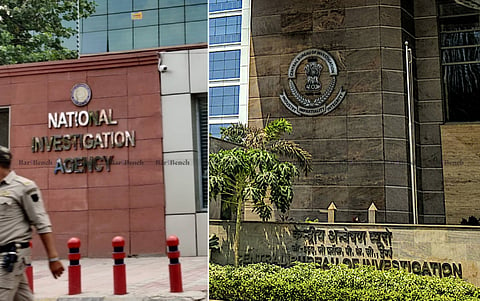
A critical theme is the massive disconnect between enforcement authority and capacity to prove guilt - a gap that widens as crimes become complex. While the general police struggle with half their caseload, the situation is catastrophic when enforcing specialised statutes. The National Investigation Agency has registered about 652 cases since its inception in 2009 through early 2025, maintaining a record conviction rate of 95.54 percent by concentrating vast resources on a handful of cases. In sharp contrast, state police invoke the Unlawful Activities (Prevention) Act as a routine tool, registering thousands of cases lacking evidentiary foundation, resulting in a national UAPA conviction rate of only 2.6 percent.
This statistical gap validates the argument that the judicial system works when evidence is sound, but collapses when investigations are perfunctory. State police suffer from a stark lack of expertise in handling digital evidence, compromising cases reliant on electronic footprints. The GN Saibaba Case serves as a significant indictment of this state level failure, where the Bombay High Court noted basic failures to prove seizures or authenticate electronic evidence - errors a specialised agency like the NIA avoids.
The dichotomy between the Enforcement Directorate (ED) and State Economic Offences Wings (EOWs) further illustrates this gap in financial crimes, where the centre operates on a boutique model while states struggle with systemic overload. The ED registered 7,771 Enforcement Case Information Reports (ECIRs) from its inception to 2025 and claims an exceptionally high 93.61 percent conviction rate in concluded trials. While the apex agency picks a few hundred cases annually, state EOWs are drowning in a backlog of over 2,04,973 new cases registered in 2023 alone, leading to a national conviction rate for economic crimes hovering around a dismal 29.1 percent.
State officers, typically drawn from the general police cadre without specialised training in forensic accounting, often treat financial crimes like physical thefts and fail to construct court admissible financial flow charts. This failure draws significant judicial ire. The Madras High Court in 2025 questioned whether the Tamil Nadu EOW had ever brought a single case to a logical conclusion within a reasonable timeframe, lamenting its failure to ensure assets are frozen to provide relief to depositors.
The fight against public corruption reveals a similar asymmetry between the Central Bureau of Investigation (CBI) and state Anti Corruption Bureaus (ACBs). The Central agency maintains a strong conviction rate through rigid adherence to its comprehensive crime manual. Conversely, state bureaus are reduced to simple trap agencies failing due to procedural negligence. In Maharashtra, the conviction rate for corruption cases plummeted to 9 per cent in 2022, representing a systemic collapse. The absence of specialised legal training means accused corrupt officials go scot-free because investigators fail to prove the mandatory element of “demand”, as clarified by the Supreme Court in the P Satyanarayana Murthy case. The judiciary points to this as a classic example of justice becoming a casualty to shoddy investigation, notably in the 37-year-old corruption case involving IAS officer Surendra Singh Ahluwalia. The special court noted that the agency did not want to arrive at a logical conclusion from day one, resulting in an acquittal after decades of delay. Without meticulous forensics and rigorous case building, state police remain inept at securing complex convictions.
The crisis of investigative efficacy is visibly severe in enforcing the Narcotic Drugs and Psychotropic Substances (NDPS) Act. Between 2019 and 2023, arrests under the Act surged by 78 per cent to over 1,32,954 individuals in 2023 alone, but only 104 convictions were secured nationwide that year, yielding a conviction-to-arrest ratio of approximately 0.08 percent. This near zero statistic results directly from procedural failures by regular police stations lacking specialised training to navigate complex safeguards.
The legal loopholes in narcotics cases centre on search and seizure protocols requiring scientific precision. Section 50 mandates informing suspects of their right to be searched before a gazetted officer or magistrate - a pivotal safeguard officers frequently bungle, causing the evidentiary chain’s discard. The Supreme Court in the Ranjan Kumar Chadha case criticised offering a “third option” of a search before the police officer himself, holding it entirely vitiates the search by compromising independence. Furthermore, officers lack understanding of the nuances between a chance recovery and a recovery based on prior information under Section 42, which requires secret information to be documented and shared within 72 hours. In sensitive border states, officers often disguise prior information as a chance recovery to bypass requirements - a tactic courts increasingly expose.
The most critical failure point today is Section 52A, mandating samples be drawn before a magistrate who certifies the inventory. For decades, police drew samples themselves at the raid spot - a practice the Supreme Court declared illegal in the Yusuf @ Asif case while acquitting a man found with 20 kilograms of heroin solely because the sampling procedure was violated. The State heavily invested in forensic laboratories, but failed to train officers that a laboratory report is worthless if the sample was not drawn before a magistrate.
Nowhere is the cost of ‘generalist’ investigation more heartbreaking than in the implementation of the Protection of Children from Sexual Offences (POCSO) Act. Conceived as a rigorous protective shield, the statute is rendered less effective by a state apparatus lacking the sensitivity and forensic capability to navigate its stringent provisions. While the Act mandates swift trials through fast track special courts, data from the Ministry of Law and Justice reveals a systemic collapse of this promise.
The conviction rate of these courts presents a harrowing disparity. While well-resourced Chandigarh managed a higher relative rate, major states with massive caseloads like West Bengal and Maharashtra languished at shockingly low conviction percentages of 1 per cent and 6 per cent respectively. This near total impunity suggests the law’s strictness exists only on paper, while the ground reality is governed by an investigative machinery failing its victims. The primary driver of this acquittal avalanche is not judicial leniency but ‘investigative fatigue’. The Supreme Court repeatedly flags that high acquittal rates are driven by the “hostile witness” phenomenon; a direct consequence of prolonged trials where unsupported victims are ground down by the system designed to deliver justice.
Furthermore, the inability to distinguish between predatory abuse and consensual adolescent relationships clogs the investigative pipeline, diverting scarce resources. In 2024, the Supreme Court was forced to express concern over this “misuse” of the Act, noting that mechanically applying the law to consensual teenagers criminalises adolescence itself while allowing actual predators to slip through the cracks. When a specialised law results in massive acquittal rates, it indicts an institutional framework substituting legislative severity for investigative competence.
The solution to this crisis lies in acknowledging the lesson taught by our Central agencies that competence dictates conviction. The disparity in outcomes is not a result of different laws, but of different investigative standards. To bridge this gap, the Bureau of Police Research and Development must lead a radical overhaul of state-level training. We must move away from the ‘generalist’ model where a single officer investigates a petty theft today and a complex financial fraud tomorrow. Instead, states must adopt the ‘centres of excellence’ model used by Central agencies, creating dedicated cadres for specialised crimes certified in the procedural nuances of the laws they enforce. Central agencies like the NIA and the NCB must act as centres of excellence to provide mandatory inter-agency mentorship and transfer their investigative mindset.
The success of the NIA and CBI proves the Indian justice system is robust enough to punish the guilty, provided the investigation is sound. By upgrading our state investigative machinery to these proven standards, we can ensure the rule of law is a reality for all citizens in the millions of cases handled by the state police every day.
Ajmal Shah is an advocate practicing before the High Court of Jammu & Kashmir and Ladakh.